
$36.90
Free delivery · 7–14 days
Humidifier for Dry Skin — Rechargeable Nano Mist









Mini power banks are designed for convenient backup charging when your phone, earbuds, or other USB device needs extra power away from an outlet. This category includes compact battery packs, magnetic chargers, keychain-sized backups, and a solar panel option, so compare capacity, connectors, charging method, and travel suitability before choosing.
Start with the devices you need to charge and the connectors they use. A mini portable charger with USB-C can suit newer phones and accessories, while a keychain power bank with USB-C and Lightning connections is useful when you carry different Apple and USB-C devices. Check whether the pack charges your device by cable or attaches magnetically; a magnetic model requires a compatible phone or case for its attachment feature. Capacity affects how much backup power is available, but larger capacity usually means more size and weight. If you want a power bank for phone use during short trips, commuting, or emergencies, prioritize pocket size and connector convenience. For longer periods away from outlets, compare capacity and recharge time more closely.
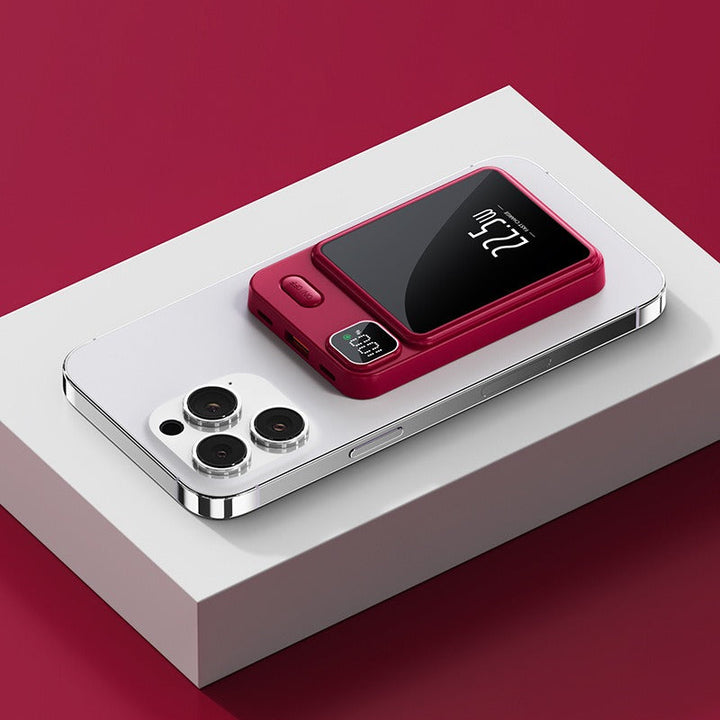
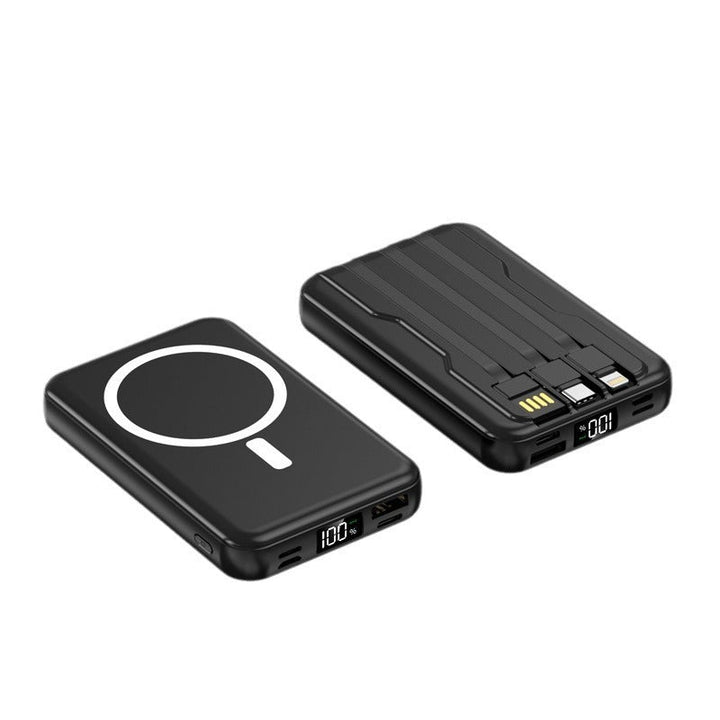
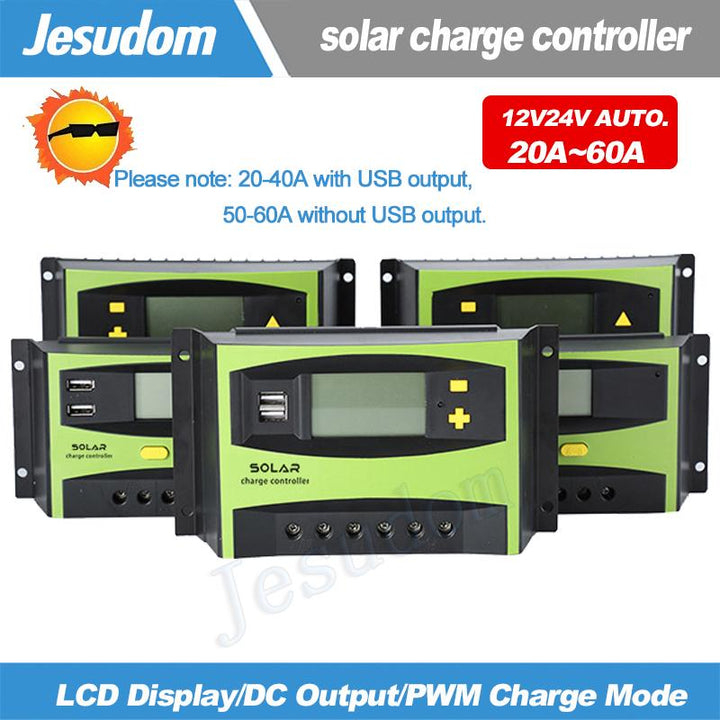
Compact chargers serve different situations. A standard mini power bank connects to your phone with a cable and is generally the most flexible choice for multiple devices. The Mini Magnetic Power Bank is a 3-in-1 option for compatible magnetic phones or cases and can reduce cable clutter. The Keychain Power Bank is a small 1500mAh backup with USB-C and Lightning connections, suited to keeping on keys or in a small bag when portability matters most. The Solar Phone Charger Panel is different: it uses sunlight rather than storing power like a conventional battery pack, so charging depends on available light and conditions. The Mini Portable Dehumidifier is not a power bank or phone charger; it is a compact home device with dual power and should not be selected for charging electronics.
Compare capacity, dimensions, weight, ports, included cables, and charging compatibility. A mini power bank 50000mAh listing should be checked carefully for its actual physical size, stated capacity, output ports, and whether the product is genuinely suitable for pocket carry; very high-capacity claims can conflict with the compact format shoppers expect. Look for USB-C if that matches your phone and other accessories, and confirm whether USB-C is used for input, output, or both. Magnetic models should clearly state the required device or case compatibility. Also check recharge requirements, battery indicators, and safety instructions. For travel, review the product’s battery information and airline guidance rather than assuming every small-looking charger is permitted.
Before leaving home, charge the power bank fully using the recommended input port and a suitable wall adapter or cable. Connect the phone or accessory to the correct output, then press the power button if the pack does not start automatically. With a magnetic charger, align it carefully with the compatible charging area and keep the connection stable. Keep ports dry and free of dust, and avoid covering the charger while it is operating. Recharge the pack after use so it is ready for the next trip. A solar phone charger panel needs direct, useful sunlight and may work more slowly or inconsistently in shade, clouds, or indoors. Follow the product instructions for storage, temperature, and charging rather than leaving any battery unattended for extended periods.
Do not choose only by the largest capacity number. A bulky pack may be less useful than a genuinely pocketable model, while an unusually large capacity claim should be checked against the listed size, weight, ports, and specifications. Avoid buying a charger without confirming your phone’s connector or magnetic compatibility. Do not confuse a keychain backup with a full-size travel battery; its small capacity is intended for limited emergency use. Avoid packing a power bank in checked luggage without checking current airline rules, and protect exposed ports from metal objects. Finally, do not expect a solar panel to behave like a stored-energy battery pack in poor light. Select the charging method that matches how and where you actually use your devices.
Mini power banks suit commuters, festival visitors, day hikers, students, and travelers who want backup power without carrying a large battery. A keychain model works for people who want an emergency charge always within reach. A magnetic model can suit compatible phone users who prefer fewer cables, while a conventional USB-C mini charger is more versatile for mixed devices. A solar phone charger panel may appeal to outdoor users who can access sunlight and accept variable charging conditions. If you need to recharge several devices repeatedly, work away from outlets for long periods, or share power with others, a larger power bank may be more practical. For flights, choose a model with clearly stated battery specifications and confirm the airline and destination rules before packing.
The best choice depends on your phone, connector, and how much backup power you need. Choose a USB-C model for broad cable compatibility, a magnetic model for compatible phones or cases, or the keychain 1500mAh option when the smallest convenient emergency backup is the priority.
Runtime depends on its capacity, the phone battery, charging efficiency, and how much power your device uses while connected. A compact keychain battery is intended for limited backup, while a larger pack can provide more charging capacity but usually adds size and weight.
The smallest useful option depends on what you mean by powerful: maximum pocketability, charging speed, or stored capacity. Compare the listed capacity, output, dimensions, weight, and connector compatibility rather than relying on size alone. A keychain charger favors portability, while a larger mini pack may offer more backup.
For short trips, choose a compact model that matches your phone connector and has clearly stated battery specifications. A keychain charger is easy to carry for emergency use, while a USB-C or magnetic mini power bank may be better for regular phone charging. Check airline requirements before departure.
Airline and destination rules vary by battery type, capacity, and whether the battery is loose or installed in equipment. Power banks are commonly subject to restrictions on checked baggage and may need to travel in carry-on baggage, but confirm the current rules with your airline and aviation authority. Do not rely on the product’s small size alone.
Often, small power banks can be carried in cabin baggage when they meet the airline’s battery requirements, but policies differ. Keep the battery protected from damage and check the stated watt-hour information, airline limits, and destination rules before flying. If the capacity or labeling is unclear, contact the airline before travel.