$59.90
Free delivery · 7–14 days
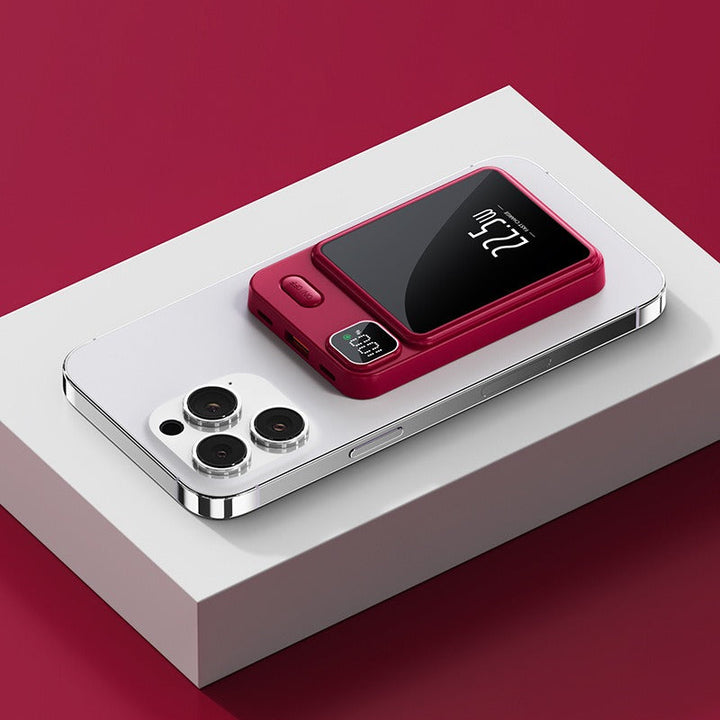
Magnetic Power Bank with Fast Charging & OLED Display
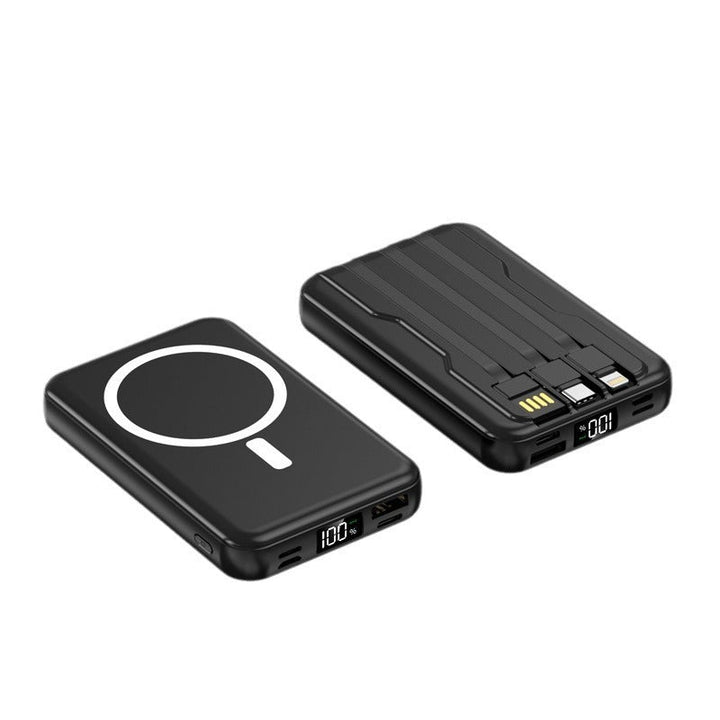




Power banks make it easier to keep phones charged while travelling, commuting, camping or dealing with limited access to outlets. This range includes compact magnetic chargers, higher-capacity portable power banks, solar models, waterproof designs and a hand warmer that also works as a power bank.
Start with your phone and your usual charging situation. For everyday carry, a compact magnetic model can be convenient, especially if you use a compatible iPhone or another device that supports magnetic charging. A 10000mAh MagSafe power bank offers a practical balance between capacity and portability, while a 20000mAh model is better suited to longer trips or charging more than one device. Check whether your phone needs USB-C, a wireless charging surface or another connection before buying. If you want one charger for several devices, look at the Mini Magnetic Power Bank 3-in-1 Universal Charger or the Solar Power Bank 20000mAh designed to charge four devices. The best power bank is the one that matches your phone, cables and daily routine.
Magnetic power banks attach to compatible phones for convenient wireless charging and reduce the need to carry a separate cable. Options here range from the featherlight 2600mAh iPhone emergency charger to a 9mm ultra-thin magnetic wireless power bank and a 10000mAh MagSafe model. Standard portable power banks connect by cable and are useful when you want broad device compatibility. Solar power banks are designed for outdoor use, with options including a waterproof 20000mAh model with a compass and a 20000mAh off-grid charger for four devices. The rechargeable hand warmer and power bank adds warmth alongside charging. Choose magnetic convenience, wired versatility, outdoor features or compact emergency backup based on where you will use it.
Compare capacity, charging method, size, ports and features rather than choosing by capacity alone. A 10000mAh power bank is generally easier to carry than a 20000mAh model, while the larger option may better suit multi-day travel or several devices. Look for fast charging if you want shorter charging sessions, and check the product details for supported input and output connections. An OLED display can make it easier to monitor remaining charge on the Magnetic Power Bank with Fast Charging and OLED Display. Magnetic users should confirm that their phone or case supports the required alignment. For camping or unpredictable weather, consider a waterproof solar power bank with a compass. If pocket space matters most, compare the mini, featherlight and ultra-thin designs.
Charge the power bank before leaving home, using the supplied or compatible cable and a suitable power source. For wired charging, connect the cable to the power bank output and your phone, then check that the charging indicator appears. For magnetic models, place the phone or compatible case centrally over the magnetic charging area. You can use your phone while it is charging on a power bank, although the phone may charge more slowly depending on how much power it is using. Keep ports dry, particularly with outdoor equipment, and follow the product instructions for the waterproof solar models. Store the power bank away from extreme heat, sharp impacts and moisture unless its design specifically supports those conditions.
One common mistake is buying a capacity that does not match the intended use. A very small model may suit emergency top-ups but be less useful for extended travel, while a larger portable power bank can take up more space and add weight. Another mistake is overlooking connector compatibility: magnetic charging does not suit every phone, and some devices may still need a cable. Do not assume a solar power bank will replace regular charging in every situation; solar features are most relevant when you spend time outdoors and should be used as directed. Also check how many devices you need to charge, whether you want a display, and whether waterproofing matters. If you search for a power bank nearby or online, compare these details rather than choosing the first result.
Portable power banks suit commuters, travellers, students, festival-goers and anyone who often spends time away from a wall outlet. iPhone users who prefer cable-free convenience can compare the MagSafe 10000mAh model, the magnetic 2600mAh emergency charger and the ultra-thin magnetic design. Android users should check magnetic compatibility and may prefer a wired model or the 3-in-1 universal charger. Campers, hikers and emergency-kit shoppers may want a 20000mAh solar model, especially one with waterproof construction or a compass. The rechargeable hand warmer and power bank is useful for cold-weather outings when you want charging and warmth in one item. For a bag or pocket, compare the mini and featherlight options; for longer trips, consider the higher-capacity models.
The best power bank depends on your phone, preferred charging method and how long you will be away from an outlet. Choose a magnetic model for compatible wireless charging, a 10000mAh option for a balance of capacity and portability, or a 20000mAh solar model for longer outdoor use and multiple devices.
The strongest choice is the one with the right capacity, connection type and features for your routine. Magnetic models suit compatible phones, compact models suit emergency top-ups, and solar 20000mAh models suit outdoor charging; check ports and device compatibility before ordering.
Choose 10000mAh when portability and everyday carry matter most. Choose 20000mAh when you expect longer periods away from an outlet, need to charge more than one device or want a larger reserve for travel and outdoor use.
Power banks add extra weight and require their own charging before use. Wireless and magnetic charging may be slower than a direct wired connection, and a model with the wrong connector or magnetic compatibility may not suit your phone. Larger capacities also tend to be less pocket-friendly.
Some transport operators and airlines restrict or control power banks because they contain rechargeable batteries. Rules can vary by carrier, route and capacity, so check the current policy before travelling and keep the power bank where the operator requires it.
Yes, you can generally use your phone while it is connected to a power bank. Charging may take longer if the phone is running demanding apps, and you should keep the power bank and phone away from excessive heat, moisture and damage.