$100.90
Free delivery · 7–14 days
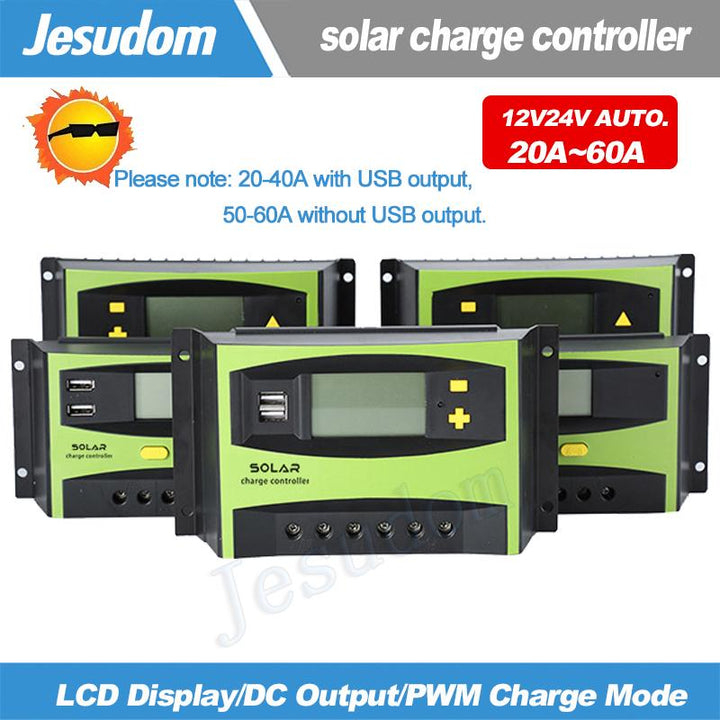
Solar Charge Controller 30-60A with LCD & Dual USB


Shop portable solar panels and solar power banks for charging phones, tablets, and other small devices away from an outlet. This category is designed for travel, camping, emergency kits, and everyday backup power—not as a complete replacement for a rooftop solar system.
Start with the device you need to charge and where you will use it. A solar phone charger panel is the most direct choice for topping up a phone in sunlight, while a 20000mAh solar power bank can store energy for later use and is more convenient when clouds or nighttime interrupt charging. Check how many devices you need to charge, whether you want built-in features such as a compass, and whether the power bank has the ports you need. For hiking, prioritize compact size and simple setup. For emergency kits, choose a power bank that can stay packed and ready. If you are searching for solar panels for sale or comparing listings on major marketplaces, read the output and port details rather than relying only on the panel size.
Portable solar panels convert sunlight into power while they are exposed to the sun. They are useful when you want to charge a phone directly during a day outdoors. Solar power banks combine a battery with a small solar charging surface, so they can hold energy and charge devices after sunset. The three 20000mAh power bank options in this category are suited to off-grid charging, with choices including a compass, support for charging four devices, or a straightforward outdoor backup design. A power bank is not the same as a full home solar panel system, and its solar surface is intended for portable convenience rather than running household appliances. Compare these products with larger 400-watt panels only when you are evaluating a separate home or RV setup.
For portable solar products, inspect practical details before price. Look for a stated battery capacity on power banks, the number and type of charging ports, weather-resistant construction where offered, and a form factor you can carry comfortably. The waterproof solar power bank includes a compass for outdoor navigation, while another model is designed to charge four devices, which may suit groups or shared emergency kits. A solar phone charger panel is useful when you want a lightweight panel rather than stored battery capacity. Remember that sunlight, angle, shade, and temperature affect real-world charging, so product descriptions should not be read as guarantees of a fixed charging speed. Reviews and solar panels Reddit discussions can help identify common usability concerns, but always confirm the actual specifications on the product page.
Place the solar phone charger panel in direct, unobstructed sunlight and reposition it as the sun moves. Keep the panel clean and avoid placing it behind tinted glass, under heavy shade, or where it may overheat. Connect your phone or compatible device using the appropriate cable, then check that charging has started. With a solar power bank, charge the bank during daylight and use its stored energy later; this is usually more convenient than expecting a small integrated solar surface to refill the entire battery quickly. Keep ports closed when the product is designed for water resistance, and follow the product instructions for charging and storage. These portable products are intended for small electronics, not direct operation of household air conditioners or other high-demand appliances.
A common mistake is buying a portable charger while expecting it to power a house. Questions about how many solar panels will run a house involve electricity usage, roof space, local sunlight, battery storage, and an appropriately designed home system—not a phone charger or 20000mAh power bank. Another mistake is confusing battery capacity with solar generation: a power bank stores energy, while a panel produces energy only in suitable sunlight. Shoppers also overlook cables, port compatibility, weight, and weather protection. Do not assume a low price means the product is suitable for every device, and do not treat a listing from a discount retailer or marketplace as interchangeable with a professionally designed installation. For home projects, get system-specific advice and installation quotes.
Portable solar panels and solar power banks suit campers, hikers, travelers, commuters, emergency-kit planners, and anyone who wants backup charging away from an outlet. They are especially useful for phones and other small USB-powered electronics. Choose the solar phone charger panel if you prefer direct daylight charging and a simple setup. Choose a 20000mAh solar power bank if stored energy, multiple charges, or group charging matters more. These products may not suit shoppers looking for solar panels for home, a whole-house battery system, or enough output to run central air conditioning. They can still be a practical low-commitment way to try solar charging before researching a larger installation, its cost, available incentives, and ongoing maintenance needs.
The number depends on your household electricity use, panel output, roof space, local sunlight, system losses, and whether you include battery storage. The portable panels and power banks in this category are intended for small electronics, not whole-home power. A qualified solar installer can size a residential system from your utility usage and property details.
Panels may be removed because a homeowner moves, replaces a roof, upgrades an older system, or dislikes the system’s cost, maintenance, or performance in a particular location. Used equipment can also be difficult to transfer or reinstall. Ask for service history, compatibility, and installation requirements before buying used panels.
There is no single useful average because installation cost varies by system size, labor, roof design, electrical work, permits, batteries, and local incentives. A portable solar charger or power bank avoids roof installation, but it is not a substitute for a home solar system. Request itemized quotes if you are comparing residential installations.
They can be worthwhile when the system matches your electricity use, local sunlight, utility rules, available incentives, and expected time in the property. Portable products are valuable when your goal is convenient backup charging rather than reducing a home electric bill. Compare total purchase and installation costs with the benefits you actually need.
Common considerations include upfront cost, variable output in shade or cloudy weather, space requirements, installation work, and the need to manage wiring or batteries in larger systems. Portable panels may charge small devices slowly when sunlight is limited. Power banks add convenience but must be recharged and carried.
A small portable solar panel or solar power bank is not designed to run a household air conditioner. AC units can require substantial continuous power and may have higher startup demand, so running one generally requires a properly sized solar array, inverter, and often battery storage. Have a qualified professional design the system for the specific AC unit.