
$169.90
Free delivery · 7–14 days
Robotic Hand Rehabilitation Glove for Stroke Recovery
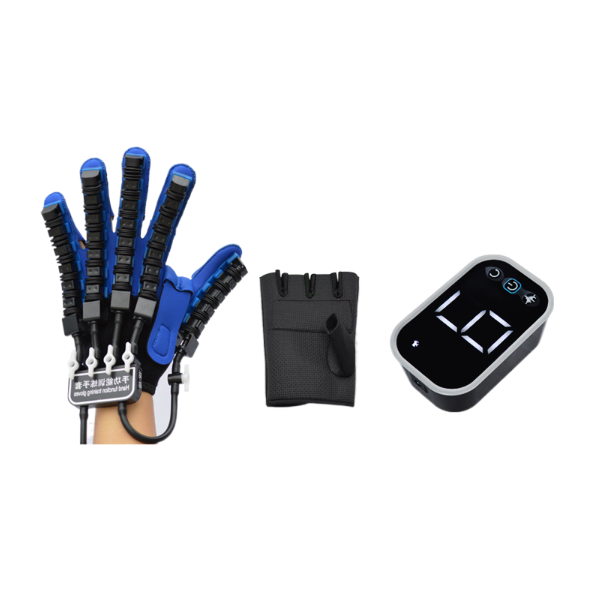

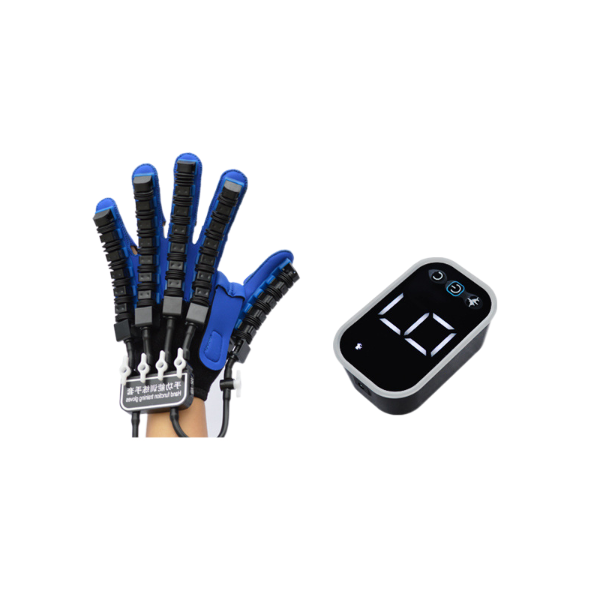
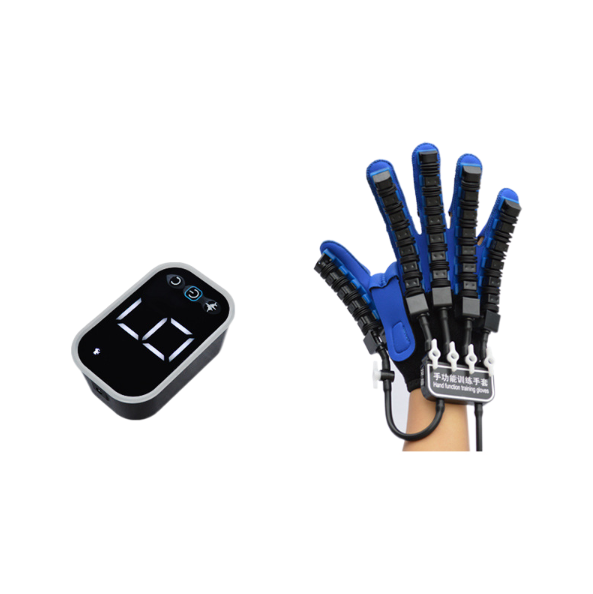
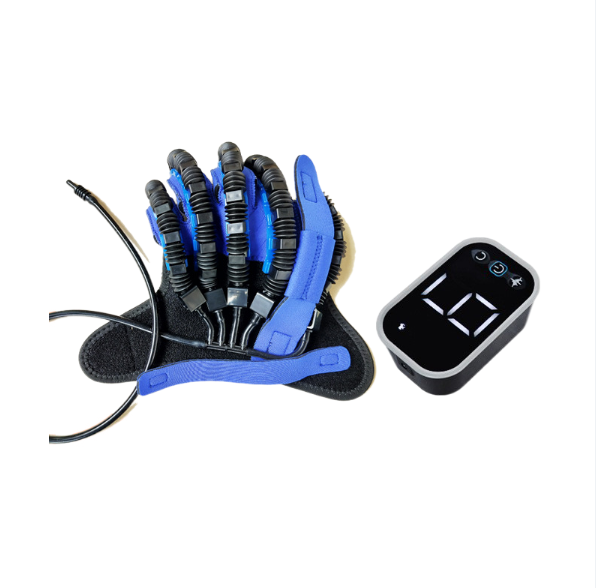


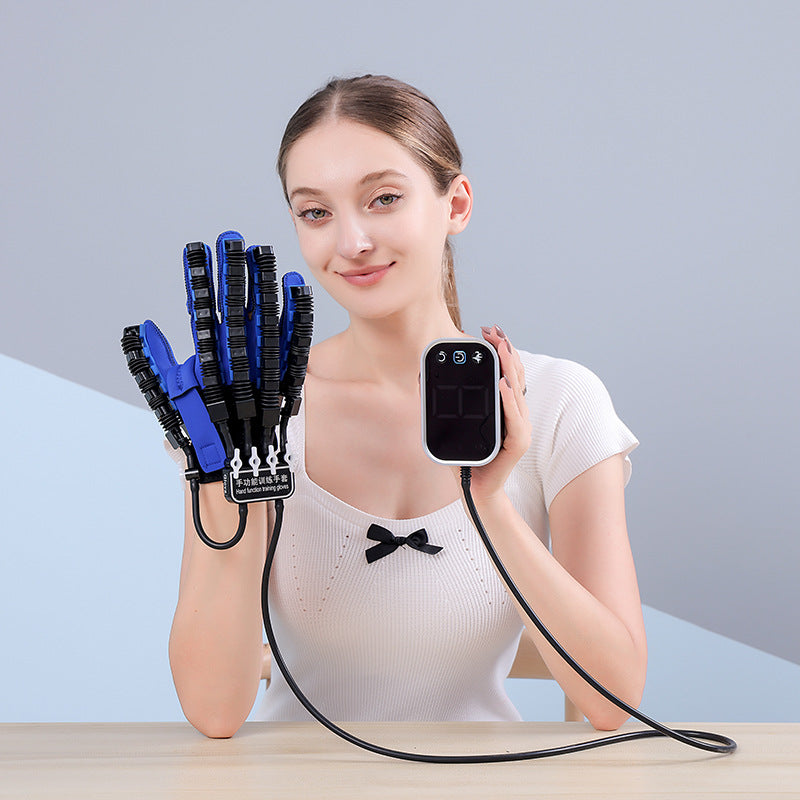


Robotic hand rehabilitation glove with five independent finger actuators, wireless resistance control, and a protective carrying case.
Read the full descriptionRobotic hand rehabilitation glove with five independent finger actuators, wireless resistance control, and a protective carrying case.
Advanced robotic therapy for finger and hand function recovery in one wearable device
Finger-by-finger robotic rehabilitation that restores hand function after stroke, injury, or neurological conditions — guided by an intuitive digital controller.

Each finger gets a dedicated actuator with ribbed silicone traction. Program them separately — focus on the index and middle fingers while letting the pinky rest. No other home device offers this level of granular control.

Adjust tension in real time via the wireless controller. Start with gentle assistance, then gradually increase resistance as strength returns. The LED display tracks your level — no guesswork, just progressive overload like in a professional clinic.

The entire system packs into a protective carrying case. Use it at home, take it to the office, or have your therapist oversee sessions remotely. Consistent daily practice — the missing ingredient in so many recovery journeys — now fits into real life.
Slide your hand into the glove, secure the wrist band, and connect the controller. The LED screen lights up with your last resistance setting.
Use the controller dial to set the difficulty per finger. Start low, and let the motors gently guide your fingers through full extension and flexion.
Aim for 30-60 minutes of continuous movement. The glove repeats the pattern you select, building muscle memory. Pair it with a podcast or audiobook — the session flies by.
Five motorized finger modules with textile wrist support
LED display with multi-level resistance calibration
Fits all components securely; ideal for clinic visits
Standard AC adapter, 6ft length

After a neurological event, the hand can feel locked. Muscles forget, fingers refuse to extend, and every small task becomes a mountain. Traditional therapy requires hours of one-on-one sessions — expensive and hard to sustain. The gap between where you are and where you want to be feels impossibly wide.
This isn't a one-size-fits-all brace. Each finger gets an independent motorized module, calibrated to your resistance level via the wireless controller. It mirrors the natural biomechanics of hand movement — extension and flexion exactly where you need it. Finally, rehabilitation that adapts to your recovery pace.
A few weeks in, the first sign appears — a finger uncurls without resistance. Then you grasp a mug, turn a doorknob, write a birthday card. The glove becomes less a device and more a bridge back to the life you remember. Consistent sessions at home, on your schedule, rebuild strength and confidence side by side.
The motors assist your fingers through a full range of motion. It may feel strange initially, but you'll notice reduced stiffness right after the session.
You start to engage muscles voluntarily. The controller records higher resistance levels; fingers tremble less at end ranges.
Grasping a water bottle, turning a key, using a fork — these daily actions require less conscious effort. Neuroplasticity is kicking in.
You can write a sentence, hold a phone securely, and self-feed reliably. The glove becomes a maintenance tool rather than a necessity.
Use a soft cloth dampened with mild soap. Avoid alcohol-based cleaners on silicone.
Protects the actuators from dust and accidental drops. Keep away from direct sunlight.
Preserve battery and prevent cable fatigue.
| ROBOGlove | Manual Putty | Basic Splint | |
|---|---|---|---|
| Active finger control | — | — | |
| Resistance calibration | ✓ (14 levels) | Partial (self-regulated) | — |
| Repetition tracking | ✓ (via controller) | — | — |
| Individual finger therapy | ✓ (all 5) | Partial (depends on exercise) | — |
| Portability | ✓ (carrying case) |
It's built for adults recovering from stroke, traumatic hand injury, surgery, or neurological conditions like Parkinson's that impair finger extension and flexion. Always consult your physician or occupational therapist before starting a new rehabilitation protocol.
We recommend daily sessions of 30-60 minutes, 5-7 days per week, based on your therapist's guidance. Consistency is key — the glove supports long-term neuroplasticity through repetition.
Not at all. Plug in the power cable, pair the wireless controller, and slide your hand into the adjustable wrist support. The digital interface walks you through resistance calibration in under two minutes.
Yes, the glove is designed for independent home use. However, we strongly advise having a rehab professional set your initial resistance levels and review your progress periodically to maximize safety and results.
The glove offers low-resistance modes specifically for hands with high tone. Start at the gentlest setting and gradually increase. If you experience pain or excessive fatigue, reduce intensity and consult your clinician.
It doesn't replace a therapist, but it supplements sessions by providing consistent, measurable repetition at home — the kind of high-frequency practice that clinics can't always deliver. Think of it as your personal exercise assistant between appointments.


 Robotic Rehabilitation Glove — Regain Finger Dexterity at Home