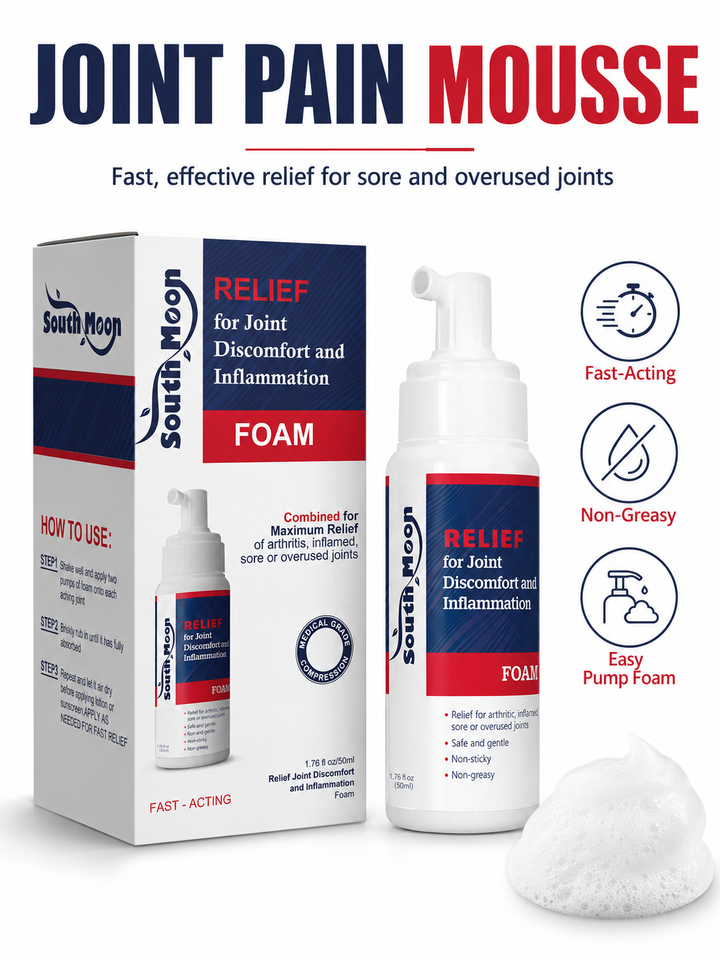
$38.90
Free delivery · 7–14 days
Joint Pain Relief Foam — Fast-Acting, Non-Greasy Comfort


Find practical joint support for hands, knees, back, and other areas with creams, sprays, and arthritis gloves. This guide explains how topical products and supportive gloves differ, what to check before buying, and how to use them responsibly for temporary comfort.
Start with the area you want to support and the type of help you prefer. Arthritis relief gloves are designed for hand coverage, warmth, compression, and a non-slip grip, making them useful when you want support while handling everyday items. Creams and gels are better suited to targeted application on hands, knees, or other areas, while sprays can be convenient when you want a quick, low-contact application. Compare the product label for active ingredients such as menthol, botanical ingredients, or bee venom, and check whether the formula is scented, greasy, or cooling. If you are searching for joint support tablets or supplements, remember that this category contains topical products and gloves rather than oral supplements.
Topical joint support products differ mainly by format, sensation, and coverage. Foam and cream products can be worked into a specific area, including Joint Pain Relief Foam, Joint Pain Cream, Joint & Bone Pain Relief Cream with menthol, and Joint Care Cooling Cream. Sprays such as Ginger Joint Pain Relief Spray and Joint Care Spray offer fast, touch-free application for areas including hands, knees, and back. A bee venom cream provides another ingredient option, but it requires careful label checking because bee products may not suit everyone. Arthritis Relief Gloves offer wearable hand support rather than a topical sensation. Choose the format that fits your routine, skin preferences, and target area.
Look for clear information about the intended body area, application instructions, ingredients, and warnings. For hand use, consider whether gloves leave your fingers usable and provide a secure grip. For creams and sprays, check whether you prefer a cooling menthol feel, a ginger-based formula, foam, or a non-greasy texture. A product described as fast-acting or instant relief should still be used according to its label; these descriptions do not guarantee the same experience for every shopper. If you are comparing the strongest supplement for joint pain or wondering about joint support herbalife products, separate those searches from topical care. Also check for sensitivities to fragrances, menthol, ginger, bee venom, or other listed ingredients.
Follow the product directions and begin with clean, dry skin when applying a cream, foam, or spray. Use only the amount and frequency stated on the label, and avoid applying topical products to broken, irritated, or infected skin unless a healthcare professional tells you otherwise. Wash your hands after application unless the hands are the treatment area, and keep products away from the eyes and mouth. Do not combine several topical formulas on the same area without checking their instructions. Wear Arthritis Relief Gloves as directed, making sure they are comfortable rather than overly tight, and remove them if you notice irritation, numbness, or worsening discomfort. Stop use and seek advice if a reaction occurs.
One common mistake is choosing a hand product for a knee or back without checking the stated use. Another is assuming that a cooling or warming sensation proves a product is working; sensation varies and does not establish a medical result. Shoppers may also overlook ingredient warnings, especially when considering bee venom, menthol, ginger, or fragranced formulas. Avoid applying extra product because you want stronger support, and do not treat topical creams, sprays, or gloves as substitutes for professional assessment of persistent or severe symptoms. Finally, do not confuse joint support meaning in a wearable product with the claims associated with joint supplements for women, vitamins, or tablets. Compare format, coverage, ingredients, and instructions instead of selecting only by strength wording.
This category may suit adults looking for non-oral options for temporary comfort, targeted topical application, or wearable hand support during everyday activities. Gloves are especially relevant for shoppers focused on hand comfort and grip, while creams and sprays offer more flexible placement on hands, knees, back, or other labeled areas. It may not suit people with known sensitivities to a product's ingredients, open skin, or a history of reactions to bee products. Pregnant or breastfeeding shoppers, people taking medicines, and anyone managing a diagnosed condition should check with a healthcare professional before using unfamiliar products. These items are not a replacement for diagnosis or treatment. Seek medical advice for severe, sudden, persistent, or worsening joint symptoms.
The best option depends on the area and the type of support you want. For hand coverage and grip, consider Arthritis Relief Gloves; for targeted comfort, compare creams, foam, and sprays by ingredients, texture, and application method. Check the label and choose the format you are most likely to use correctly.
Topical products and gloves can provide temporary comfort or practical support for some people, but results vary. A cooling sensation, warming feel, or comfortable compression is not proof that an underlying condition has been treated. Follow the instructions and seek professional advice for symptoms that persist or worsen.
This category does not contain oral supplements; it includes topical products and arthritis gloves. There is no single supplement that is best for everyone, and the right choice depends on your health, medicines, diet, and the reason for your symptoms. Ask a healthcare professional before starting joint support tablets or other supplements.
No vitamin can be relied on to get rid of joint pain, and pain may have many possible causes. Taking a supplement without knowing whether you have a deficiency may be unhelpful or unsafe. Discuss ongoing symptoms and any interest in vitamins with a healthcare professional.
There is no single product or traditional remedy taken by everyone in Japan for arthritis. Treatment and self-care choices vary by person, diagnosis, and medical advice. Avoid choosing a supplement based only on its country association; check ingredients, warnings, and suitability instead.
Joint discomfort does not identify a specific vitamin deficiency. A deficiency can only be assessed appropriately with your health history and, where needed, professional evaluation. Do not assume that a vitamin supplement will address joint symptoms without advice.