
$38.90
Free delivery · 7–14 days
Press-On Nails — Hand-Painted Camellia & Pearl Accents


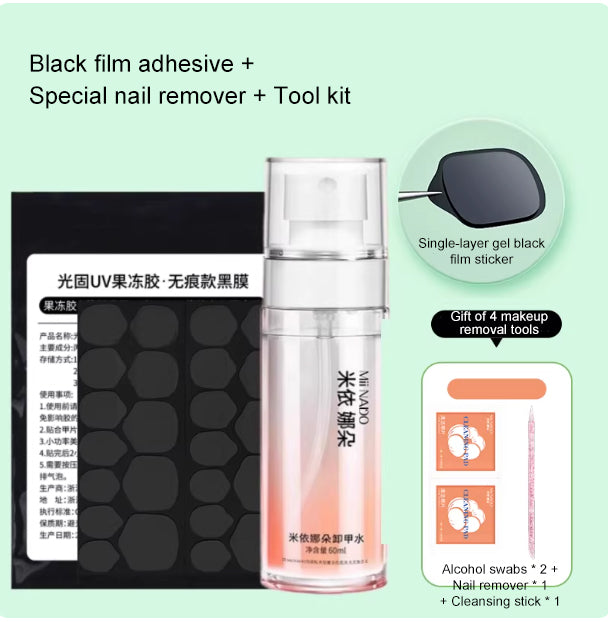
Find nail adhesives for applying press-on nails, securing gel tips, and completing at-home manicures. Choose between liquid nail glue, gel adhesives that cure under a UV or LED lamp, and adhesive nail tabs based on wear time, flexibility, removal, and the type of press-on nail you plan to use.
Start with the nail style and wear time you want. Liquid nail glue is a practical choice for many traditional press-on nails and usually gives a firm bond without a lamp. Gel nail glue is designed to cure under UV or LED light, making it a useful match for compatible gel tips and clear or translucent press-ons. Adhesive nail tabs are convenient when you want a quick, temporary application and easy removal. For an event or short wear, tabs may be enough; for a longer-lasting set, look for a nail glue or gel adhesive that matches the nail material. Also consider the lamp you have: a 36W UV nail lamp, mini USB UV lamp, or 5W LED UV gel lamp must be compatible with the adhesive instructions.
Nail glue is a liquid adhesive applied directly to the natural nail or press-on nail, making it suitable for many standard press-on designs. Gel nail glue has a thicker texture and needs UV or LED curing, so it works best when light can reach the adhesive through the nail tip. Adhesive nail tabs are pre-cut, double-sided pieces that attach without liquid glue or curing. They are clean and convenient, but their hold can vary with nail shape, oil, water exposure, and pressure. If you are comparing nail adhesive versus nail glue, think of adhesive as the broad category: glue and gel are liquid bonding options, while tabs offer a non-liquid alternative for temporary wear.
Check whether the product is made for press-on nails, gel tips, or both, and follow its stated curing requirements. A good fit should allow the press-on to sit flat without excessive gaps, while the adhesive should spread evenly rather than pooling around the edges. Look for an applicator that helps control small amounts, especially on short or narrow nails. If you are using gel nail glue, pair it with a compatible lamp and choose clear or translucent tips so the light can reach the adhesive. For a complete set, consider coordinating products such as almond, ombre, tortoiseshell, or heart-and-swirl press-ons with the appropriate glue, gel adhesive, or tabs.
Wash and dry your hands, then gently push back loose cuticle tissue and lightly shape the natural nail. Remove surface oil and dust, and select a press-on that covers the nail without touching the surrounding skin. For liquid glue, apply a thin, controlled layer and press the tip into place according to the product instructions. For tabs, choose the closest size, smooth it onto the nail, remove the backing, and press the press-on firmly from the cuticle area toward the tip. For gel nail glue, apply the gel, position the tip, remove any overflow before curing, and use the recommended UV or LED lamp. Avoid water and heavy pressure immediately after application.
Applying adhesive over oil, lotion, moisture, or leftover polish can reduce contact with the natural nail. Choosing a press-on that is too small can create lifting at the sides, while one that is too large may touch the skin and catch on clothing. Using too much glue can cause overflow; using too little can leave gaps beneath the tip. With gel nail glue, incomplete curing may result from an unsuitable lamp, an opaque press-on, or an incorrect curing time. Do not forcefully peel off bonded nails, as this can damage the natural nail surface. Instead, follow the adhesive removal directions and stop if the product causes discomfort, redness, or irritation.
Nail adhesives suit shoppers who want to apply press-on nails at home without booking a salon appointment. Liquid glue is a versatile option for traditional sets, while gel nail glue is suited to shoppers who already use a UV or LED lamp and want a cured gel application. Adhesive tabs are useful for short-term styling, quick changes, or anyone who prefers to avoid liquid glue. Press-on collections in almond, gradient, tortoiseshell, and contrasting designs make it easy to change the look without buying separate polish colors. If you want a coordinated gel manicure, a gel polish and suitable lamp can complement the adhesive routine, provided each product is used as directed.
The best option depends on the nail type and how long you want to wear it. Liquid nail glue suits many standard press-ons, gel nail glue suits compatible tips that can be cured with a UV or LED lamp, and adhesive tabs work well for temporary applications and easier removal.
Nail adhesive is a general term that can include liquid glue, gel glue, and adhesive tabs. Neither option is universally better: choose glue or gel for a firmer application, or tabs when convenience and short-term wear are more important.
Choose a glue labeled for press-on or artificial nails and match it to the nail material. For gel nail glue, confirm that the press-on allows light through and use a compatible UV or LED lamp according to the curing instructions.
For a small cosmetic split at the free edge, some people use a nail repair product or a small piece of nail wrap rather than regular press-on adhesive. Do not glue over bleeding, painful, inflamed, or exposed skin; keep the area clean and seek advice from a qualified healthcare professional if the damage is significant or does not improve.
A temporary nail wrap or purpose-made nail repair patch may help protect a minor split, while a small piece of tea-bag-style paper with a suitable nail repair product is another commonly used cosmetic method. Avoid household glue and do not cover a wound or area showing signs of infection.
Do not pull or tear the nail. Keep it trimmed and smooth any snagging edge, then use a purpose-made nail repair patch only if the split is minor and the surrounding skin is intact. If the split is painful, reaches the nail base, follows an injury, or keeps returning, ask a healthcare professional for guidance.