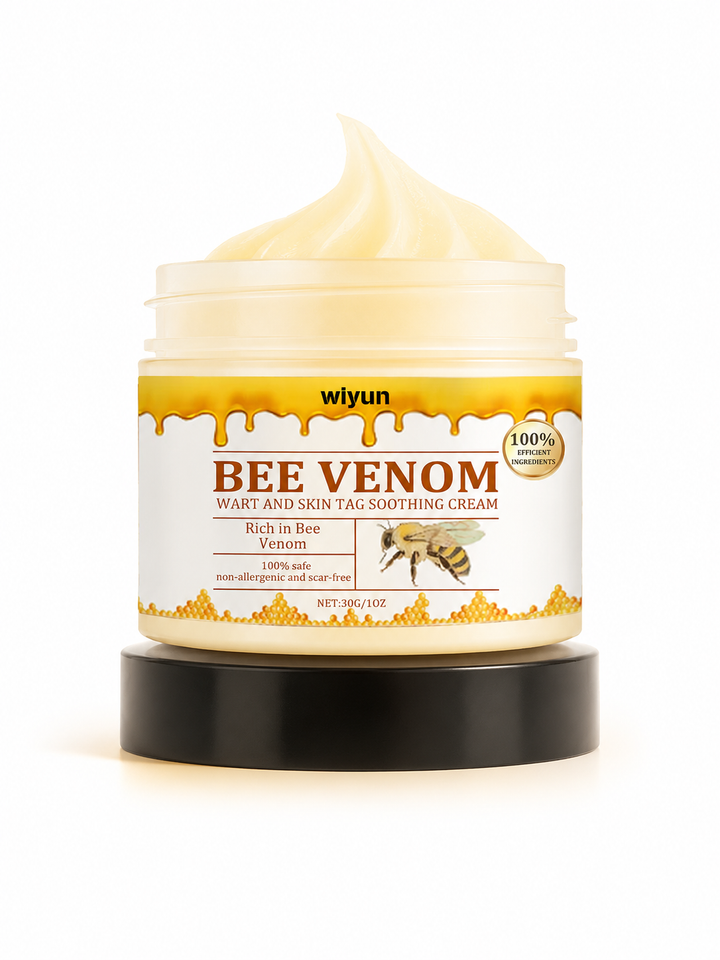
$44.90
Free delivery · 7–14 days
Wiyun Beesvenom Soothing Skin Creme


Bee venom creams and lotions are topical products marketed for joint comfort, itchy-feeling skin, moisture, and skin repair. This guide explains how to compare formulas, check ingredients, use them cautiously, and choose a product that matches your intended area and routine.
Start with the area you want to treat and the product’s stated purpose. Joint creams are generally positioned for knees, hands, shoulders, or other areas where you want a warming or soothing topical routine. Skin-focused formulas may be intended for dryness, rough texture, itchy-feeling areas, hands, feet, or general moisturising. Check whether the label says face, body, or joint use before buying. Compare the full ingredient list rather than relying only on “bee venom” in the title. If you are researching bee venom cream for pain or arthritis, remember that a topical product is not a substitute for professional advice or prescribed treatment. Reviews can help you assess texture, scent, packaging, and ease of use, but individual results vary.
This category includes several distinct formats. Joint and bone care creams are designed for application around areas such as knees, elbows, hands, or shoulders. Itchy-skin and psoriasis-positioned creams are usually marketed for dry-feeling or irritated-looking areas, while repair creams focus on moisturising and a smoother skin feel. Hand-and-foot products may use richer textures for frequently dry zones. Scar or wart-removal products require extra caution because their intended use may differ from ordinary moisturisers. Compare texture, directions, container size, and recommended application area before choosing. A product described as a bee venom lotion may spread more easily, while a cream may feel more concentrated. Choose the type that fits your routine rather than assuming every formula has the same purpose.
Read the ingredient panel before purchase, especially if you have sensitive skin or known allergies. Look for bee venom listed clearly, along with the other active and supporting ingredients, such as moisturisers, plant extracts, fragrance, preservatives, or warming agents. The ingredient list can help explain differences between a lightweight lotion and a richer cream. Check for directions and warnings about broken skin, eyes, lips, face use, or contact with mucous membranes. Do not assume that “natural,” “herbal,” or “gentle” means risk-free. If the seller does not provide a complete ingredient list, usage instructions, or basic contact information, consider another option. Comparing bee venom cream ingredients is more useful than choosing solely from claims such as “fast acting” or “best.”
Follow the product label and apply only to the recommended area. Before broader use, place a small amount on a limited area of intact skin and monitor for redness, itching, swelling, burning, or other unwanted reactions. Wash your hands after application unless the hands are the treatment area, and avoid the eyes, mouth, and broken skin. Do not cover the area with a tight dressing unless the instructions specifically allow it. Stop using the product and seek appropriate medical advice if a reaction is severe, spreads, or does not settle. Keep the container away from children and store it as directed. For face use, choose a formula that specifically permits facial application; do not assume a body or joint cream can be used every day on facial skin.
Anyone with a known allergy to bee stings, bee venom, honeybee products, or an ingredient in the formula should avoid these products unless a qualified healthcare professional advises otherwise. Extra caution is sensible for people with very reactive skin, a history of serious allergic reactions, or unexplained rashes. Do not apply over open wounds, infected-looking skin, or areas close to the eyes unless a healthcare professional or product label specifically says it is suitable. Children, pregnant or breastfeeding people, and anyone using treatment for a skin or joint condition should check with a healthcare professional before use. If you are worried about bee venom and your heart, or about a possible systemic reaction, ask a clinician rather than relying on online reviews.
A common mistake is treating every bee venom cream as interchangeable. A joint formula may not be suitable for the face, while a facial or moisturising product may not be intended for joints. Another is ignoring the complete ingredient list, patch testing, or warnings because a listing promises quick relief. Shoppers also sometimes judge effectiveness from a single review or assume a tingling sensation proves that a product is working. Read several reviews for practical details such as consistency, scent, absorption, and packaging, but keep expectations realistic. Avoid applying more than directed, combining several new products at once, or using a cream on damaged skin. If symptoms are persistent, worsening, or unusual, seek professional advice instead of repeatedly changing topical products.
Results can vary by formula, skin, and intended use, and product listings or reviews do not prove that a cream will work for everyone. These products are topical cosmetics or comfort products unless specifically regulated and labelled otherwise, so use the stated directions and avoid treating them as a replacement for medical care.
Dermatologists generally consider the full formula, the person’s skin history, and the intended application area rather than focusing on the ingredient name alone. Bee venom can cause unwanted reactions, so people with allergies or sensitive skin should seek professional guidance and patch test only as directed.
People with a known allergy to bee venom, bee stings, honeybee products, or any listed ingredient should avoid it unless advised otherwise by a qualified professional. Do not use it on broken skin or near the eyes, and ask a healthcare professional before use if you are pregnant, breastfeeding, treating a skin condition, or considering it for a child.
Only use it on the face if the product label specifically allows facial application and gives suitable frequency instructions. Patch test as directed, avoid the eye and lip area, and stop if you notice irritation, swelling, or persistent redness.
A topical bee venom product may still cause an allergic reaction in susceptible people, but online product descriptions cannot determine your personal risk or answer heart-related concerns. If you have heart disease, take regular medication, or are worried about a reaction, ask a healthcare professional before use and seek urgent help for severe breathing, swelling, or faintness.
Possible unwanted effects may include local redness, itching, burning, irritation, or swelling, particularly in people who are sensitive or allergic. Stop using the product if a reaction occurs; seek urgent medical help for serious symptoms such as trouble breathing, widespread swelling, or feeling faint.
Browse related: Shop all Hand Cream for Dry Skin: Rich, Moisturizing Hand Lotion · explore hair removal products: creams and lotions for smooth skin.