
$49.90
Free delivery · 7–14 days
Spiral Potato Cutter with 4 Stainless Steel Spits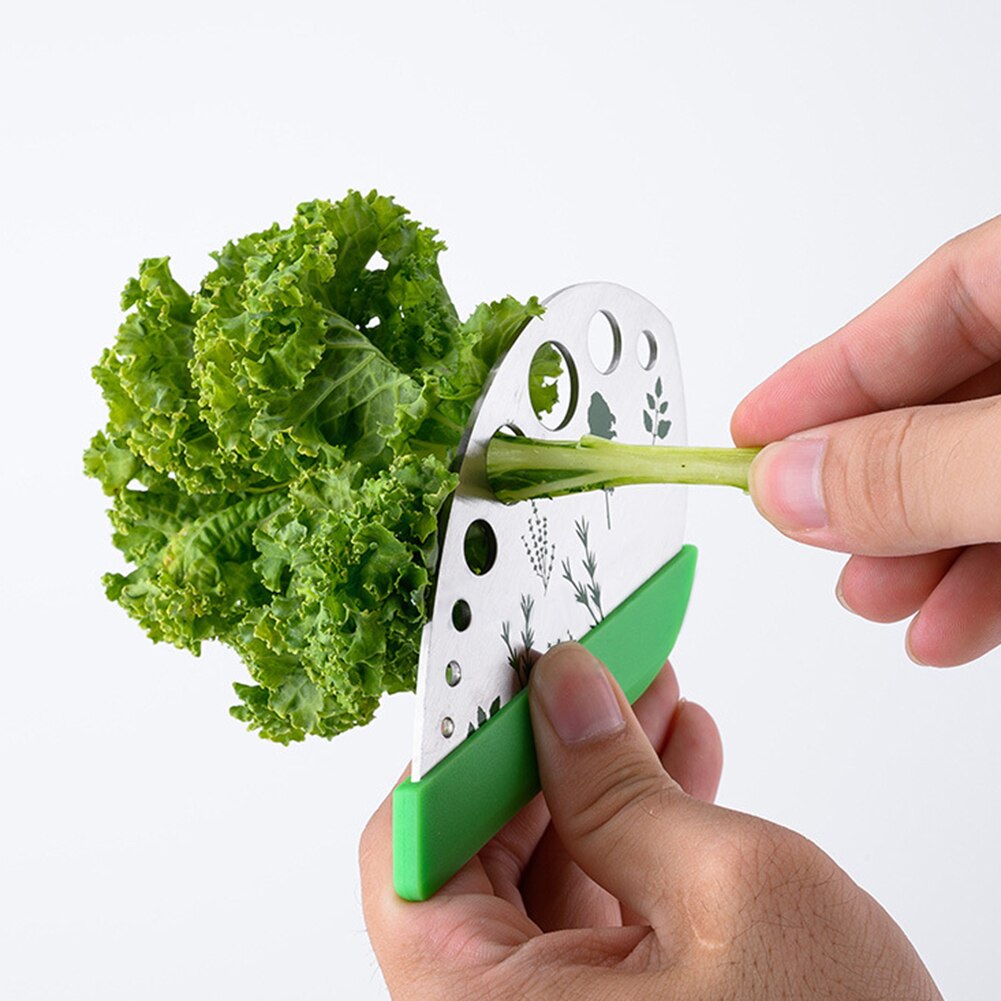


Herbs go from bunch to bowl in seconds, and the leaves come off whole and bright. Nine graduated holes match thin basil and thyme stems through to thick kale and chard ribs. One compact stainless tool replaces the slow, bruising work of pinching leaves by hand.
Read the full descriptionHerbs go from bunch to bowl in seconds, and the leaves come off whole and bright. Nine graduated holes match thin basil and thyme stems through to thick kale and chard ribs. One compact stainless tool replaces the slow, bruising work of pinching leaves by hand.
Strip herb leaves off stems in seconds with nine graduated holes
Tired of pinching leaves one by one while bruised basil piles up on the board? Nine graduated holes pull the leaves off clean, so the herbs go into the pan whole and fresh.

The nine openings run from 1 mm to 15 mm across the blade. The smallest holes take thyme and basil stems, and the widest take thick kale and chard ribs. You stop guessing and stop forcing a stem through the wrong size.

The blade is 430 stainless steel with a PP protective cover in the box. The steel resists rust and corrosion and keeps its shape, so the holes stay true over time. At 12.3 by 6.9 cm, it fits a drawer without crowding the other tools.

The rounded blade strips large leaves, and the same edge chops soft vegetables, dough and fruit. One compact stainless tool covers the herb pile and the cutting board, so there is less to dig out of the drawer.
Pat the bunch dry with a towel. Wet stems slip through the holes and leave the leaves clumped.
Start with a smaller hole for thyme and basil, and move up through the sizes for rosemary and thick kale ribs.
Hold the green grip, slide the stem through the hole, and pull down. The leaves drop off and the bare stem stays behind.
Rinse under water, dry the blade fully, and keep it in a drawer. Trapped herb residue is what leaves spots on steel over time.
430 stainless steel blade with nine graduated holes and a green plastic grip
PP cover that keeps the blade protected between uses
Thyme and basil stems fit the smaller holes, and rosemary and thicker stems move up the sizes. The holes run from 1 mm to 15 mm, so one tool covers thin herb stems and thick greens ribs. Start with a small hole and step up if a stem sticks.
Yes. The widest holes, at 13 mm and 15 mm, take thick kale, chard and collard stems. Pull the stem slowly from the top and the leaves come off whole. Very thick ribs may need a second pull to clear the hole.
The blade is 430 stainless steel, a food-grade steel that resists rust and corrosion and will not warp. Rinse it after use and dry it fully before storing. The PP protective cover keeps the blade covered in the drawer.
For a single small sprig, hand picking is fine. For a full bunch of rosemary, kale or chard, the holes win. You pull each stem once instead of picking leaf by leaf, and the leaves stay whole instead of getting crushed in your fingers. If you buy fresh herbs every week, the time saved adds up fast, and the tool costs less than a few bunches of pre-cut herbs.
Yes. The rounded blade strips large leaves and also cuts vegetables, dough and fruit. It is a light prep blade, not a chef's knife, so use it for soft produce and keep your heavier knife for hard vegetables.


 Stainless Steel Herb Stripper with 9 Holes for Kale