
$64.90
Free delivery · 7–14 days
Milk Honey Hand Wax for Soft, Bright Exfoliated Hands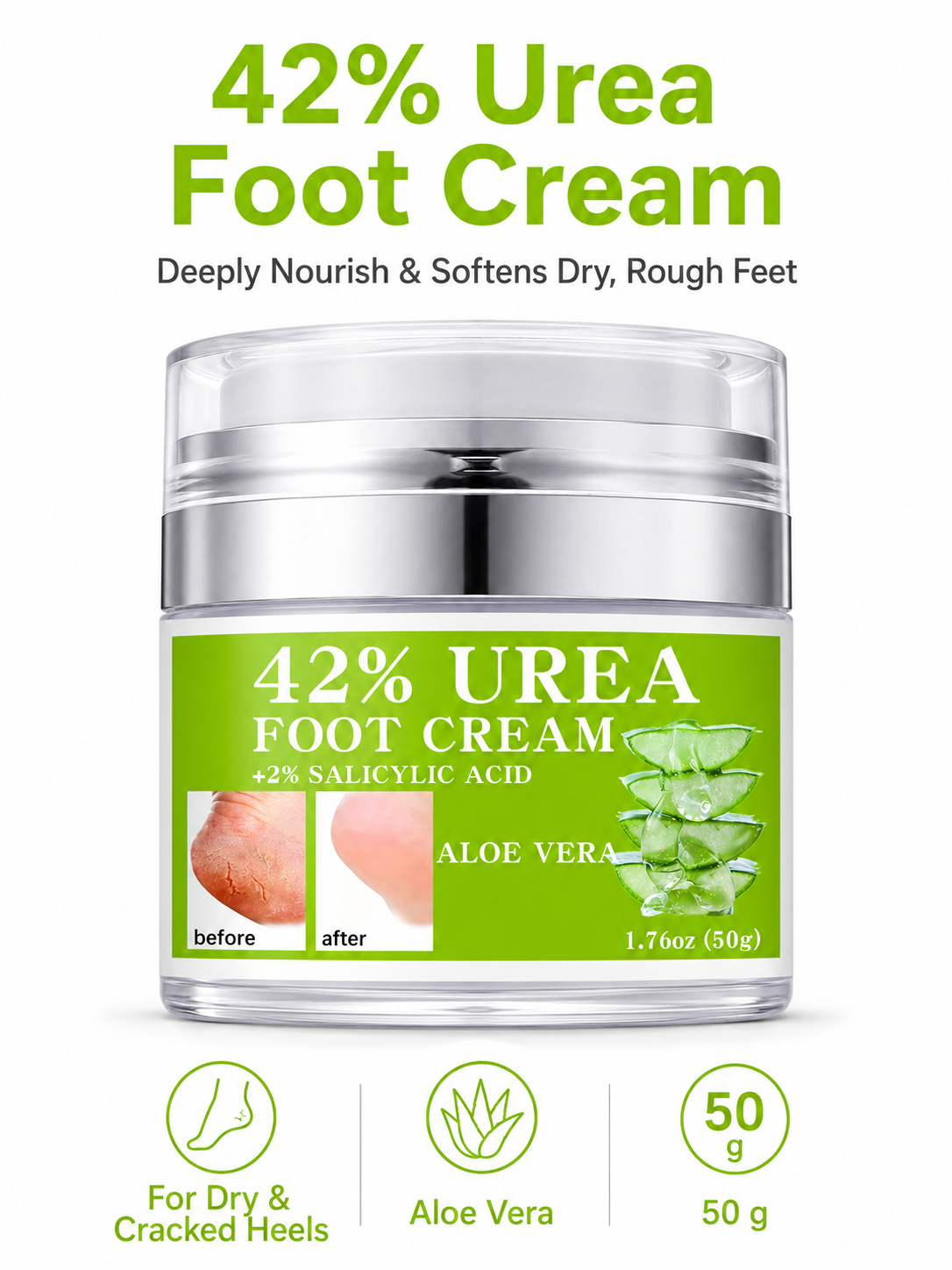
A clinical-strength cream delivering 42% urea and 2% salicylic acid to dissolve hardened calluses and seal deep heel cracks in 2–3 weeks.
Read the full descriptionA clinical-strength cream delivering 42% urea and 2% salicylic acid to dissolve hardened calluses and seal deep heel cracks in 2–3 weeks.
Visibly soften severely cracked heels in 2-3 weeks with clinical-strength 42% urea formula
42% urea plus 2% salicylic acid go where basic moisturizers never reach: dissolving hardened calluses, filling deep fissures, and restoring the kind of smooth skin you thought was gone for good.
Urea at this concentration penetrates the stratum corneum and breaks down excess keratin from within. It is hygroscopic too — meaning it draws moisture into the tissue it softens, treating dryness and hardness simultaneously rather than as separate problems.
Salicylic acid loosens the bonds between dead skin cells on the surface, allowing urea deeper access with every application. The two actives form a dual-action system: salicylic acid prepares the surface, urea completes the work underneath.
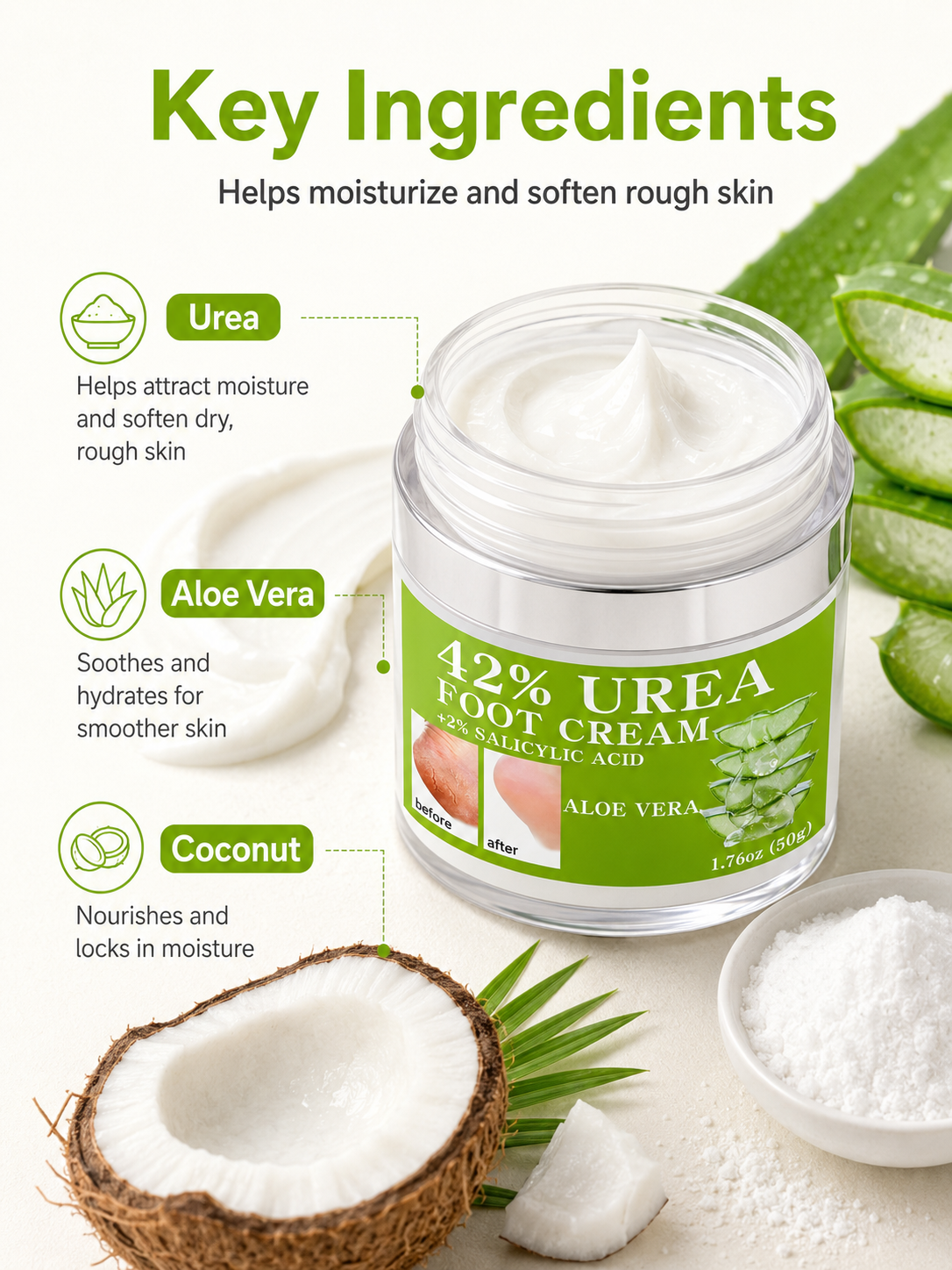
Once the hard outer layer starts to shift, the skin underneath needs immediate, lasting hydration. Aloe vera calms and soothes; coconut oil seals in moisture; hyaluronic acid attracts water at a cellular level. The result is softened skin that stays soft.
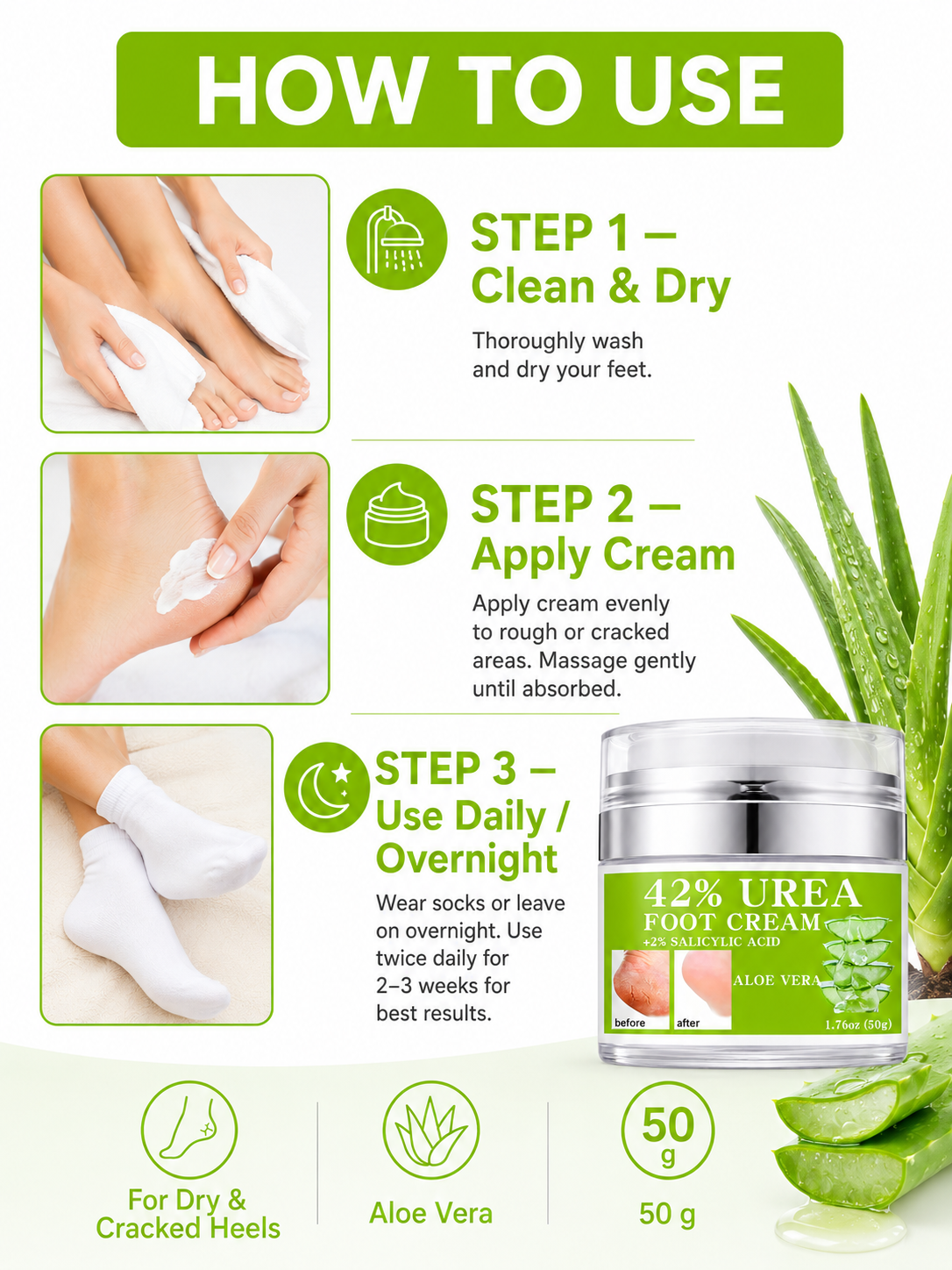
Clean the affected area with mild soap and water. Pat completely dry — moisture on the surface dilutes the actives and slows penetration. This step takes thirty seconds and significantly affects efficacy.
Scoop a pea-sized amount from the wide-mouth jar and work it into the cracked or thickened skin using circular motions. You do not need heavy coverage — the high urea concentration means a thin, even layer outperforms a thick one.
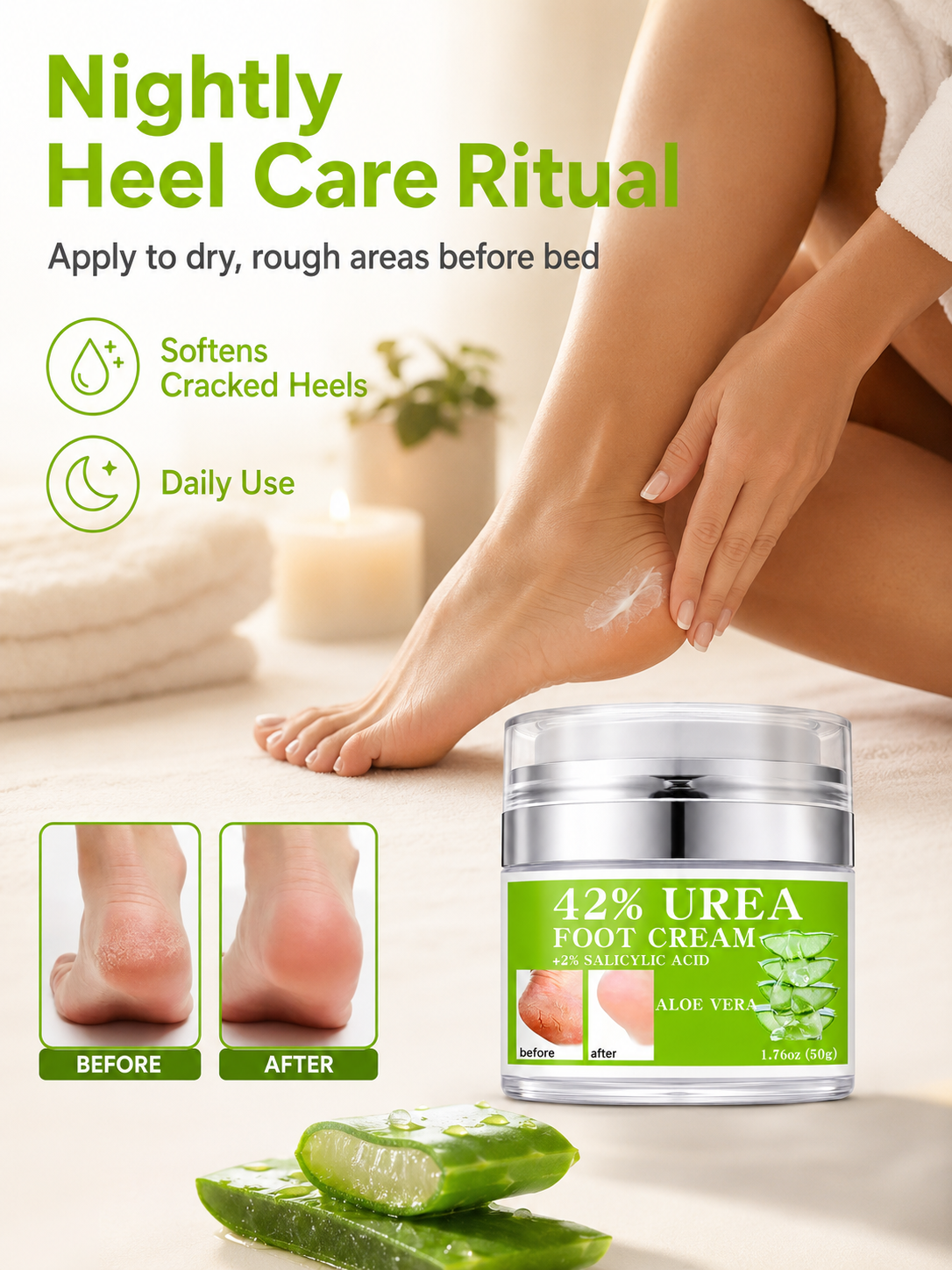
Apply twice daily — once in the morning and once before bed. The bedtime application is particularly effective: cover with cotton socks overnight to lock in moisture and maximise contact time while you sleep.
Keratolytic treatment is cumulative. Skipping days resets progress. Commit to the full 2-3 week window and the transformation becomes visible; once you reach smooth skin, shift to maintenance applications as needed.

Standard lotions sit on the surface. They soften the top layer briefly, then evaporate — leaving thickened, callused skin exactly as it was. For severely cracked heels, that cycle is pointless. The real barrier is dead keratin that has built up over months, and no amount of shea butter gets through it.
At 42%, the urea concentration here sits in the clinical range — the same tier used in dermatology practices for hyperkeratotic conditions. Urea works by breaking down the hydrogen bonds in hardened keratin, gently but systematically dismantling the dead-skin fortress. Paired with 2% salicylic acid to loosen scale and exfoliate, then finished with aloe vera, coconut oil, and hyaluronic acid to flood softened tissue with moisture, the formula does not stop at the surface.
Keratolytic — dissolves and softens hardened dead skin tissue
Exfoliant — loosens surface scale and enhances urea penetration
Soother — calms irritated skin and aids barrier repair
Emollient — seals in moisture and leaves skin supple
Humectant — draws water into softened tissue at a cellular level
| This Formula | Standard Foot Cream | |
|---|---|---|
| Urea concentration | 42% | 10–20% |
| Keratolytic (dissolves hard skin) | — | |
| Salicylic acid exfoliant | — | |
| Hyaluronic acid hydration | Rarely | |
| Visible results timeline | 2–3 weeks | Varies / often none |
| Suitable for severe cracks | — |
Urea concentration determines how deeply the ingredient penetrates hardened keratin. At 10-20%, urea primarily hydrates. At 40%+ it becomes keratolytic — meaning it actively breaks down and dissolves thickened dead skin tissue rather than just softening the surface. This formula is designed for severely cracked or callused skin that has not responded to standard moisturizers.
At 2%, salicylic acid is an established cosmetic exfoliant and is well-tolerated by most skin types when used as directed on thickened foot skin. If you have a known salicylate sensitivity or open wounds, avoid application to broken skin and consult a healthcare provider before use.
Yes — the product is formulated as a hand and foot cream. The same keratolytic action that works on thick heel skin is effective for rough, cracked knuckles and dry hand skin. Because hand skin is generally thinner than heel skin, results often appear faster.
A small amount is sufficient per application at this concentration — you do not need to layer it heavily. For a single area (both heels), 50ml used twice daily typically lasts through a full 2-3 week treatment course with product to spare for maintenance.
The protocol is straightforward: clean and thoroughly dry the affected area before each application. Applying to damp or dirty skin dilutes the actives. Some users accelerate results by gently exfoliating with a pumice stone before the first application of the day.


 42% Urea Foot & Hand Cream for Cracked Heels | 50ml