
$34.90
Free delivery · 7–14 days
Korean Gonggi Game for Focused Screen-Free Family Play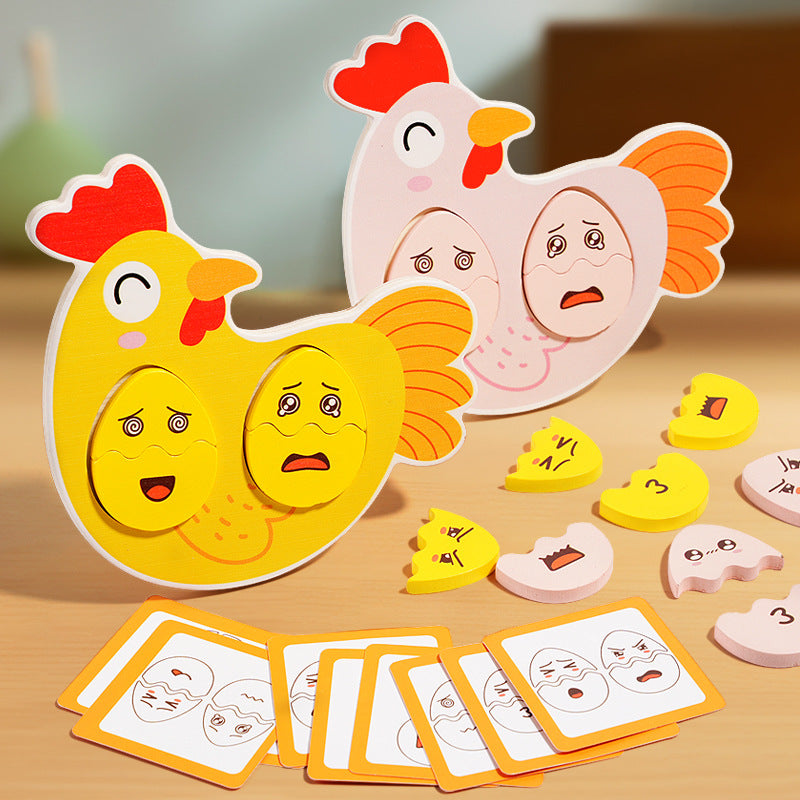
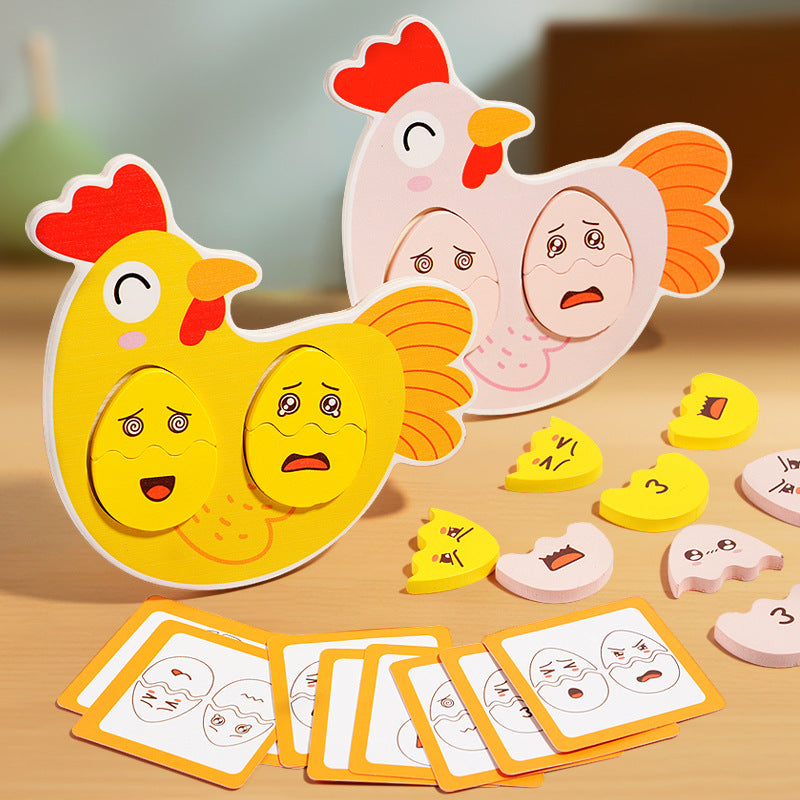
Every face they build becomes a small, joyful lesson in feelings, focus, and thinking together.
Read the full descriptionEvery face they build becomes a small, joyful lesson in feelings, focus, and thinking together.
Playful two-person emotion matching that builds early reasoning and emotional recognition skills.
When screens struggle to hold attention, children can build, match, and recognize emotions through hands-on play. Parents get a playful way to connect while early reasoning skills grow.
Interchangeable facial-expression pieces let children actively assemble and inspect different emotions instead of only looking at static pictures.
Illustrated challenge cards give children a concrete visual task: study the expression, build the face, and match the result.
Thick-looking wooden construction, smooth surfaces, and rounded silhouettes make the pieces inviting for hands-on indoor play.
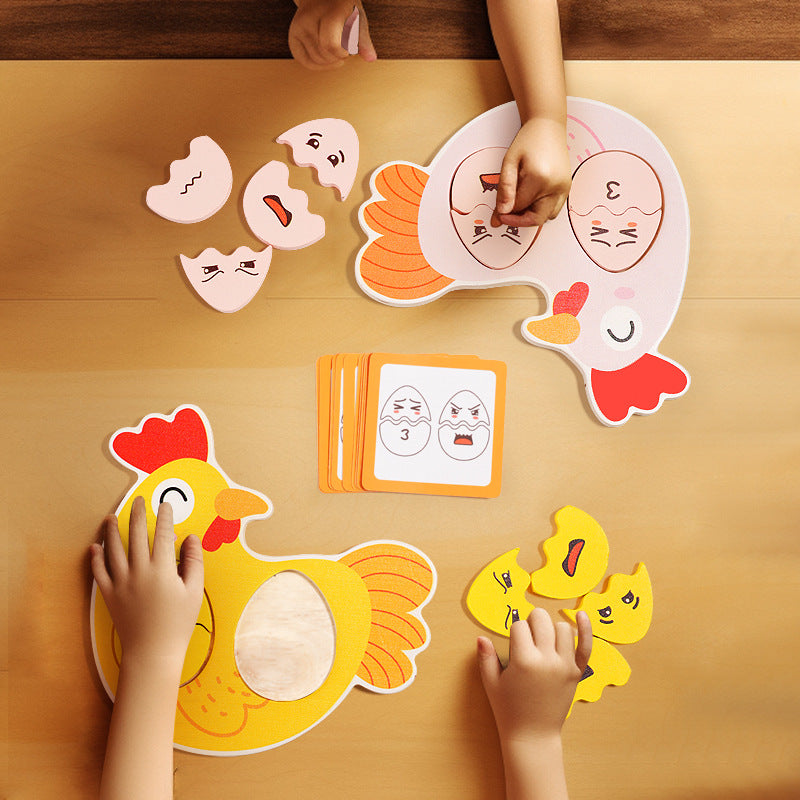
Place an illustrated challenge card where both players can see it. Ask the child what expression the face seems to show.
Sort through the wooden eyes, mouths, and expression pieces, then place the matching parts on a chicken-shaped board.
Look at the finished face beside the card. Celebrate careful noticing and talk about moments when someone might feel that way.
Let the child choose the next card or offer a gentle hint. Taking turns keeps the game shared rather than turning it into a test.
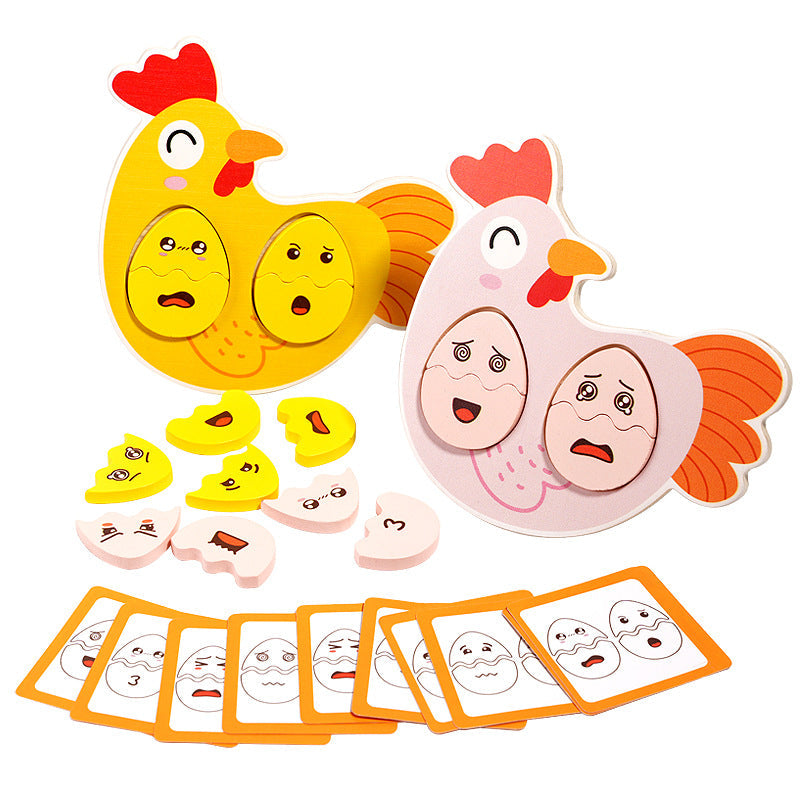
A bright game base for building expressive faces.
A second board for two-person play.
Interchangeable wooden pieces for assembling expressions.
Visual prompts that guide the matching game.

Some afternoons become a loop of short attention and screen requests. Flashcards can feel like lessons, while ordinary blocks give children little reason to talk about what a face is showing. This game gives hands and minds one shared place to begin.

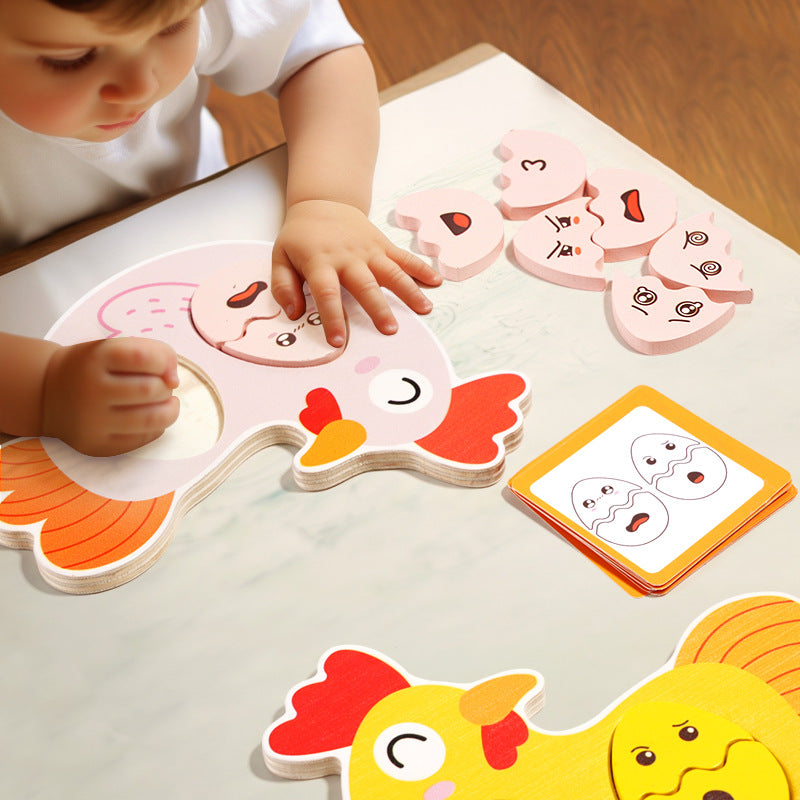
A child chooses a card, studies the eyes and mouth, then builds the expression piece by piece. Feelings become something visible and touchable, giving children a natural way to compare details and find words for what they see.

The best moment is often the pause after a match. Child and parent look at the finished face together, smile, and talk about the feeling behind it. A small table game becomes focused time that belongs to both of you.
| This game | Emotion flashcards | Ordinary blocks | |
|---|---|---|---|
| Two-person interaction | Yes | Partial | Partial |
| Children build facial expressions | Yes | No | No |
| Visual challenge prompts | Yes | Partial | No |
| Logical matching task | Yes | Partial | No |
| Hands-on fine motor practice | Yes | No | Yes |
| Emotional context | Yes | Yes | No |
The set includes a yellow chicken-shaped board, a pink chicken-shaped board, a set of emotion face pieces, and illustrated challenge cards. Together, they create the two-person face-building activity.
Yes. The cards and interchangeable pieces give children a concrete way to study an expression instead of relying on abstract explanations. An adult can name the feeling, point out facial details, and let the child build at their own pace.
The two-player layout is made for parent-child or child-to-child play, so adult participation is part of the appeal. A child who knows the matching loop can also explore the pieces independently, with supervision.
Flashcards show expressions, while ordinary blocks leave the activity open-ended. This game combines visual prompts, physical face-building, logical matching, and conversation in one shared activity.
The pieces have smooth surfaces, rounded silhouettes, and thick-looking wooden construction. Caregivers should still inspect the set and supervise age-appropriate play.
The card gives the child a clear starting point, while the adult can offer a gentle hint or build alongside them. Start with simple comparisons and keep the goal on noticing and talking, not getting every answer right.


 Wooden Emotion Matching Game for Focus, Logic & Feelings