
$49.90
Free delivery · 7–14 days
Stainless Steel Fish Scale Remover: Clean Fish Fast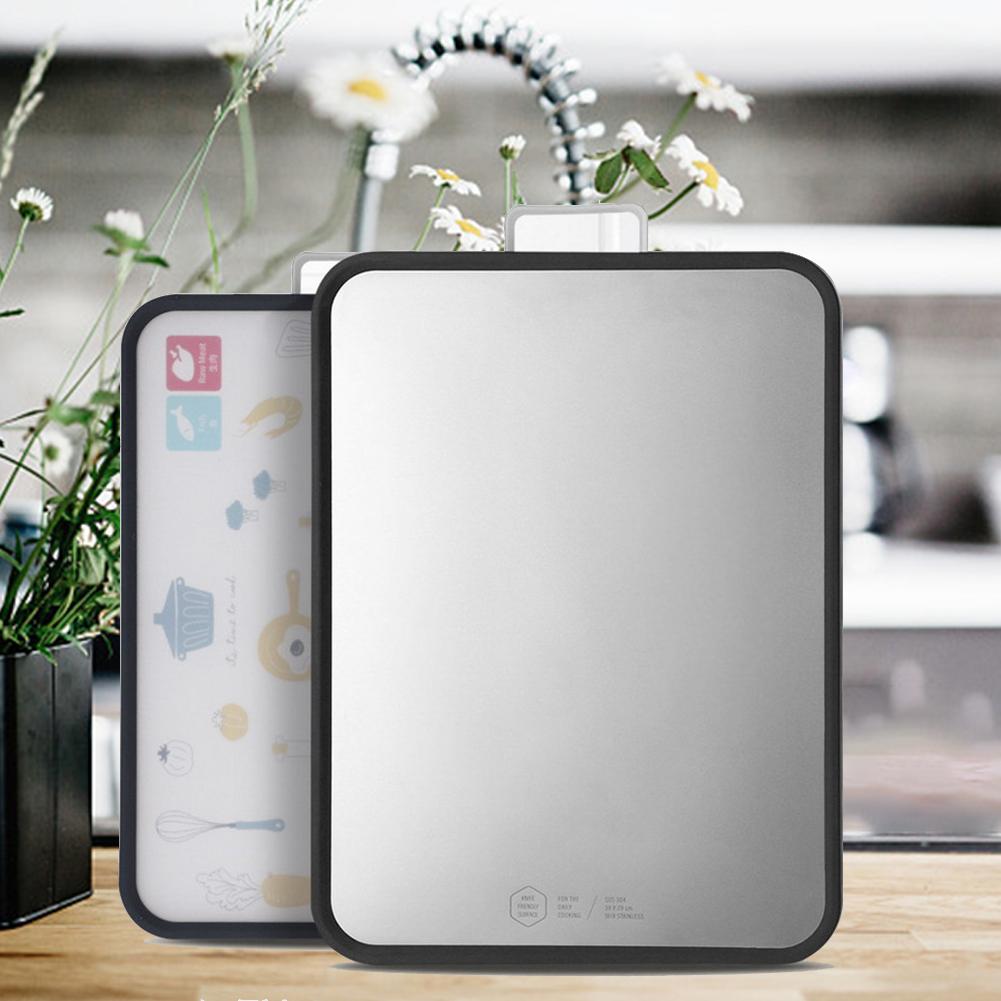


A thick 304 stainless steel board that keeps raw meat and fish on one side and produce on the other. The brushed surface rinses clean, and the TPR rim holds it still while you cut.
Read the full descriptionA thick 304 stainless steel board that keeps raw meat and fish on one side and produce on the other. The brushed surface rinses clean, and the TPR rim holds it still while you cut.
Double-sided stainless steel cutting board that is knife-friendly, non-slip, and easy to clean
Tired of knife-scored plastic that smells of last night's chicken? Switch to a thick 304 steel side for raw protein and a PP side for produce, on a board that doesn't slide.

The brushed 304 stainless steel side takes raw chicken, beef and fish. Flip the board and the printed food-grade PP side handles cheese, fruit and pastry. The meat never touches the produce, and you rinse the steel before the next task.
A soft TPR border runs all the way around the edge and grips the counter. The board stays flat through a steady chopping rhythm, and liquid poured across the steel does not push it off the counter.

At 22 mm thick with a built-in handle, the board feels solid under the knife. It is also easier to lift off the counter than a thin board, which tends to flex and slide.
Run the steel side under hot water with dish soap, then rinse clean.
Wipe with a soft cloth and let it air dry to keep the brushed finish.
Standing water can wear the TPR rim, and the printed PP side is not meant for soaking.
Wipe the charcoal TPR border so residue does not collect along the edge.
Thick enough to stand upright on the counter
Steel is firmer than wood or plastic, so a blade needs honing more often than it would on end grain. Keep a steel rod nearby and run the edge across it before a big prep session. For soft produce, use the PP side.
Stand it upright in a rack or against the back of a cabinet. The built-in handle gives you a grip for lifting it out. Lying flat takes more room than most kitchens have, so upright is the better fit.
Use the 304 stainless steel side for raw meat and fish. Keep the printed PP side for cheese, fruit, pastry and dough. Rinse the steel with hot water and dish soap between tasks.
Hand washing is the method to use. Rinse the steel under running water and wipe it dry. Skip long soaks, since standing water can wear the TPR rim and the PP side is not meant for soaking.
Brushed 304 stainless steel and a 22 mm body cost more to make than thin plastic. Plastic boards grow knife grooves and odors, then get replaced every year or two. A steel board does not hold grooves the way plastic does, so the cheaper board often ends up costing more over time.


 Stainless Steel Cutting Board: Double-Sided, Non-Slip