
$48.90
Free delivery · 7–14 days
Titanium Plated Stainless Steel Flatware Set for 4

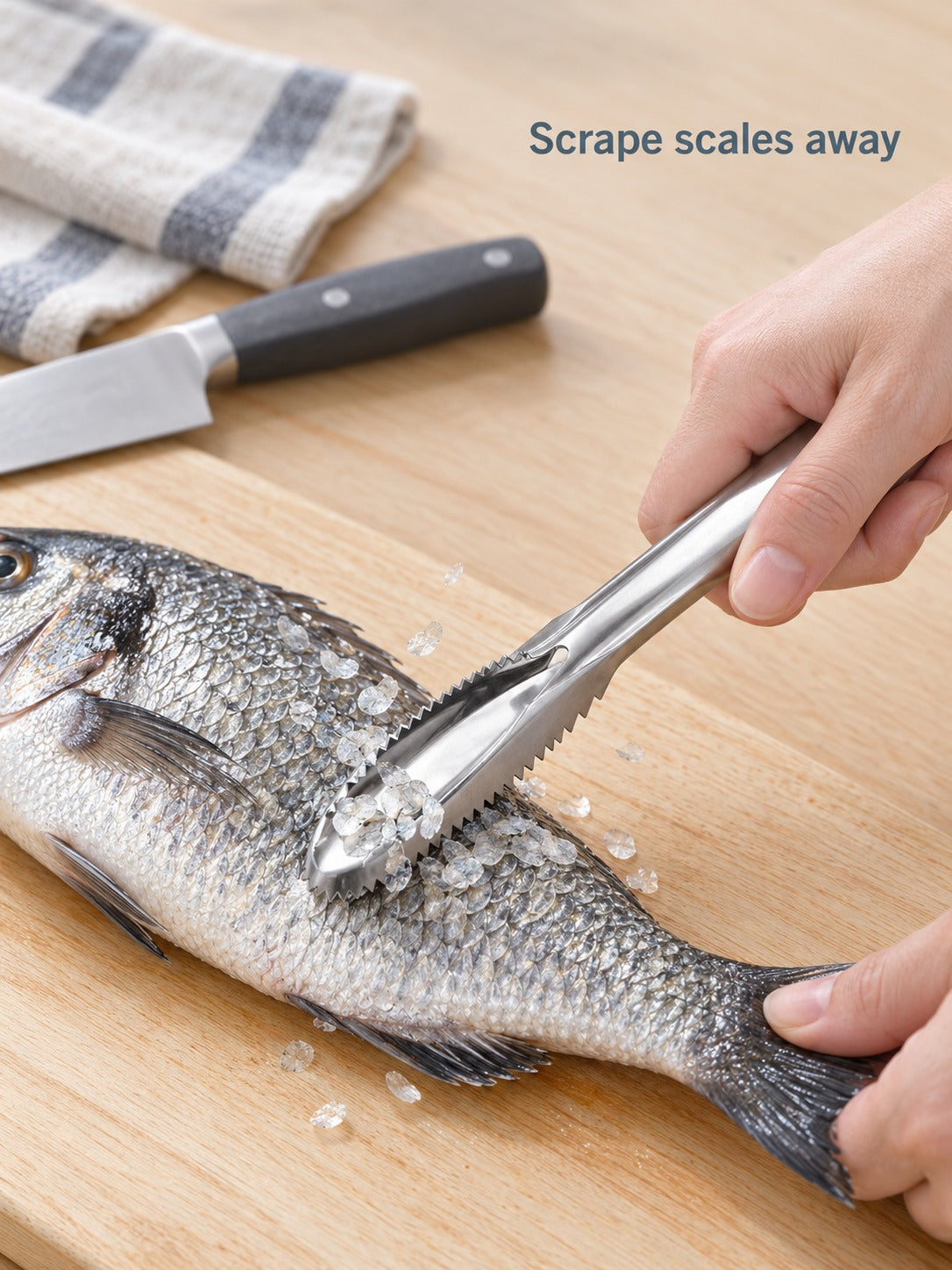

Whole fish used to mean scales on the walls, a slipping knife and a sink full of mess. This stainless scaler lifts the scales off in a few clean strokes, so prep stays on the board and dinner comes sooner. It is built for carp, bream and tilapia cooked at home.
Read the full descriptionWhole fish used to mean scales on the walls, a slipping knife and a sink full of mess. This stainless scaler lifts the scales off in a few clean strokes, so prep stays on the board and dinner comes sooner. It is built for carp, bream and tilapia cooked at home.
Removes fish scales quickly and cleanly with one stainless steel tool
Before: scales fly across the kitchen and a knife slips. After: one stainless tool lifts them off in strokes, and your prep stays contained.

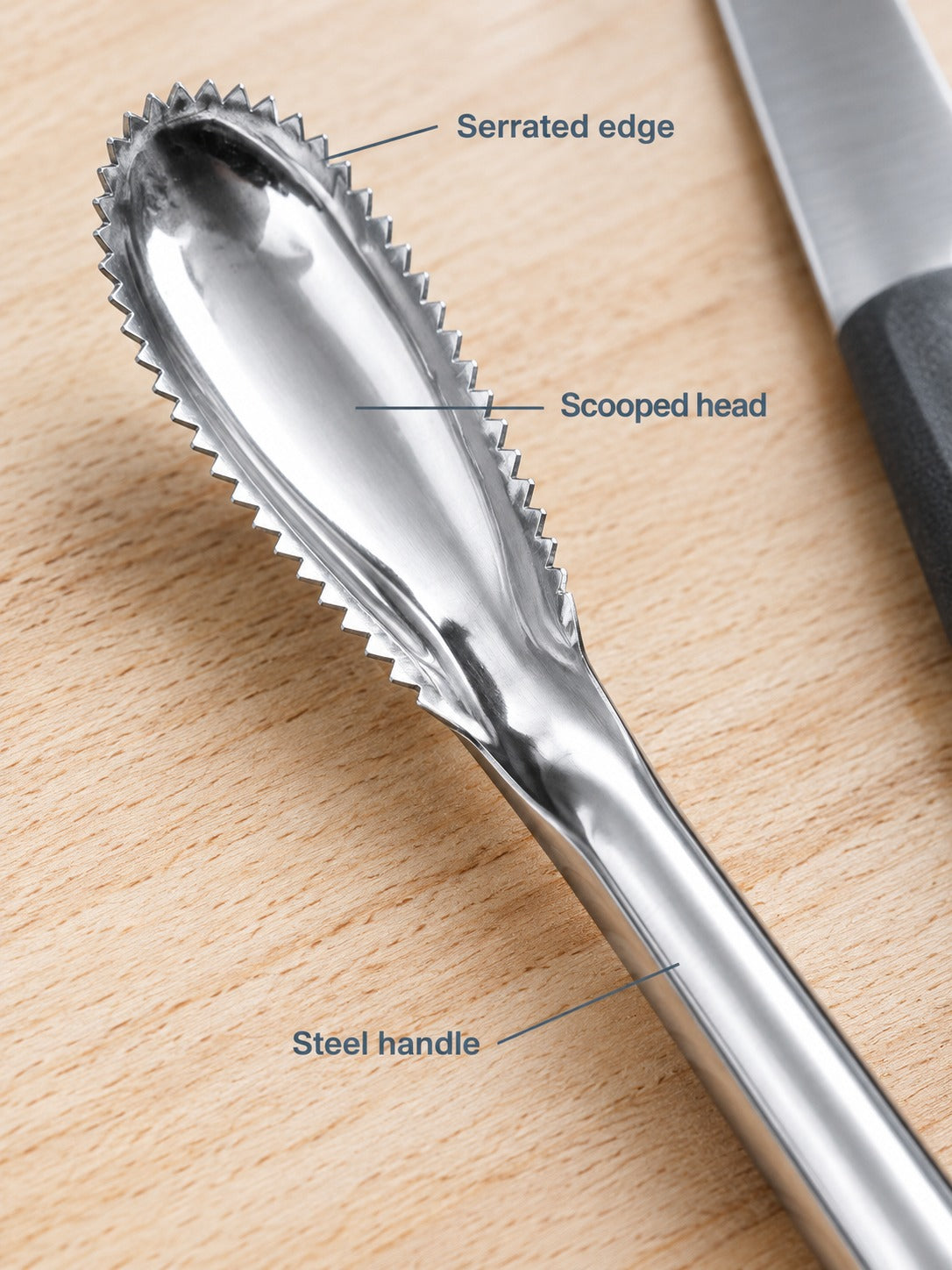
The slots catch each scale and lift it in a single stroke, where a knife edge skids and scatters them. The blade is brushed stainless, so it wipes clean and keeps its shape pass after pass.

The serrated edge teeth grip the fish skin, so the tool stays on track through each stroke. You spend less effort holding the fish still and more on the scales.

The stainless version has a hanging loop, and the mint and pink handles have a hanging hole. Either way the tool dries on a hook between jobs and stays out of the drawer while damp.
Hold the fish firmly by the tail so the skin is taut and the scales lie in one direction.
Scrape toward the head with the slotted blade, following the way the scales lie. Working against the grain tears skin and leaves scales stuck in place.
Rinse the blade under running water after each pass. Scales and slime build up on the teeth and reduce grip.
Check the area near the fins for missed scales, then hang the tool on its loop or hole to dry.

Anyone who has scaled a carp with a kitchen knife knows the routine. The blade skids on wet skin, scales spray across the counter and the sink, and the job drags on longer than it should. Every skipped patch sends you back over the same fish.

A stainless blade with slotted teeth works the scales loose along the grain of the fish. The teeth catch each scale and lift it in one stroke, where a knife edge smears them across the skin. The serrated edge gives your grip something to hold on slick skin.

Scaling now takes minutes, the counter stays mostly clear and the fish goes straight to the pan. Rinse the tool, hang it on its loop or hole, and the drawer stays tidy until the next whole fish.
Dried scale and fish oil build up along the serrated edge. Rinse it before it sets.
Wipe or towel dry, then store. Dry steel keeps its finish and resists rust in normal use.
Use the hanging hole to keep the edge off other utensils and out of the drawer clutter.
A quick wipe between fish keeps the edge working at full bite during a batch.
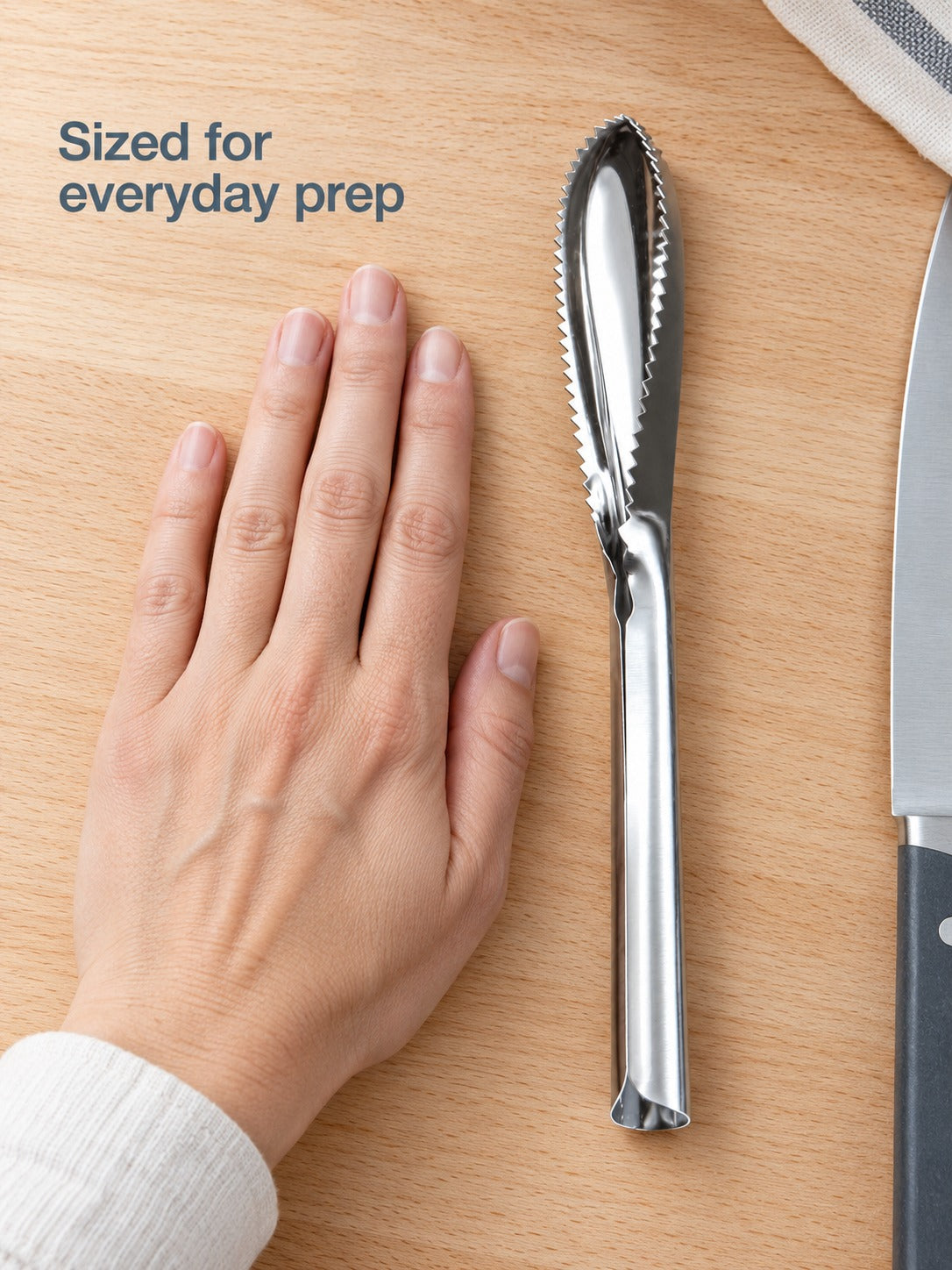
Light enough to hold in one hand for the whole job
For the scales, yes. The slotted teeth catch each scale and lift it in one stroke, while a knife edge skids on wet skin and sends scales across the counter. A knife still has its place for cutting, but scaling is the job this tool is built for.
It is built for whole carp, bream and tilapia, so one tool covers all three. Work from tail to head on each fish and check near the fins, since that is where missed scales tend to hide.
The blade is stainless steel on every version. The handle changes the color and the grip, not the cutting edge. Rinse and dry each one after use to keep it in good shape.
Yes. The stainless version has a hanging loop, and the mint and pink handles have a hanging hole. A hook by the sink keeps the blade out of the drawer while it is still damp.
If you cook whole fish often, the tool pays for itself in saved trips and less mess at the sink. A fishmonger visit costs time and money each time, while the scaler stays in the drawer for the next fish. Browse the fish descaler range for other options.


 Stainless Steel Fish Scale Remover: Clean Fish Fast