Motorcycle Lift Stand — 330 lbs Stable Support, 11‑16.5
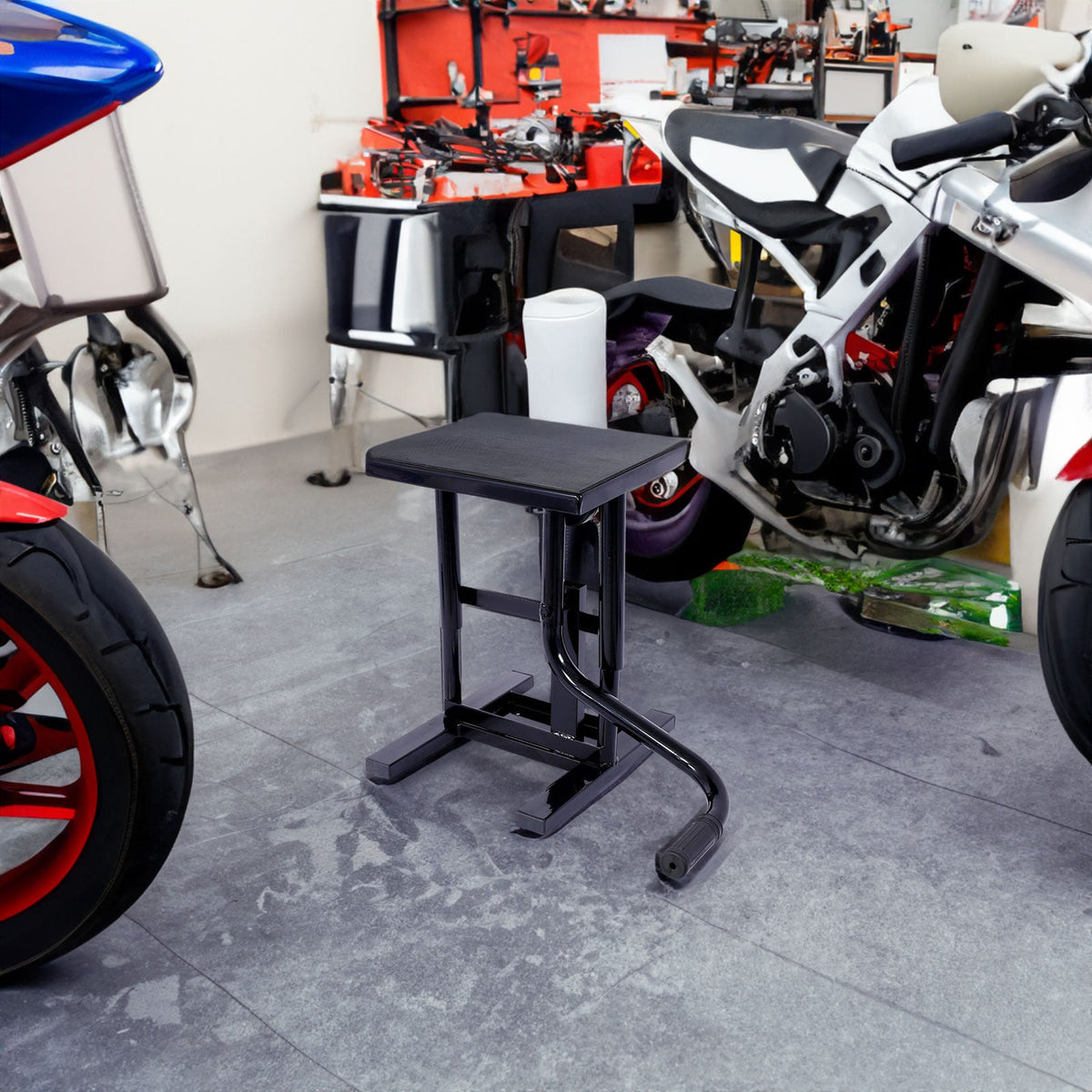


Stop balancing your bike on scraps. This adjustable steel jack stand lifts dirt bikes, cruisers, and dual sports to a stable, scratch‑free working height — from 11 to 16.5 inches — so every…
Read the full descriptionDescription
Stop balancing your bike on scraps. This adjustable steel jack stand lifts dirt bikes, cruisers, and dual sports to a stable, scratch‑free working height — from 11 to 16.5 inches — so every…
Secure, stable lift for heavy maintenance work with 330 lbs capacity and tool-free height adjustment
- unsafe bike positioning during repairs
- difficulty accessing undercarriage
- unstable makeshift lifting solutions
- inadequate weight capacity
Secure, stable lift for confident maintenance
Drop the makeshift blocks and milk crates. This heavy-duty steel jack stand gives every dirt bike, cruiser, or street bike a rock‑solid platform at the perfect working height — so you can focus on the repair, not on keeping the bike upright.
Three decisions that earn the premium tag

Wide 3‑point base
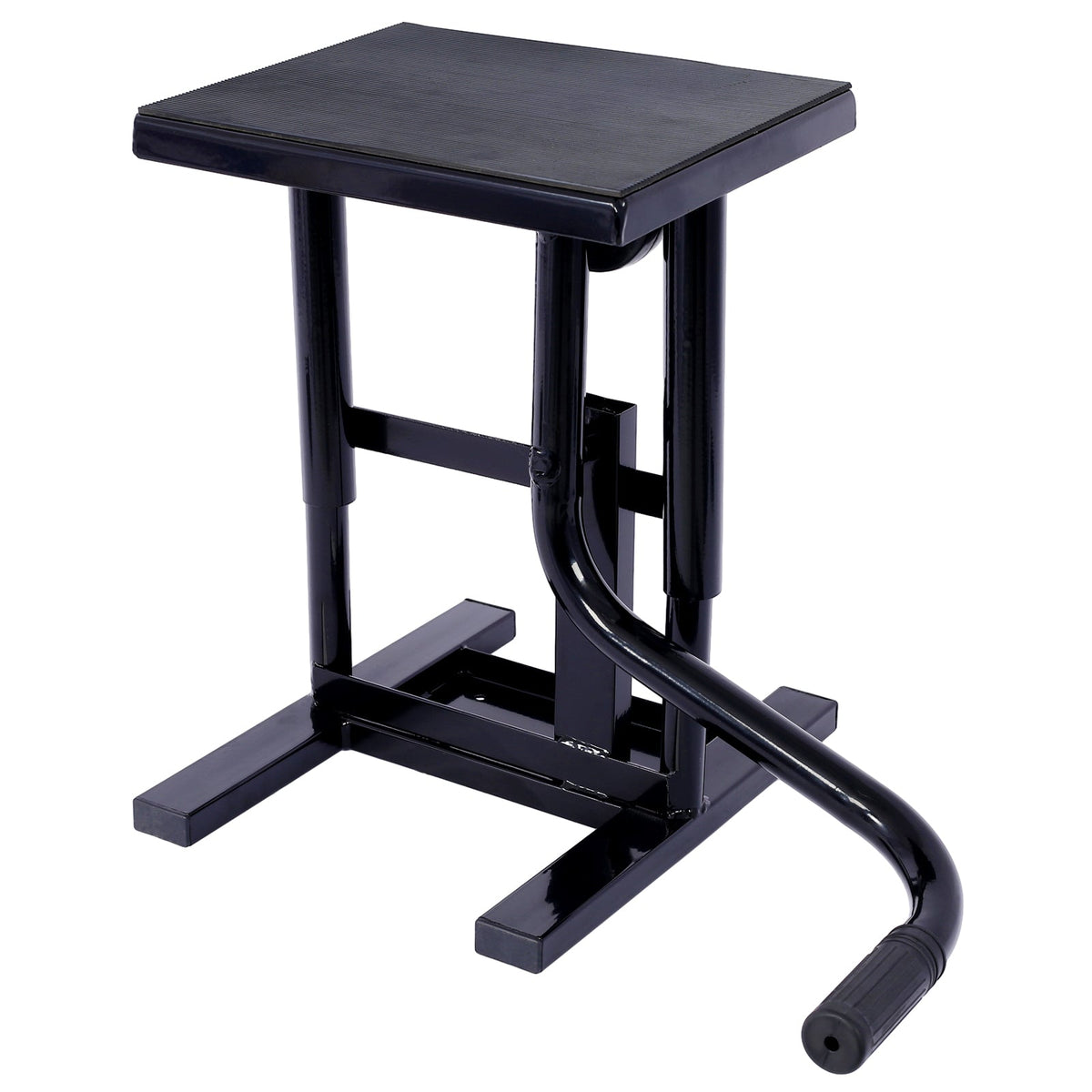
Three feet spread the load over a 14‑inch footprint. The geometry resists tipping even if you lean into a stuck bolt. No wobble, no rock — just planted steel on concrete.

Tool‑free height adjustment
An oversized rubber‑grip handle lets you lift or lower in seconds. The threaded steel column locks at any point between 11 and 16.5 inches — no pins to lose, no hydraulic seals to fail.

Padded top platform
A thick rubber pad coats the lifting surface. It cushions the frame or engine case on contact, stops scratches, and adds just enough grip so the bike doesn’t shift while you’re working.
Proof points for the shop‑hardened
- 330 lbsLoad capacity
- 11–16.5 inAdjustable height
- 14 inBase footprint
- 3‑pointContact design
What arrives at your door
- Jack stand main unit×1
Welded steel frame with integrated screw lift
- Rubber‑grip handle×1
Threads onto the adjustment shaft
- Stabilizing base feet×3
Pre‑attached, with anti‑slip rubber pads
From balancing act to workshop command

The unstable truth
Before the stand, every oil change or tire swap meant a game of inches: wedging wooden blocks, trusting a flimsy scissor jack, or — worst case — leaning the bike against a wall. One slip and you’re chasing a 300‑pound machine across the floor.

The engineered turning point
When the stand rolls under the frame, the three‑point footprint locks on the floor. The padded platform cradles the bike’s underside. A quick spin of the handle — no tools, no effort — raises it to exactly 11, 14, or 16.5 inches. The bike doesn’t just sit; it rests.
The after‑state: workshop flow
Now you work standing, in your preferred light. The undercarriage is fully exposed. No more crawling, no more second‑guessing stability. Chain adjustments, bearing checks, brake swaps — all done at a pace that feels almost leisurely. The stand disappears into the background, but your back notices the difference.
A footprint that stays out of the way
- 11 inMin height
- 16.5 inMax height
- 14 inBase width
- 14 inBase depth
Roughly the size of a large hardcover book when collapsed, with a 14‑inch circle of floor contact.
Why this stand, not the rest
| This Stand | Generic Steel Stand | |
|---|---|---|
| 330 lbs true capacity | Often overstated | |
| Wide 3‑point base | ✗ (narrow) | |
| Tool‑free height adjust | Pin or bolt needed | |
| Padded top platform | Bare steel | |
| Rubber grip handle | Slick metal |
Characteristics
Reviews
Questions and answers
The stand is rated for 330 lbs. That covers most cruisers, dirt bikes, and dual sports. If your bagger is heavier than that — or if you plan to remove the engine while the bike is on the stand — choose a hydraulic lift instead. For everything else, the steel frame handles the load without flexing.
The lifting platform is covered with a thick rubber pad. It cushions the contact point and prevents scratches, even on painted or powder‑coated frames. Keep it clean and it will stay gentle.
Turn the rubber‑grip handle — no tools needed. The threaded steel shaft moves the platform smoothly up or down. It locks solid at any height between 11 and 16.5 inches, no detents or pins.
The three‑point base spreads to 14 inches. That geometry keeps the stand planted even when you push or pull on the bike. As long as the floor is level and solid, tip‑over risk is negligible.
A floor jack can roll, slip, or bleed pressure — and a wood block can crack. This stand is purpose‑built: the wide footprint doesn’t slide, the screw lift can’t sink, and the padded platform centers the bike automatically. You save setup time and avoid the gamble.
A scissor lift raises the whole bike from the side and costs two to three times more. This stand lifts from the center or swingarm in a few seconds, takes up less floor space, and still gives full undercarriage access. For routine maintenance, it’s faster and more maneuverable.
Similar products
See all Motorcycle Lift Stand — 330 lbs Stable Support, 11‑16.5