$36.90
Free delivery · 7–14 days
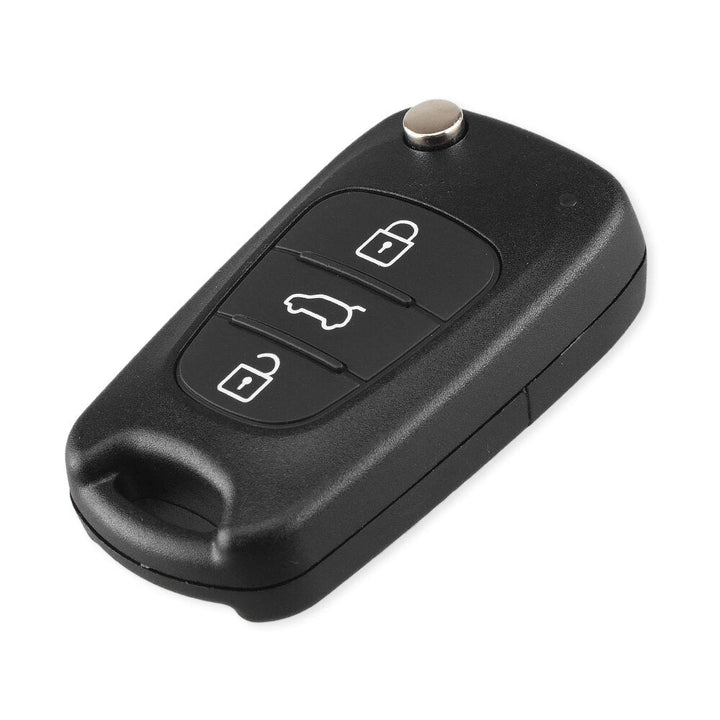
Replacement Flip Key Shell for Kia & Hyundai — 3-Button Case


Car key covers and fob cases can protect worn buttons, cracked plastic and exposed key mechanisms during everyday use. This range focuses on replacement shells and cases for specific vehicle key layouts, including flip keys, smart cards and remote fobs.
Start by matching the replacement shell to your vehicle, key layout and button count. A Ford 3-button flip key shell is different from the Ford 2-button case with an uncut blade, while the Kia and Hyundai shell is designed for a 3-button flip remote. Check whether your key folds, uses a smart card format or has a separate blade. Compare the button positions, shell shape, logo recess, battery area and blade arrangement with your existing fob. These products are replacement shells, so the internal circuit board and transponder may need to be transferred from your original key. If your current electronics are working but the outer case is cracked or worn, a matching shell can be a practical alternative to replacing the complete remote.
Replacement flip key shells are made for remotes with a folding blade and button mechanism. Options in this category include 3-button Kia and Hyundai shells, Peugeot and Citroën DIY repair kits, Ford 3-button shells and a Ford 2-button case supplied with an uncut blade. The Renault smart card shell suits a card-style key rather than a conventional folding remote. The BMW shell is intended to refresh a cracked compatible fob, while the Chevy flip remote shell is supplied as a replacement kit. A shell protects and replaces the outer housing, but it is not the same as a soft silicone sleeve or a signal-blocking Faraday bag. Choose the construction that matches your key format and the repair you need.
Look for an exact fit rather than a universal case. The shell should align with your original button positions, battery compartment, screw points, folding blade and key ring opening. Confirm whether the product includes an uncut blade, a blank shell only or a complete DIY repair kit. A replacement shell is most useful when the original circuit board, battery contacts and transponder remain functional. Check the listing details for vehicle compatibility and button count before ordering, especially for Ford, Renault, BMW, Kia, Hyundai, Peugeot, Citroën or Chevy applications. Also consider whether you are comfortable opening the old fob and transferring its parts. Some keys require careful handling of small clips, springs or a transponder chip, so professional key cutting or locksmith assistance may be appropriate for the blade.
Before opening the old fob, compare both shells and work over a clean, well-lit surface. Remove the original housing carefully, keeping the circuit board, battery, rubber buttons, transponder chip, spring and folding mechanism together where applicable. Transfer each compatible part into the new shell, then check that the buttons sit correctly and the blade folds or releases smoothly. For a case with an uncut blade, the blade normally needs cutting to match your vehicle before it can operate the lock. Close the shell securely without pinching wires or trapping the battery cover. Test the buttons, central locking, start recognition and key movement before disposing of the old housing. If the remote stops working after fitting, recheck battery orientation, board seating and transponder placement.
The most common mistake is ordering by vehicle model alone without checking the exact key shape and button count. The same model name can use different remote layouts across years or markets. Another error is assuming a replacement shell includes working electronics; most shells require the original circuit board and transponder to be moved across. Buyers can also overlook the difference between a flip key, a smart card and a conventional remote, or forget that an uncut blade needs professional cutting. Do not force a circuit board into a shell that does not match its mounting points. Finally, a replacement shell is not automatically a Faraday protector: it may protect the housing from scratches and cracks, but it generally does not block keyless-entry signals unless specifically designed and described for that purpose.
These cases suit drivers whose key fob still works but has a cracked, split, faded or damaged outer housing. They can also help when worn buttons make the key unpleasant to use, provided the internal electronics are sound. A DIY kit may suit someone comfortable transferring small components, while a shell with an uncut blade may be useful when the original blade or housing needs replacement and a locksmith can cut the new blade. They are less suitable if the circuit board is water-damaged, the vehicle no longer recognises the transponder or the remote has an unrelated electronic fault. For people asking what the best case to protect a key fob is, the best choice is the compatible shell or cover that fits the exact key and protects the part that is actually worn.
A cover or replacement shell can help protect the outer housing from everyday scratches, drops and wear. Choose one that matches the exact key shape and button layout; a poor fit can interfere with buttons or the folding blade.
The best protector depends on the key type and the damage you want to prevent. For a cracked or worn outer housing, an exact-fit replacement shell such as a compatible Ford, Renault, BMW, Kia, Hyundai, Peugeot, Citroën or Chevy option is more suitable than a generic case.
Select a case that matches the fob’s shape, button count, battery access and blade arrangement. If the electronics still work, a replacement shell can restore the housing; if you specifically need signal blocking, look for a separately described Faraday product rather than assuming a standard shell provides it.
They can work for the purpose they are designed for. Replacement shells protect or restore the physical housing, while signal-blocking bags are intended to reduce radio communication when the key is stored inside; these are different products with different uses.
Some people use foil as a temporary way to reduce radio signals from compatible keyless-entry fobs. It is not a purpose-built or consistently convenient storage solution, and it may not fully enclose the key; a suitable signal-blocking pouch is designed specifically for that task.
A Faraday bag can prevent the key from communicating while it is inside, so you may need to remove the key before unlocking or starting a vehicle. It also needs to close properly and remain in good condition; a damaged or poorly sealed bag may not provide the intended signal reduction.