

$49.90
Free delivery · 7–14 days
Punch-Free Stainless Steel Sponge Holder for Kitchen Sink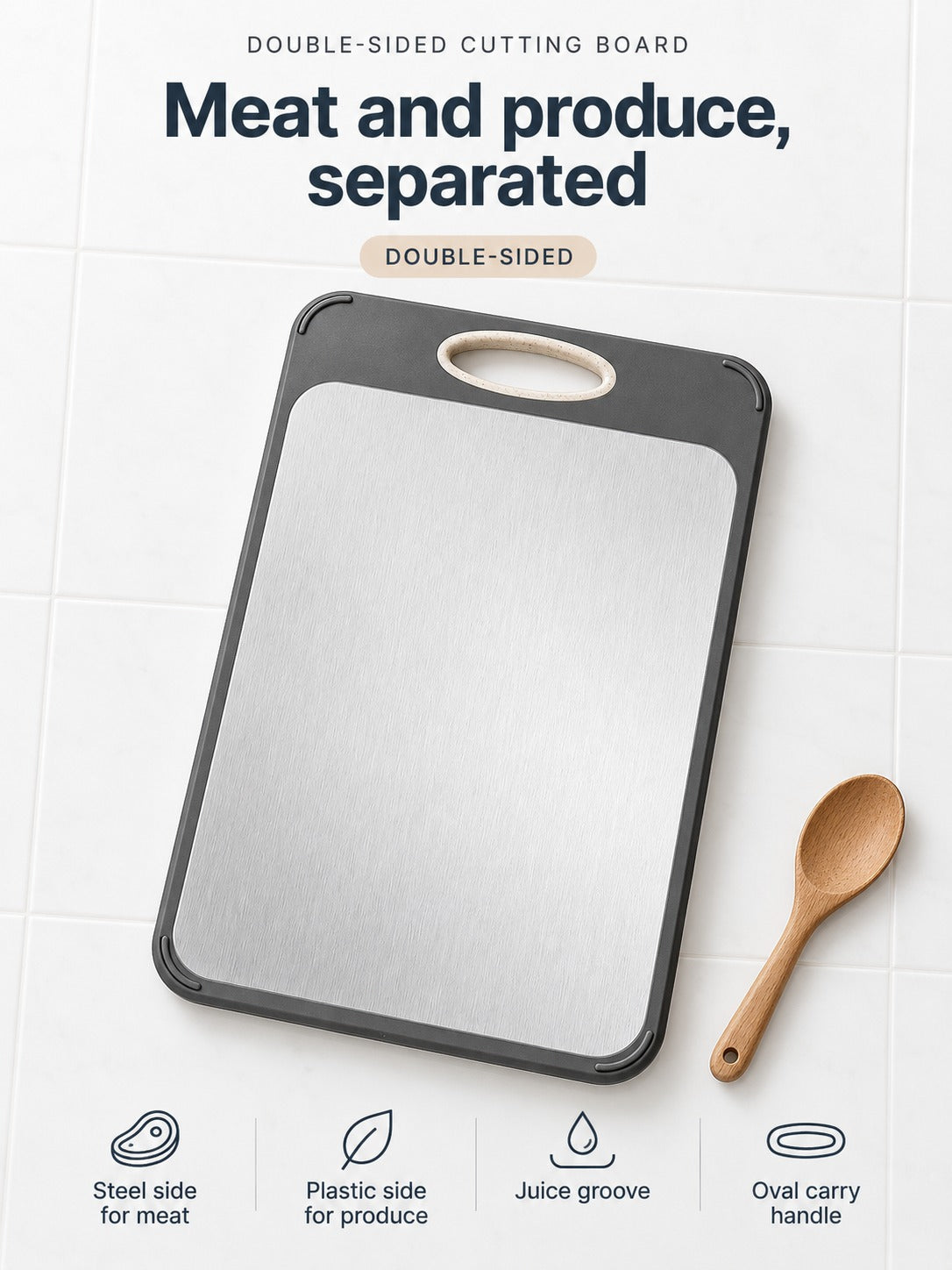
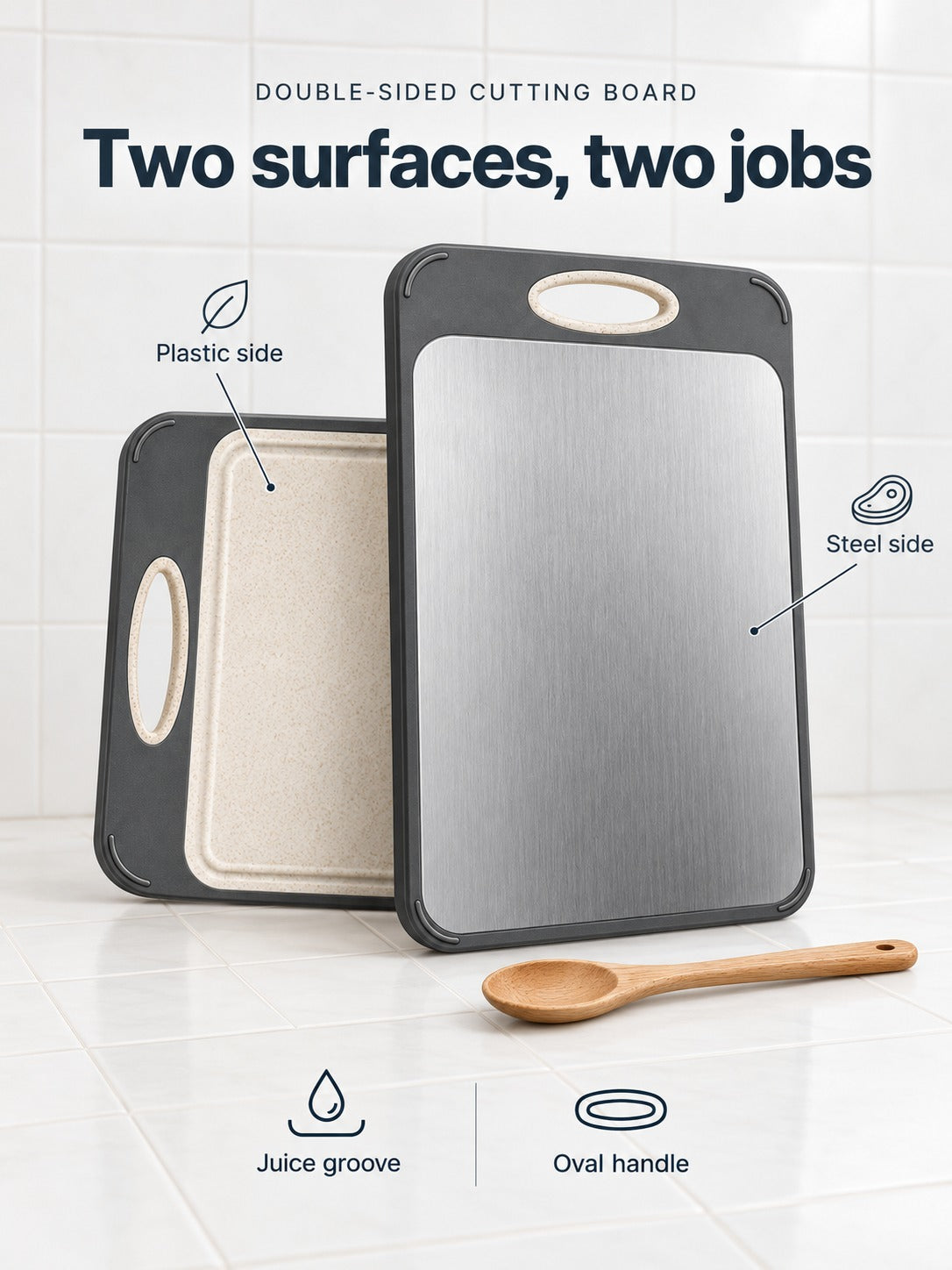
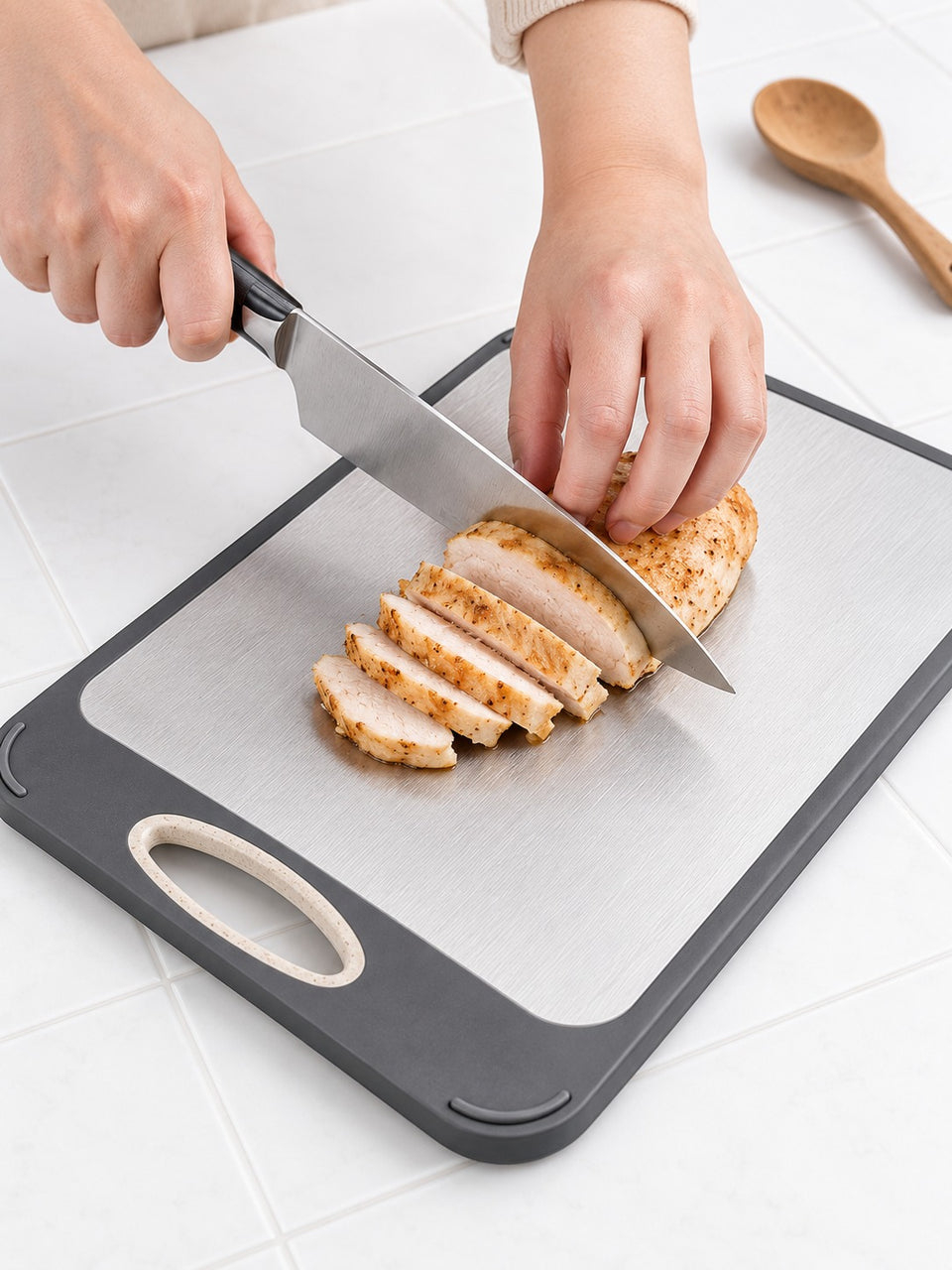
Two cutting surfaces in one board: brushed 304 stainless steel for raw meat and wheat-straw PP for fruit and vegetables. Prep both without washing the board between tasks, and keep the counter dry with the juice groove along the plastic edge.
Read the full descriptionTwo cutting surfaces in one board: brushed 304 stainless steel for raw meat and wheat-straw PP for fruit and vegetables. Prep both without washing the board between tasks, and keep the counter dry with the juice groove along the plastic edge.
Two cutting surfaces in one board: stainless steel for meat, wheat-straw plastic for fruit and vegetables
Stop rinsing one board between chicken and cucumbers. Steel takes the meat, wheat-straw plastic takes the fruit and vegetables, and the juice groove keeps the counter dry.

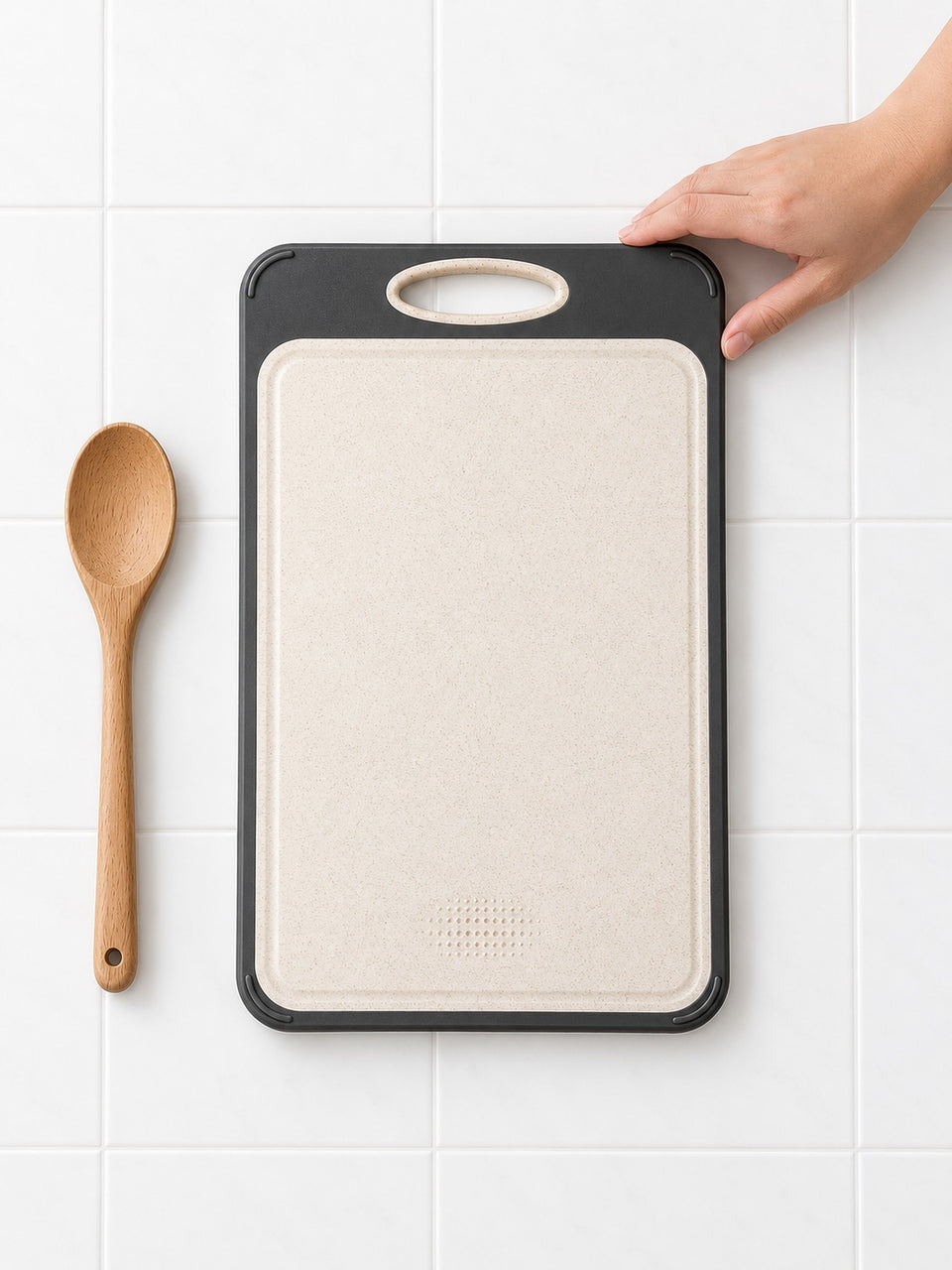
One face is brushed 304 stainless steel for raw meat and fish. The other is wheat-straw PP for fruit and vegetables. Each task has its own surface, so the chicken never touches the cucumber, and you never wash the board mid-prep to make it safe again.

The groove runs along the plastic side and channels juice from tomatoes, melon and citrus away from the counter edge. Slice toward the groove and the mess stays on the board, not on your countertop or your sleeve.

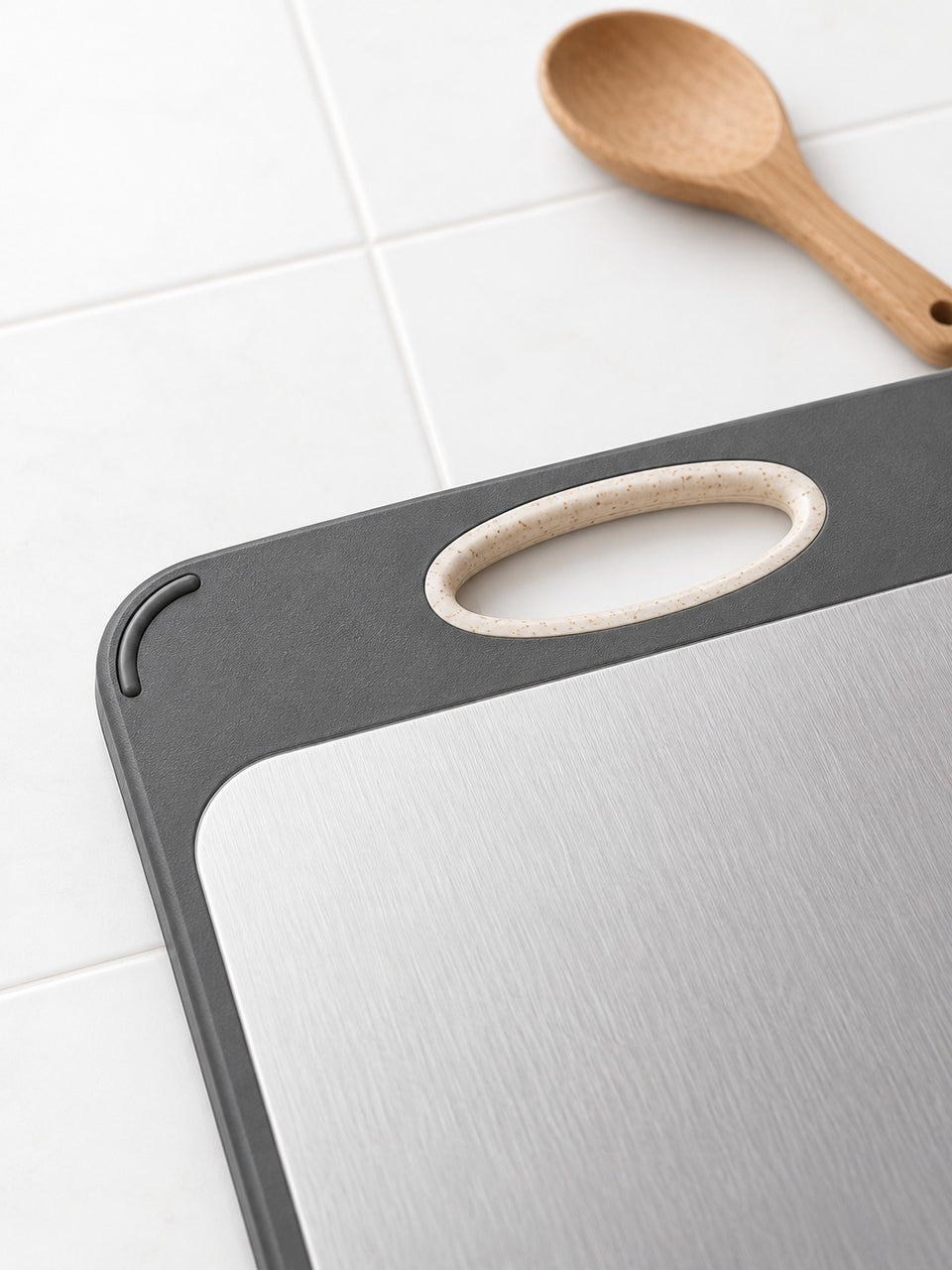
The oval handle hole sits in the top edge, so you can lift the board to the sink, carry it to the table or hang it up to dry. The raised charcoal frame gives you a firm grip, and the non-slip corner pads keep it planted while you chop.
Use warm water and mild soap on the steel and the plastic, then dry both faces with a towel before the first cut.
Decide now: steel for raw meat and fish, wheat-straw plastic for fruit and vegetables. Keep the rule the same every time so your hands learn it.
Put the board plastic side up, set the groove toward the back of the counter and slice a tomato. The first juice you catch is the proof the groove works.

You cut chicken, rinse the board, and start on the tomatoes. The juice still finds its way across the counter, and the cucumber sits on a surface you are not sure about. Most home cooks own two or three boards and still end up reaching for the one they just used.

The board puts brushed 304 stainless steel on one face and wheat-straw plastic on the other, held in a charcoal grey frame. Meat goes on the steel, produce goes on the plastic, and you flip the board instead of hunting for a second one. The groove along the plastic edge catches juice from tomatoes and fruit before it reaches the counter.
Warm water and mild soap on each face. A soft sponge from our cleaning sponges kitchen range works well.
Stand the board on its edge after each wash so trapped moisture does not sit around the frame.
Heat and harsh detergent can warp the plastic side and dull the brushed steel finish over time.
Keep your blades sharp with a set of knife sharpeners whetstone so cuts stay clean on both surfaces.
| This board | Single plastic board | Two separate boards | |
|---|---|---|---|
| Separate surface for raw meat | Yes | No | Yes |
| Separate surface for produce | Yes | No | Yes |
| Juice groove along the edge | Yes | No | No |
| One board to store | Yes | Yes | No |
| Handle hole for lifting | Yes | No | No |
Steel is harder than plastic, so it puts more wear on an edge over time. Use the steel side for raw meat and keep the plastic side for produce, where most of your slicing happens. Sharpen on your usual schedule and the difference stays small.
Yes. That split is the point of the board. Give the steel side to chicken, beef, pork and fish, and the wheat-straw plastic side to tomatoes, cucumbers, onions and fruit. Wash your hands and knife when you switch between them.
Hand washing is the right call. Warm water and mild soap are enough, and drying the board upright keeps the plastic flat and the steel bright. The dishwasher heat is what warps composite boards, so skip it.
Rinse the steel under hot water, scrub with a soft sponge and mild soap, then dry it before the next use. Stainless steel does not hold odour the way plastic can, so a quick wash after raw meat keeps it clean.
The groove runs along the plastic side edge and catches the juice from tomatoes, melon and citrus as you slice. Cut toward the groove and most of the liquid stays on the board instead of running across your counter.
You are buying two cutting surfaces in one board. If you currently keep two or three boards to keep meat and produce apart, this board replaces them and frees up drawer space. One board you use every day costs less per meal than replacing a stack of boards that crowd the drawer.


 Double-Sided Cutting Board: Steel Meat, Plastic Produce