
$69.90
Free delivery · 7–14 days
Instant Tire Repair Glue for Quick Crack Sealing Jobs
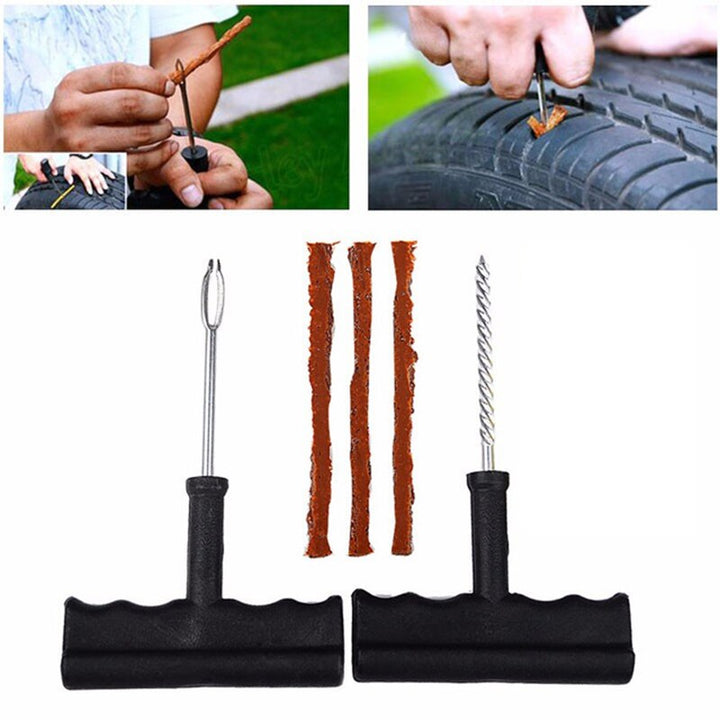


Tire repair products can help address small punctures, surface scuffs, cracks, and leaks without replacing the entire tire immediately. This category includes rubber repair glues and a tubeless tire repair kit, so choose according to the damage, tire construction, and the product instructions.
Start by identifying where the damage is and whether the tire is tubeless. The tubeless tire repair kit is intended for fast puncture plugging in the tread area, while tire repair glue is suited to surface scuffs, small cracks, seams, and rubber wear where the product instructions allow. Do not treat a sidewall cut, bulge, exposed cord, bead problem, or large split as a simple glue repair. Remove the tire from service and have it assessed by a qualified tire professional. Check the product details for compatible rubber surfaces, curing requirements, application method, and whether the repair is intended as temporary or suitable for continued use. If you are searching for tire repair near me or mobile tire repair, professional inspection may be the safer next step.
Tire repair glue creates a bond over or within compatible rubber surfaces, making it useful for scuffs, scratches, surface wear, seams, and quick crack-sealing jobs. It is not a replacement for a structural tire repair and should not be assumed to seal every puncture. A tubeless tire repair kit uses a plug to fill a suitable tread puncture from the outside, following the included tool and insertion steps. Plugs and patches are different repair methods, and the best option depends on puncture size, location, tire condition, and local safety guidance. A plug is not appropriate for every nail or screw. If the puncture is near the shoulder or sidewall, or the tire has been driven while seriously underinflated, stop using it and seek professional advice.
For glue, compare the bottle size, rubber compatibility, waterproofing information, nozzle design, and directions for cleaning and curing. A 50ml tire repair glue may suit occasional small jobs, while a quick-sealing formula can be convenient for keeping in a vehicle or workshop. For a puncture kit, check that it includes the tools needed to prepare the hole and insert the plug, and confirm that it is intended for tubeless car tires. Clear instructions matter more than a broad claim of universal use. Also consider storage: keep liquid products sealed and protected from unsuitable temperatures, and replace opened or dried-out material. Tire repair tools are useful for roadside preparation, but they do not replace correct inflation checks, a pressure gauge, or a professional inspection when damage is uncertain.
Read the product instructions before starting and work only when the tire and damage are safe to handle. For glue, clean and dry the compatible rubber area, remove loose material, apply the recommended amount, and allow the stated curing time before exposing it to water or movement. For a tubeless plug kit, locate the puncture, remove the object only if the instructions direct you to do so, prepare the hole with the supplied tool, and insert the plug as instructed. Reinflate to the vehicle maker’s specified pressure and check for escaping air. Do not rely on a roadside repair without checking the result. If air continues to escape, the tire loses pressure, or the damage is outside the tread repair area, do not drive on it; arrange tire repair or recovery instead.
One common mistake is using tire repair glue on a sidewall cut, bulge, bead leak, or damage that reaches the tire’s internal structure. Another is fitting a plug without checking the puncture location, size, or condition of the tire. Do not combine products unless the instructions specifically permit it, and do not skip cleaning, surface preparation, curing, or a leak check. Driving for a long distance on a nail-damaged or underinflated tire can worsen the damage and may make a professional repair impossible. Avoid treating a temporary roadside fix as permanent without confirmation from a tire professional. If you are comparing tire repair cost, include the price of inspection, removal, fitting, balancing, or replacement where needed—not just the cost of glue or a tire repair gun.
These products suit drivers, workshop users, and roadside emergency kits that need a practical way to address an appropriate small puncture or rubber surface defect. A tubeless tire repair kit is most relevant to someone carrying tire repair tools for a tread puncture emergency. Tire repair glue is more suitable for compatible surface scuffs, seams, wear marks, and small cracks described by the product listing. They are not suitable for every damaged tire, especially tires with sidewall or structural damage, severe air loss, visible cords, or a history of being driven flat. If you are unsure whether a nail in a tire can be repaired, arrange an inspection rather than guessing. Drivers who need immediate assistance may prefer tire repair near me or mobile tire repair services.
The total cost depends on the damage, tire construction, location, labor, and whether the tire can be repaired or must be replaced. A DIY tire repair product may cost less than a professional visit, but inspection, removal, fitting, balancing, or recovery can add to the final price.
Sometimes, if the puncture is small, located in the repairable tread area, and the tire has not suffered other damage. A nail near the shoulder or sidewall, or a tire driven while underinflated, may require replacement or professional repair assessment.
There is no single distance that applies to every patch or tire. Follow the repair product or tire professional’s instructions, monitor pressure, and avoid extended driving until the repair has been checked; a temporary repair should not automatically be treated as permanent.
The appropriate method depends on the puncture’s location, size, tire condition, and the repair instructions. An external plug can be useful for a suitable tubeless tread puncture, while a professional internal repair may be preferred after removing and inspecting the tire.
Driving two hours with a nail in a tire is not advisable because the tire may lose air or suffer internal damage. Check the pressure without putting yourself at risk, and use roadside assistance, mobile tire repair, or a nearby tire professional if the tire is losing air or the damage is uncertain.
A plug’s service life depends on the puncture, installation, tire condition, road use, and the product’s instructions. Have the repair inspected and monitor tire pressure; do not assume a plug will last for the remaining life of the tire or replace a professional repair when one is recommended.