$89.90
Free delivery · 7–14 days
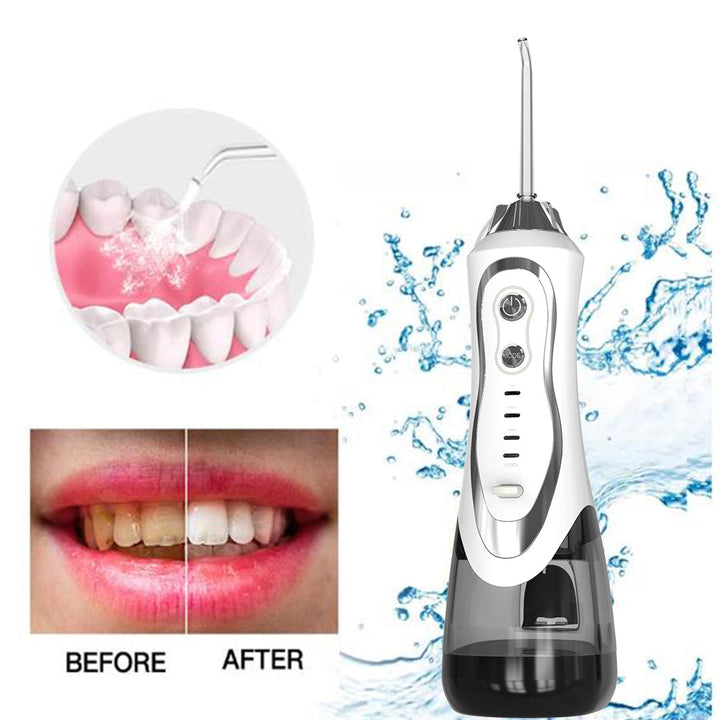
Portable Water Flosser – Dentist-Clean Teeth in Under a Minute


Oral irrigators, also called water flossers, use a focused stream of water to clean between teeth and along the gumline. This guide compares cordless, portable, faucet-connected, combination, and manual options so you can choose a setup that fits your routine, space, and cleaning preferences.
Start with where and when you plan to use the device. A cordless oral irrigator suits small bathrooms, travel, and quick daily cleaning, while a faucet water flosser can work well if you prefer not to recharge or refill a reservoir. Check the tank capacity, charging method, included tips, pressure controls, and whether replacement tips are easy to find. A portable water flosser with a covered tip compartment may be convenient for shared bathrooms or travel. If you want brushing and water cleaning in one appliance, consider an electric toothbrush with a water jet. Read oral irrigator reviews for practical details such as noise, filling, cleaning, and battery life rather than focusing only on headline claims.
Cordless oral irrigators have a built-in reservoir and rechargeable battery, making them easy to move around and useful for travel. Countertop models generally offer a larger reservoir and a connected handle, but they need more space and access to an outlet. Faucet water flossers connect to a tap and do not rely on an internal battery or charging cable, although compatibility with your faucet matters. A manual oral irrigator syringe uses hand pressure and does not require power, but it takes more effort and may offer less consistent flow. Combination devices pair an electric toothbrush with a water jet for a consolidated routine. Specialized tools such as ultrasonic dental cleaners and manual dental scalers are separate products and should not be treated as replacements for everyday water flossing.
Look for adjustable water pressure so you can begin gently and select a comfortable setting. A removable reservoir is easier to rinse and dry, while a transparent tank makes it simple to see when it needs filling. Rotating or interchangeable tips can help you direct water around different areas, but confirm which tips are included and how they are stored. For a cordless model, check charging time, the charging connector, waterproofing details provided by the manufacturer, and whether it can be used away from a sink. A compact 300 ml-class reservoir may be convenient, but capacity varies by design and pressure setting. Product manuals, including an oral irrigator manual PDF when available, are useful for checking assembly, cleaning, and tip replacement instructions before purchase.
Fill the reservoir with clean, lukewarm water unless the instructions specify otherwise. Place the tip in your mouth before turning the device on, lean over the sink, and start at a low pressure setting. Guide the stream along the gumline and between teeth, pausing briefly at each space; avoid forcing the tip into the gums. Empty and rinse the reservoir after use, then allow removable parts to air-dry as directed. Many people use a water flosser before brushing so loosened food and residue can be brushed away afterward, but the most important factor is following a routine you can maintain. If you are learning how to use an oral irrigator, read the model’s instructions because controls, tip angles, and cleaning steps differ.
Using the highest pressure immediately can feel uncomfortable, so increase it gradually rather than treating stronger flow as better cleaning. Do not run an empty pump, use very hot water, or add solutions unless the manufacturer specifically allows them. Leaving water in the tank can contribute to stale odors, so empty and dry the reservoir after each session. Keep the tip moving instead of holding the stream in one spot, and replace worn or damaged tips according to the product instructions. Another common mistake is skipping brushing and treating a water flosser as the only part of oral care. Keep the handle, reservoir, and charging area clean, and do not share tips unless each user has a separate, clearly identified tip.
An oral irrigator may suit shoppers who find string floss awkward, want a portable way to clean between teeth, or prefer a guided stream around the gumline. It can also be useful for people who want a larger countertop setup, a faucet-connected hydro floss oral irrigator, or a cordless device for travel. Those choosing between an oral irrigator syringe and an electric model should consider whether they value battery-free simplicity or adjustable, powered flow. If you have dental appliances, implants, recent dental work, persistent discomfort, or bleeding that concerns you, ask a dental professional which cleaning tools and settings are appropriate. Water flossers are personal-care devices, so select the style you can use consistently and maintain properly.
Oral irrigators can help flush food particles and residue from between teeth and along the gumline when used as directed. They are an addition to regular brushing and should not be viewed as a substitute for all other oral-care steps.
They are used to direct a controlled stream of water between teeth and around the gumline. People choose them for everyday cleaning, travel convenience, or an alternative to handling traditional string floss.
The best dental irrigator depends on your routine. Choose cordless for portability, a larger countertop unit for fewer refills, a faucet model for battery-free use, or a combination toothbrush and water jet if you want both functions in one device.
Water flossers can require refilling, charging, cleaning, and replacement tips. Some models take more counter space, make operating noise, or feel uncomfortable if used at too high a pressure. They also do not replace brushing.
Many users water-floss before brushing so loosened particles can be brushed away afterward. Either order can work if it helps you clean consistently, but follow the device instructions and maintain your regular brushing routine.
Dental professionals commonly consider water flossers one possible tool for cleaning between teeth and along the gumline, with suitability depending on the individual. For advice about pressure, tips, dental appliances, or recent treatment, ask your dentist or dental hygienist.