
$37.90
Free delivery · 7–14 days
COB LED Turn Signal Bulbs — Instantly Brighter, Feels Safer


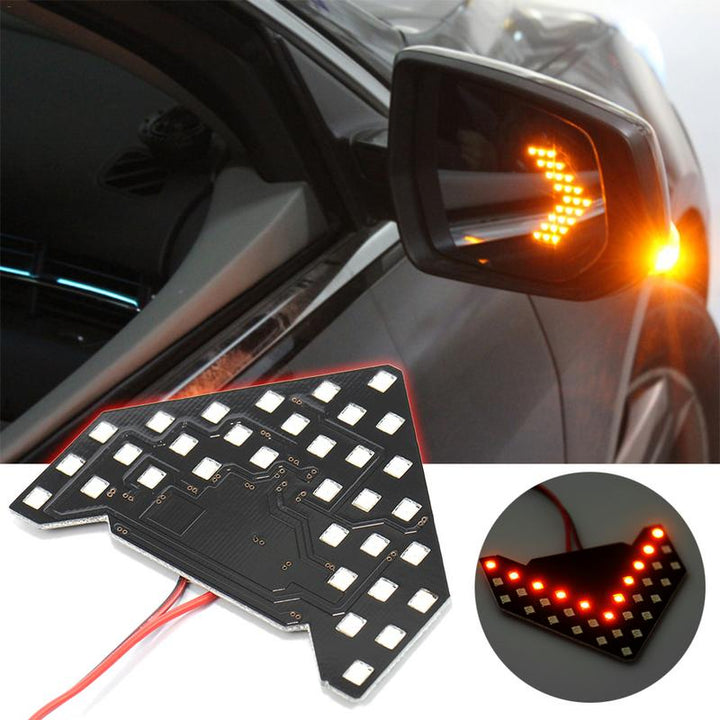

Mirror turn signals add a visible amber or multi-color indicator to your vehicle’s side mirrors, helping other road users see your intended turn or lane change from the side. This category includes replacement bulbs, sequential LED mirror turn signals, puddle-light-compatible options, and motorcycle signals, so match the product to your vehicle, socket, wiring, and mirror housing before ordering.
Start by identifying whether you need a complete side mirror turn signal assembly, a replacement bulb, or an add-on light. Check your vehicle’s owner’s manual, the original bulb or signal housing, and the connector before buying. Replacement bulbs such as 22SMD brighter brake and signal lights or COB LED turn signal bulbs may fit existing sockets, but brightness, polarity, base style, and available space still matter. For factory-style upgrades, select sequential LED mirror turn signals with the correct mounting shape and plug. Motorcycle owners should choose motorcycle-specific signals, including options with a flowing water effect and IP68 construction. If your mirror also has a puddle light, confirm whether the turn signal and courtesy light use separate wiring.
LED replacement bulbs are useful when the original housing and wiring remain in good condition and only the light source needs changing. Sequential LED mirror turn signals use a flowing amber arrow pattern, while 14 SMD sequential arrow models may offer multi-color lighting depending on the product and wiring setup. COB LED turn signal bulbs provide a compact replacement format with an instantly bright appearance. Motorcycle LED turn signals are shaped and wired for motorcycle applications rather than car mirror housings. Puddle lights on side mirrors are a separate feature: they illuminate the area below the door and should not be confused with the turn signal. Always compare the product photos, dimensions, connector, and installation method with your existing light.
Fitment is the first priority: compare the bulb base, connector, housing dimensions, mounting points, and vehicle-specific compatibility. Next, check the intended color and pattern. Amber is commonly used for turn indication, while a sequential arrow creates a moving light effect; multi-color products require confirmation that your vehicle’s wiring supports the available functions. Look for clear installation instructions and a weather-resistant design when the light sits outside the vehicle. Motorcycle buyers should verify the signal’s mounting hardware and electrical requirements separately. If the replacement flashes too quickly after installation, the vehicle may need a compatible load solution or an LED-ready flasher, but do not assume every model supports one. Product photos alone are not enough—measure the original part when possible.
Disconnect the vehicle’s power as recommended in the service instructions, then remove the mirror cap, lens, or access panel without forcing clips. Unplug the original signal and compare the replacement connector and mounting points before securing the new unit. For LED bulbs, check polarity if the light does not illuminate, then reinstall the housing so its seal and clips sit correctly. Test the turn signal, hazard lights, running light, and any available sequential or multi-color function before driving. If the mirror includes a puddle light on the side mirror, test that circuit separately. Use the vehicle’s turn signal before a maneuver, check mirrors and blind spots, and follow local lighting and installation requirements.
The most common mistake is ordering by appearance instead of confirming fitment. A bulb that looks similar may use a different base, connector, polarity, or physical size. Another error is installing a car mirror signal on a motorcycle, or fitting a motorcycle signal where the mirror housing cannot support it. Avoid pinching wires when replacing the mirror cover, leaving the lens seal loose, or skipping a hazard-light test. If an LED flashes rapidly, flickers, or does not work, check polarity, connectors, grounding, and vehicle compatibility before replacing parts. Do not rely on a sequential effect if the arrow direction is unclear or local rules require a specific lamp setup. Keep the original part until the replacement has been fully tested.
These lights suit drivers replacing a failed side mirror signal, refreshing faded factory lighting, or adding a more noticeable sequential appearance where compatible. Bulb-style products are a practical choice when the original housing is intact and the correct socket is easy to confirm. Complete sequential mirror turn signals are better for shoppers whose vehicle supports a matching replacement housing or plug-in assembly. A multi-color 14 SMD option may suit projects that need more than a single signal function, provided the wiring and vehicle controls support it. Motorcycle riders should stay with motorcycle-specific LED turn signals, such as flowing-effect designs with exterior-weather protection. If you only want illumination below the door, search for puddle lights on side mirrors rather than turn signals.
A turn signal mirror is a vehicle side mirror with an integrated indicator light, usually positioned in the mirror housing or cap. It flashes when the vehicle’s turn signal or hazard lights are activated, making the intended direction visible from the side.
The process usually involves removing the mirror cap, lens, or access panel, disconnecting the original bulb or light assembly, and fitting the replacement. The exact steps vary by vehicle, so follow the service instructions and confirm the connector, polarity, mounting points, and seal before testing the turn and hazard functions.
A signal mirror connects to the vehicle’s turn-signal or hazard-light circuit. When that circuit receives power, the bulb or LED module flashes; sequential models illuminate multiple sections in a flowing arrow pattern.
Check your mirrors and surroundings first, then signal before turning or changing lanes, allowing other road users time to react. Check again as needed during the maneuver and follow the driving rules that apply in your area.
Build mirror checks into regular driving routines, such as before braking, changing lanes, turning, or moving away from a curb. Use a consistent scan pattern and adjust your mirrors correctly so you can monitor traffic without taking attention away from the road.
A vehicle side mirror with a turn signal can be identified by its visible lens, wiring, or connection to the turn-signal circuit; it is not a surveillance device. If you mean a household mirror and a possible two-way mirror, visual checks are not conclusive, so consider the setting, privacy, and local laws and ask the property owner or relevant authority.