
$47.90
Free delivery · 7–14 days
Piercing Aftercare Drops for Gentle Healing Support
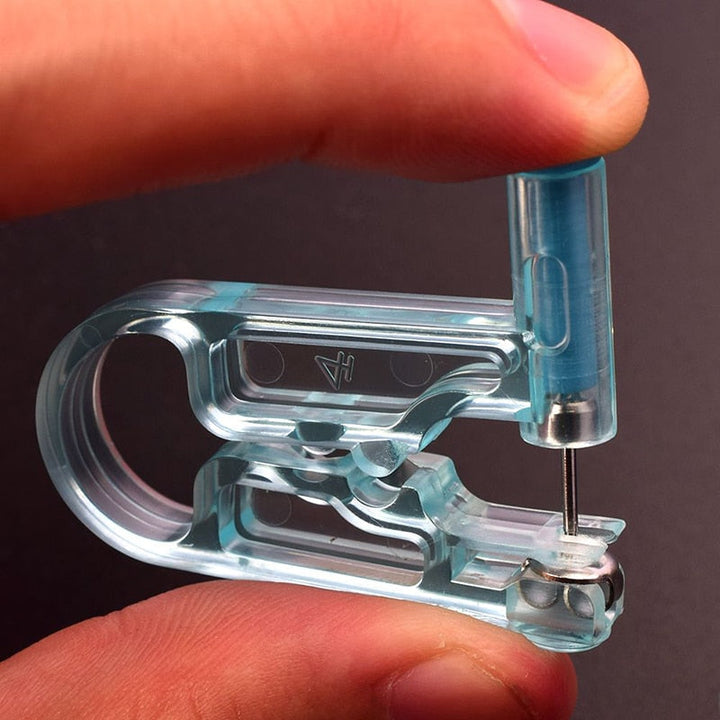
An ear piercing kit can combine a disposable piercing device, starter earrings, and aftercare products for a more convenient setup at home. Compare the piercing method, hygiene features, earring materials, and included instructions before choosing a kit, and consider a trained professional if you are unsure about placement or technique.
Start by checking exactly what the kit includes: a disposable ear piercing gun, sterile or individually packaged components where stated, starter earrings, instructions, and aftercare support. A disposable design can help limit reuse between users, but it does not replace careful handwashing, clean preparation, or following the product directions. Check whether the earrings are suitable for fresh piercings and whether the post length fits the intended area. For children or babies, confirm age guidance and local rules, and consider using a professional piercing service instead of choosing solely by convenience.
Piercing guns and piercing needles are different tools with different handling requirements. A disposable ear piercing gun is designed as a ready-to-use option for straightforward earlobe placement, while a professional ear piercing kit may use a single-use needle and require trained technique, accurate marking, and appropriate disposal. Needles are commonly selected by trained piercers for greater control over placement and for areas beyond the basic lobe, but shoppers should not assume that a home ear piercing kit offers the same process or support. Before buying, decide whether you want a simple earring-and-device set or a professional appointment. Do not use an ear piercing gun for cartilage unless the instructions and local professional guidance specifically support it.
Look for clear packaging, a visible contents list, straightforward instructions, and a device intended for one-time use. The starter earrings should be described clearly, including the post style and material information supplied by the seller. Avoid kits with damaged packaging, missing instructions, or vague claims about being painless or universally suitable. An aftercare product, such as Piercing Aftercare Drops for Gentle Healing Support, can make routine cleaning easier when used exactly as directed. A USB Endoscope Ear Cleaning Tool is a separate visual ear-care accessory, not a substitute for a piercing device or a way to inspect a fresh piercing. Also check return terms, age guidance, and whether the kit is intended for earlobes only.
Read the complete instructions before opening the disposable device. Wash and dry your hands, prepare a clean surface, and mark the intended position carefully so both ears can be compared before piercing. Use only the supplied compatible earrings and complete the process as instructed; do not reuse a disposable gun or share it with another person. Afterward, follow the included aftercare directions and avoid unnecessary touching, twisting, or changing of the starter earrings. Keep the area away from products that are not intended for piercing aftercare. Stop and seek advice from a qualified healthcare or piercing professional if you notice concerning changes, significant discomfort, or a reaction. Never pierce through an existing bump, irritated skin, or an area you cannot position confidently.
A common mistake is buying an attractive earring set without checking whether it is designed for a new piercing. Other problems include piercing too close to the edge, skipping the position check, using a reusable or poorly packaged device, and cleaning with products not recommended in the instructions. Do not treat an ear piercing kit as suitable for every location: lobe and cartilage placement have different considerations, and some kits are intended only for lobes. Avoid using an ear-cleaning endoscope to press against or probe a fresh piercing. Do not share equipment, improvise earrings, or repeat a piercing immediately if placement is wrong. If the process feels unsafe or you cannot verify the kit’s condition, choose a professional service instead.
A disposable at-home kit may suit an adult who wants a simple lobe piercing, can follow written directions carefully, and is comfortable handling the preparation and aftercare. It may not suit shoppers seeking cartilage, multiple complex placements, or advice on anatomy and styling. It is also not automatically suitable for a baby or child: check the product’s age guidance, discuss the decision with the child’s caregiver, and consider a trained professional with an appropriate setting. Shoppers searching for an ear piercing kit near me or an ear piercing kit in store may prefer an appointment if they want placement marking, equipment handling, and aftercare guidance included. For a decorative look, choose the placement and starter earrings only after considering comfort, healing routines, and school or workplace rules.
Safety depends on the device, packaging, preparation, placement, and aftercare, so no home kit is risk-free. Use only an undamaged, single-use product according to its instructions, and consider a qualified professional if you are uncertain, piercing cartilage, or piercing a child.
The best option is one with a disposable device, clear instructions, suitable starter earrings, intact packaging, and practical aftercare guidance. Choose a kit intended for the specific placement you want, and avoid relying on claims such as painless or professional without checking the actual contents.
The phrase is used inconsistently online and is not a universal standard for ear piercing. It may refer to different advice about spacing, timing, or the number of piercings, so follow the instructions for your kit and ask a qualified piercer for placement-specific guidance.
There is no single prettiest placement; it depends on your ear shape, preferred jewelry, lifestyle, and comfort. A simple lobe piercing is a versatile starting point, while additional placements should be marked and assessed carefully, preferably with a professional.
A disposable gun can be convenient for straightforward earlobe piercing, while a single-use needle handled by a trained professional offers a different approach and may be preferred for more controlled placement. Do not assume one tool is suitable for every ear area; check the kit instructions and seek professional advice for cartilage or complex placements.