
$64.90
Free delivery · 7–14 days
Drain Clog Remover Powder With 8 Pre-Measured Sachets


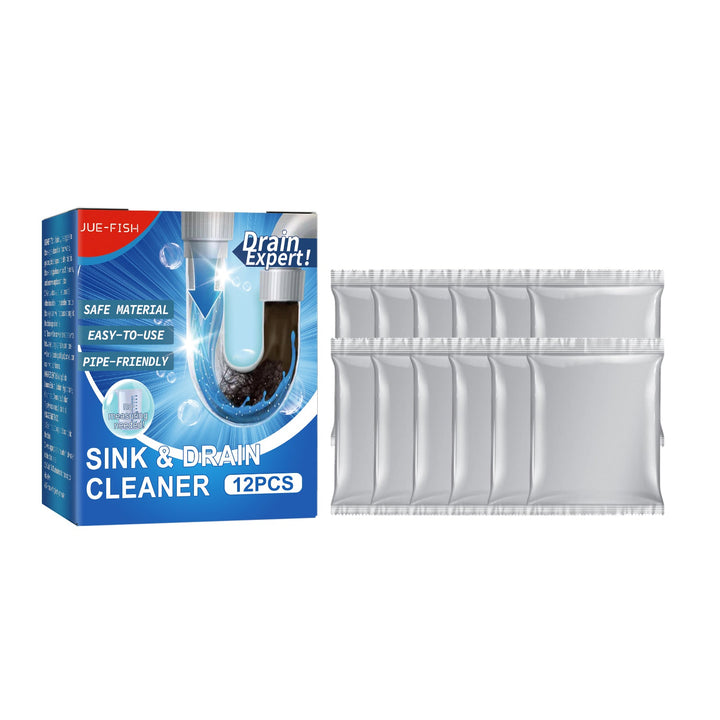

This category brings together drain-cleaning powders, sachets, tablets, gels, and foam cleaners for common kitchen and bathroom drain maintenance. If you specifically need a manual drain plunger, toilet plunger, or power plunger, check the product type and instructions carefully, because the listed items are chemical or dissolving cleaners rather than plungers.
Start by identifying the problem: a slow kitchen sink, standing water, grease buildup, bathroom residue, drain odor, or a more serious blockage. Drain cleaning powders and pre-measured sachets are convenient for targeted sink and pipe use, while gels can suit surface stains and bathroom cleaning rather than deep pipe blockages. Tablets and foam cleaners are useful when you want a measured format for broader kitchen and bathroom cleaning. Read the label for compatible drain materials, water requirements, contact time, and whether the product is intended for complete clogs or routine maintenance. If the drain is fully blocked, overflowing, or connected to a disposal or septic system, confirm suitability before use.
A cup plunger is designed mainly for relatively flat sink or floor drains and creates pressure over the opening. A flange or toilet plunger has an extended collar that fits a toilet outlet, making it more suitable for toilets than sinks. Accordion-style and power plungers use different pressure designs, but they still require the correct seal and application. The products in this category are not manual plungers: they include drain clog remover powder, drain cleaning powder sachets, pipe cleaner powder, tablets, gel, and foam cleaner. Choose based on the format and stated use rather than assuming a powder or gel replaces a heavy duty toilet plunger or floor drain plunger.
Look for a clearly stated use case, such as slow sinks, grease, odors, kitchen drain flow, bathroom grime, or fast clog removal. Pre-measured sachets can reduce guesswork, while loose powder may offer more flexible dosing when the instructions allow it. Check whether the product is intended for drains, general surfaces, or both; a multi-surface tablet or bathroom gel may not be the right choice for a blocked pipe. Packaging should provide directions, warnings, storage guidance, and material compatibility information. Also consider the size of the pack and whether you want occasional treatment or several applications. Never select a product solely because it sounds stronger than other drain cleaners.
Follow the product label exactly, including the recommended amount, water temperature, waiting period, and flushing instructions. Remove visible debris from the drain opening first, and keep the area ventilated. Do not combine powders, gels, tablets, bleach, acids, or other drain products, and do not use a plunger over a drain containing recently added chemicals unless the label specifically permits it; splashing can be hazardous. For a manual sink plunger, cover the overflow opening, add enough water to cover the cup, create a firm seal, and use controlled strokes. Stop if water backs up elsewhere, a pipe leaks, or the blockage does not respond.
A common mistake is choosing a toilet plunger for a flat sink opening or using a sink cup plunger on a toilet, which can prevent a proper seal. Another is pouring several different products down the same drain, especially when the first treatment has not been fully flushed. Avoid guessing the dose, leaving cleaner in the pipe longer than directed, or using hot water when the label does not call for it. Do not treat a recurring blockage as a simple clog if the sink backs up repeatedly, multiple fixtures drain slowly, or water appears around a pipe joint. In those situations, stop using products and inspect the trap or contact a qualified plumber.
Powders, sachets, tablets, gels, and foam cleaners suit shoppers who want a measured or ready-to-use option for slow sinks, grease, odors, surface grime, or routine drain care. A manual drain plunger is better for shoppers who want a reusable tool and immediate mechanical action without adding a chemical product. Toilet blockages generally call for a toilet-specific flange plunger rather than a sink cleaner or cup plunger. A power plunger may appeal when extra pressure is needed, but it must match the fixture and be used according to its instructions. For unknown, deep, recurring, or multi-fixture blockages, professional assessment is usually more appropriate than repeated treatments.
For a flat sink or floor drain, a cup-style drain plunger is generally the appropriate manual design because it can seal against the surface. For toilets, a flange or heavy duty toilet plunger is usually a better fit. The products listed in this category are powders, sachets, tablets, gels, and foam cleaners rather than manual plungers, so check the product type before ordering.
A plunger can work when the blockage is near the drain opening and the cup forms a good seal. It may be less effective for hardened buildup, deep pipe obstructions, or a blockage caused by a damaged pipe. If you have used a chemical drain cleaner, follow its label before attempting to plunge.
There is no single best product for every blockage. Choose a drain powder, pre-measured sachet, or other cleaner whose label specifically covers your drain type and problem, such as slow flow or grease. Never mix drain products or combine them with bleach, acids, or other household cleaners.
Cup plungers are commonly used for sinks and floor drains, while flange plungers are shaped to seal toilet outlets. Accordion or power plungers use different pressure mechanisms and should be matched to the fixture. Powders, gels, tablets, and sachets are chemical or dissolving drain cleaners, not types of manual plungers.
The better type depends on the fixture and the shape of its opening. Use a cup design for many flat sink drains and a flange design for toilets; a poor seal makes either type less effective. For repeated or deep blockages, a different tool or professional help may be more suitable than changing plunger styles.
Professionals may choose a toilet flange plunger, a toilet auger, or other equipment based on the blockage and fixture. The appropriate tool depends on whether the obstruction is near the bowl, deeper in the line, or caused by a plumbing issue. Chemical drain powders and sink cleaners should not be assumed to replace toilet-specific equipment.