
$37.90
Free delivery · 7–14 days
Brake Fluid Tester Pen — Instant Moisture Detection
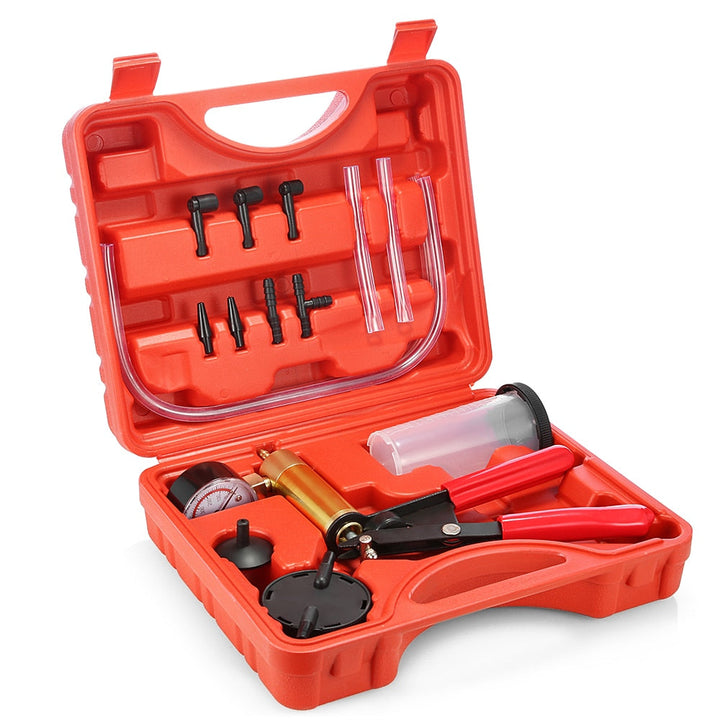
Brake bleeders help remove old brake fluid and trapped air during a brake fluid flush or brake service. This category includes a professional vacuum pump with gauge for controlled one-person bleeding and a brake fluid tester pen for checking moisture before deciding whether fluid needs attention.
Start by deciding whether you need to remove fluid and air, check fluid condition, or do both. A pressure brake bleeder kit pushes fluid through the system from the master-cylinder reservoir, while a vacuum brake bleeder pulls fluid from an individual caliper or wheel-cylinder bleeder screw. The Brake Bleeder Kit — Professional Vacuum Pump with Gauge is a practical choice when you want one-person operation and a visible vacuum reading. The Brake Fluid Tester Pen — Instant Moisture Detection is useful for a quick moisture check, but it does not replace a bleeding tool. Also consider hose fit, gauge readability, container capacity, included adapters, and whether the kit suits your vehicle's bleeder screws. Always check the vehicle service instructions before selecting a method.
A manual vacuum brake bleeder uses a hand pump, hose, and collection container to draw fluid through the system. It is portable and does not require an air compressor, making it a useful one man brake bleeder kit for home garages. A pneumatic brake bleeder uses compressed air to create suction and can reduce hand pumping, but it requires a suitable compressor and secure connections. A pressure brake bleeder applies pressure at the reservoir and can provide a steady flow, though the cap adapter must seal correctly. Gravity bleeding is the simplest method, allowing fluid to drip from an open bleeder screw, but it can be slower and may not remove air as efficiently in every system. Match the tool to your vehicle and working space.
Look for a brake bleeder kit with a readable gauge, durable pump body, flexible hose, and fittings that stay attached while fluid moves. A gauge helps you monitor vacuum during use and notice when a connection may be leaking. A sealed collection bottle or container helps limit spills and keeps the work area easier to control. For a pressure brake bleeder, the most important details are the reservoir-cap adapter range, pressure control, and compatibility with the vehicle. For a pneumatic brake bleeder, check the required air supply before buying. A brake bleeder wrench is also useful because its shape is designed for bleeder screws and helps reduce the chance of rounding them. Keep fresh fluid, protective gloves, and a way to clean spills nearby.
Park on a stable, level surface, secure the vehicle, and follow the service sequence specified for your vehicle. Keep the master-cylinder reservoir filled with the correct fluid so it does not run dry during bleeding. Attach the vacuum pump hose firmly to the bleeder screw, place the other end in the collection container, and create vacuum with the pump. Open the screw carefully, watch the fluid and bubbles, then close the screw before releasing the vacuum or removing the hose. Repeat at the required wheels and check the reservoir often. Do not allow brake fluid to contact painted surfaces, and dispose of used fluid according to local requirements. A tester pen can be used separately to check moisture in the fluid before or after service.
One common mistake is letting the master-cylinder reservoir run empty, which can introduce more air into the system. Another is opening the bleeder screw too far or leaving it open while releasing vacuum, allowing air to enter around the threads or hose connection. Loose fittings, cracked hoses, and an incorrect reservoir adapter can also create false bubbles and inconsistent results. Do not pump the pedal aggressively unless the vehicle instructions call for it, and do not force a stuck bleeder screw with an ill-fitting tool. Use the correct fluid type, keep the reservoir and container clean, and protect painted surfaces from spills. If the pedal remains soft after proper bleeding, stop driving and inspect the system or seek qualified service rather than assuming the tool solved the problem.
A manual vacuum brake bleeder suits DIY owners, home mechanics, and anyone who wants to flush or bleed brakes without a second person operating the pedal. The gauge on the Professional Vacuum Pump with Gauge helps make the process easier to monitor, while the hand-powered design avoids dependence on an air compressor. A pressure brake bleeder may suit frequent brake work when the correct reservoir adapter is available. A pneumatic brake bleeder can be convenient in a workshop equipped with compressed air. The Brake Fluid Tester Pen suits drivers and technicians who want a quick moisture check before planning service, but it is a testing accessory rather than a fluid-removal tool. If you are unsure about the vehicle's bleeding sequence or cannot obtain a firm pedal, use the manufacturer service information or consult a qualified technician.
Brake bleeders help move old brake fluid and trapped air out through the system's bleeder screws. Vacuum models pull fluid from the wheel end, while pressure models push fluid from the master-cylinder reservoir. A brake fluid tester pen checks moisture but does not perform bleeding.
The best choice depends on your vehicle, service method, and available equipment. A vacuum pump with a gauge is a versatile option for one-person work, while a pressure brake bleeder can provide steady flow when its reservoir adapter fits. Look for secure fittings, a readable gauge, durable hoses, and a suitable collection container.
A manual vacuum brake bleeder with a gauge is a practical one-person option because it creates suction at the bleeder screw without requiring someone to operate the pedal. Keep the master-cylinder reservoir filled and follow the vehicle's specified wheel sequence. A pressure brake bleeder can also support solo work when the correct adapter is available.
Yes, a one man brake bleeder kit can work when the hose, fittings, and collection container seal properly. Vacuum bleeding may draw some air around the bleeder-screw threads, so judge progress by the service procedure and fluid flow rather than bubbles alone. If the pedal remains soft, inspect for leaks, trapped air, or another brake-system issue.
Common mistakes include allowing the reservoir to run dry, using the wrong fluid, leaving the bleeder screw open while releasing vacuum, and using loose or mismatched fittings. Rounding a bleeder screw with the wrong wrench and spilling fluid on painted surfaces are also avoidable problems. Follow the vehicle instructions and check the pedal before returning the vehicle to service.
Gravity bleeding may work for some systems when fluid can flow steadily from an open bleeder screw, but it can be slow and may not remove all trapped air. It also requires close monitoring of the reservoir so it does not empty. A vacuum or pressure brake bleeder gives you more control over fluid movement and is often more practical for a planned flush.