$35.90
Free delivery · 7–14 days
Herbal Anti-Fungal Foot Spray — Dry Cracked Heels Relief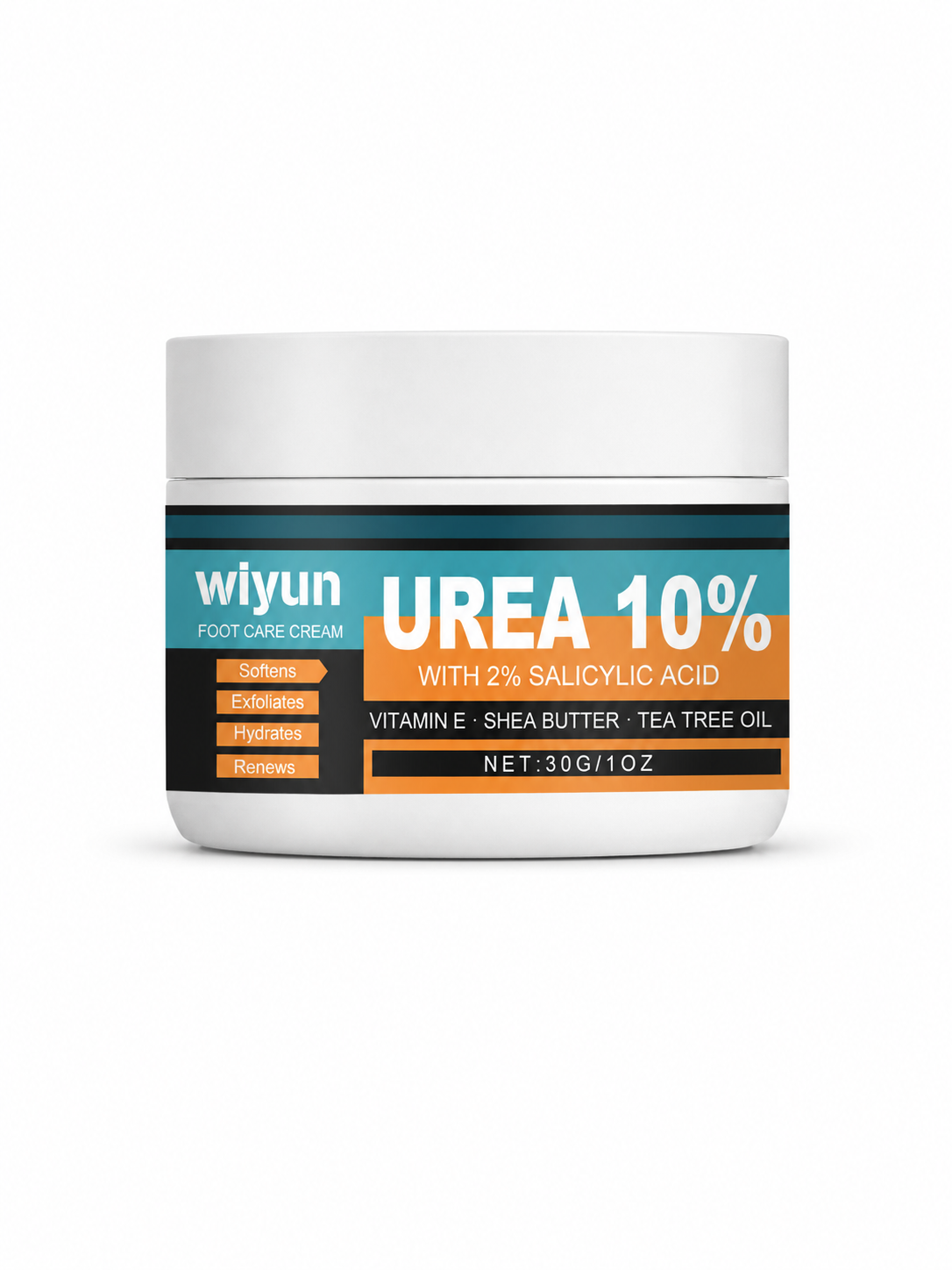
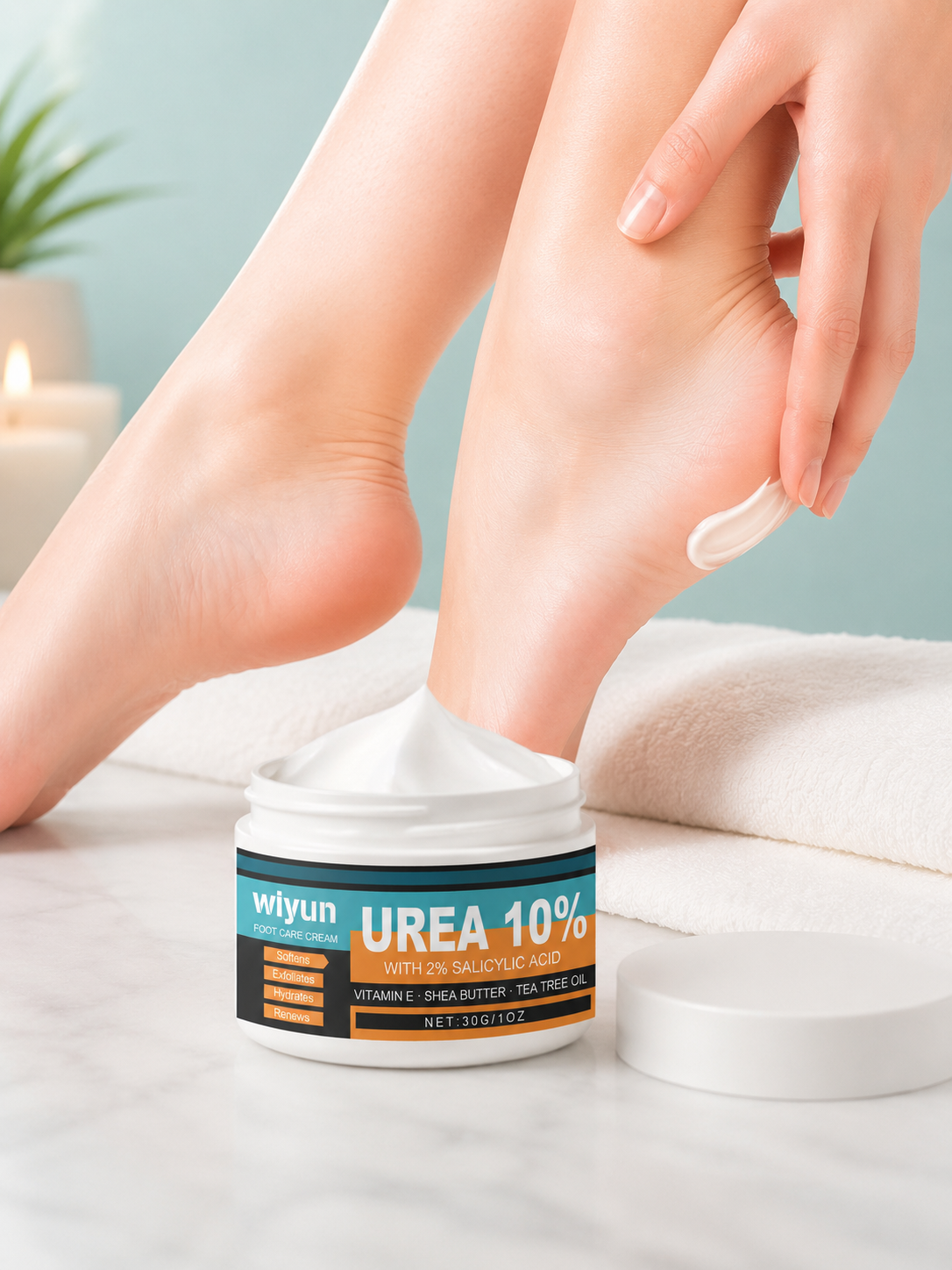
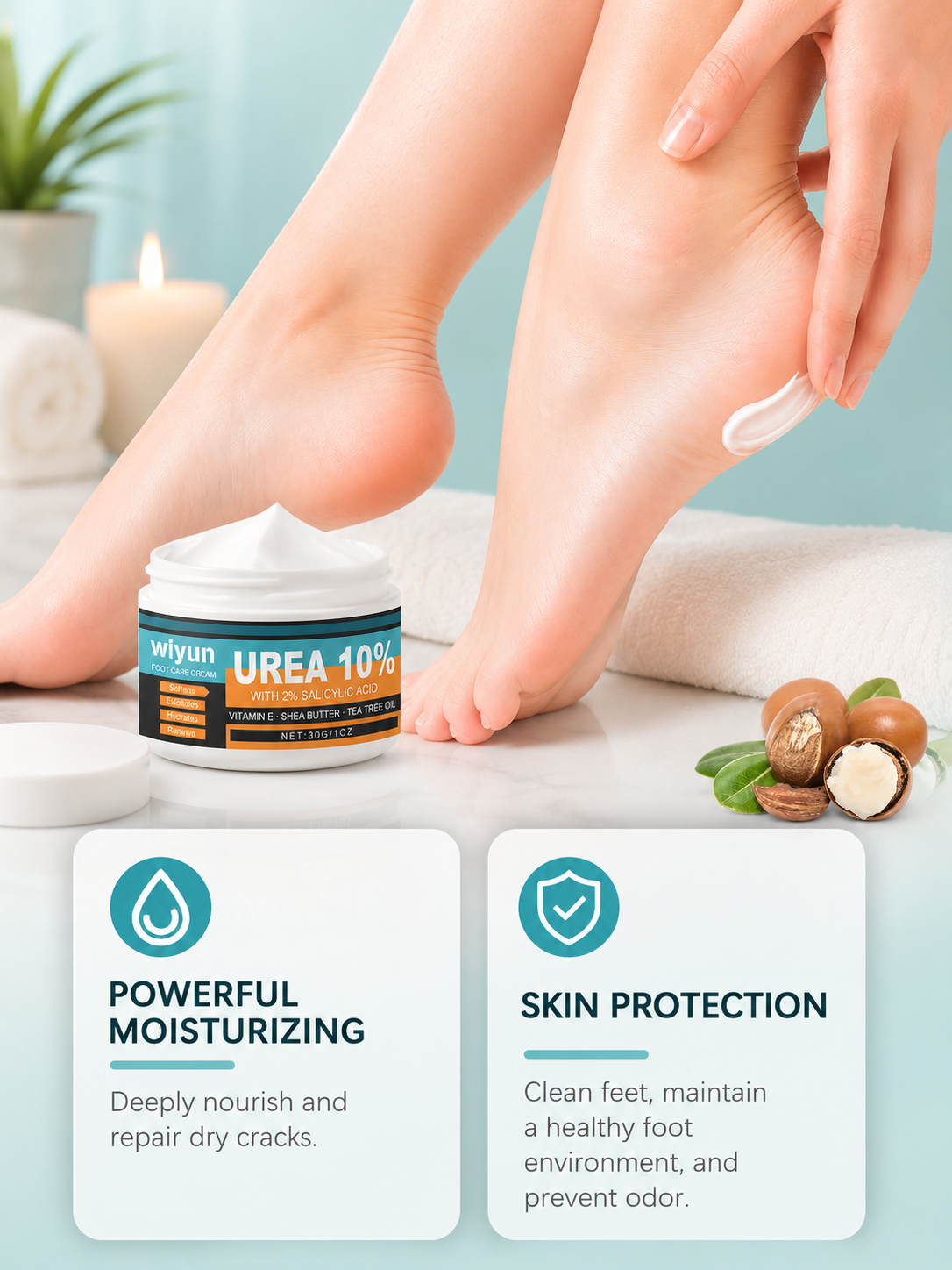
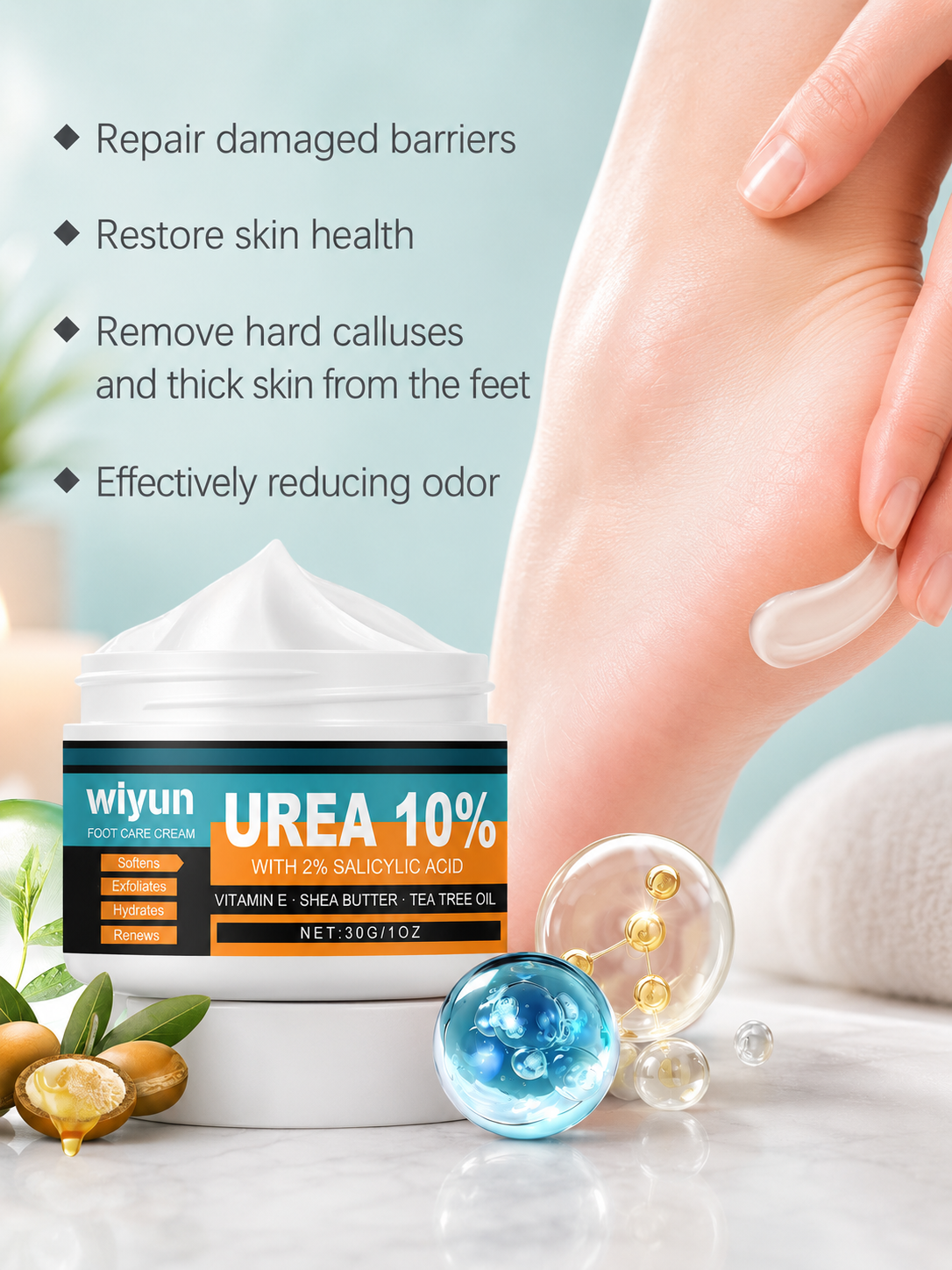
Wiyun Foot Repair Cream combines clinically active 10% urea and 2% salicylic acid to dissolve calluses, seal cracked heels, and restore the skin barrier.
Read the full descriptionWiyun Foot Repair Cream combines clinically active 10% urea and 2% salicylic acid to dissolve calluses, seal cracked heels, and restore the skin barrier.
10% urea with 2% salicylic acid repairs cracked heels and removes calluses
Wiyun Foot Repair Cream dissolves thick calluses, seals the skin barrier, and leaves heels genuinely smooth — not just temporarily soft. One small jar, measurable results.
Urea below 5% only moisturizes. At 10%, it breaks down the peptide bonds holding dead skin cells together, allowing hardened callus tissue to slough away without scrubbing. Clinically the threshold where real keratolytic action begins.
Salicylic acid penetrates the stratum corneum to dissolve intercellular cement in thick skin, while shea butter and vitamin E follow behind — locking moisture into the freshly exposed layers and rebuilding the lipid barrier against daily friction and environmental stress.
As dead skin layers are removed, the exposed surface needs protection. Tea tree oil provides a natural antimicrobial shield — reducing the bacteria responsible for foot odor without harsh synthetic preservatives, keeping your feet clean and confident throughout the day.
Clean, dry skin allows the actives to penetrate without dilution. Pat feet fully dry — especially between toes — before applying.
Use a pea-to-marble sized amount per heel. The cream is concentrated — spreading thin is more effective than thick. Focus on callus zones, cracked areas, and the ball of the foot.
Work the cream into the skin with circular movements for 30–60 seconds. This encourages penetration and improves circulation in the treated area.
Occlusion dramatically improves the keratolytic effect. Cotton socks hold warmth and prevent cream from transferring, increasing the time urea and salicylic acid have to work on hardened skin.
Results are cumulative. The first week softens the surface; weeks two and three progressively reduce callus depth. After heels are smooth, reduce to 2–3 times weekly to maintain.

Standard moisturizers sit on top of hardened skin and evaporate by morning. Cracked heels, thick calluses, and persistent dryness are structural problems — the buildup of dead skin cells that form a barrier no surface lotion can reach. Without keratolytic actives, you're hydrating the callus, not the skin beneath it.
Wiyun combines 10% urea — a clinically validated keratolytic that loosens and removes dead skin layers — with 2% salicylic acid, which exfoliates from inside the follicle outward. Together they dismantle callus buildup while vitamin E and shea butter immediately replenish what's exposed beneath. Tea tree oil keeps the environment clean and odor-free as skin renews.

With the hardened outer layer removed, shea butter and vitamin E can finally reach living skin cells and reinforce the lipid barrier. The result isn't a temporary softness that fades after your next shower — it's visibly smoother heels and a barrier that holds moisture on its own. Evening application, morning payoff.
Shea butter and vitamin E are felt immediately — skin feels less tight and dry after the first application. Urea begins loosening the outermost dead skin layer.
The surface of callused areas begins to feel slightly softer and less rough to the touch. Some flaking of loosened dead skin is normal and indicates the formula is working.
Thickened skin on heels and the ball of the foot shows measurable reduction. Deep cracks begin to close as the skin barrier is reinforced. Odor reduction typically noticeable by day 10.
Continued use brings heels to a genuinely smooth texture. The lipid barrier is reinforced enough to hold moisture independently. Many users switch to a 3× weekly maintenance schedule at this point.
Keratolytic — dissolves bonds between dead skin cells, enabling callus removal without mechanical scrubbing
Exfoliant — penetrates the stratum corneum to remove accumulated dead skin layers from within
Emollient — seals the newly exposed skin layer with fatty acids, rebuilding the lipid barrier
Antioxidant + moisturizer — protects skin cells from oxidative stress and supports healing of cracked tissue
Natural antimicrobial — reduces odor-causing bacteria and protects renewing skin from microbial contamination
Avoid leaving in direct sunlight or near heat sources — high temperatures can affect cream consistency and active stability.
Always use dry fingers or a spatula to scoop product. Introducing water to the jar can encourage microbial growth and degrade the formula.
The screw cap creates an airtight seal that preserves the volatile tea tree oil compounds and prevents cream from drying out.
| Wiyun Foot Repair Cream | Standard Foot Lotion | |
|---|---|---|
| Keratolytic urea (≥10%) | — | |
| Salicylic acid exfoliant | — | |
| Callus removal (structural) | — | |
| Surface moisturization | ||
| Antimicrobial / odor control | Partial | |
| Barrier repair (shea + vitamin E) | Partial |
Most foot creams rely on humectants and emollients to soften the surface temporarily. Wiyun contains 10% urea and 2% salicylic acid — both are keratolytics, meaning they chemically break down dead skin rather than coating it. That's the difference between addressing the symptom and addressing the cause.
At 2%, salicylic acid is well tolerated on foot skin for most people. Foot skin is significantly thicker than facial skin, where irritation is more common. If you have very sensitive skin or active wounds, do a small patch test on the heel first and avoid applying to broken or bleeding skin.
The formula is designed for feet where skin is thicker, but many users also apply it to elbow skin and very rough hand patches. Avoid facial skin, which is far more sensitive to the concentrations used here.
Yes — through two mechanisms. Tea tree oil provides direct antimicrobial action against odor-causing bacteria. Additionally, by removing the dead skin buildup where bacteria colonize, the overall bacterial load on the foot is reduced over time.


 Wiyun 10% Urea Foot Cream — Callus & Cracked Heel Repair