
$74.90
Free delivery · 7–14 days
Ultrasonic Dog Repeller for Quieter, Calmer TrainingGarden visitors are the problem this stake solves. A solar repeller in the bed sends 360° ultrasonic pulses and red flashing lights at cats, dogs and wildlife, and it runs on sun with no outlet or cable. Mornings start with the beds still in one piece.
Read the full descriptionGarden visitors are the problem this stake solves. A solar repeller in the bed sends 360° ultrasonic pulses and red flashing lights at cats, dogs and wildlife, and it runs on sun with no outlet or cable. Mornings start with the beds still in one piece.
Solar-powered 360° animal repeller that deters cats, dogs and wildlife with ultrasonic pulses, motion-triggered light and no wiring
Cats, dogs and wildlife dig, trample and leave mess overnight. This solar repeller sits on a ground stake and deters them with 360° ultrasonic pulses and flashing lights, with no cable to run.
The transmitters sit around the body, so the pulses reach animals coming from any side of the unit. Set it at the edge of a bed and the approach path is covered from one position.
Infrared sensors detect movement and set off the ultrasonic pulses and red flashing lights in the same moment. The lights give the warning as an animal comes near, before it reaches the seedlings.
The solar panel is fixed to the top of the unit, so there is no wire to run across the lawn and no outlet to find. A micro USB port is there for topping up when the sun is weak.
Slide the ground support rod into the unit and push it into open soil at the edge of the bed or lawn. It stands steady once it is in the ground.
Angle the sensor lenses toward the planting area and the path animals use most. Keep walls and fences out of the view, since a blocked sensor cannot see animals coming in.
Leave the solar panel in direct sun. Avoid deep shade under trees, because low light leaves the unit short of power.
Use the gear switch to adjust the deterrent to your situation. Move the unit if one animal keeps coming in from an uncovered side.
Ultrasonic transmitters, infrared sensors, LED and red warning lights
Holds the unit upright in soil
Fixed to the top of the unit, nothing to assemble
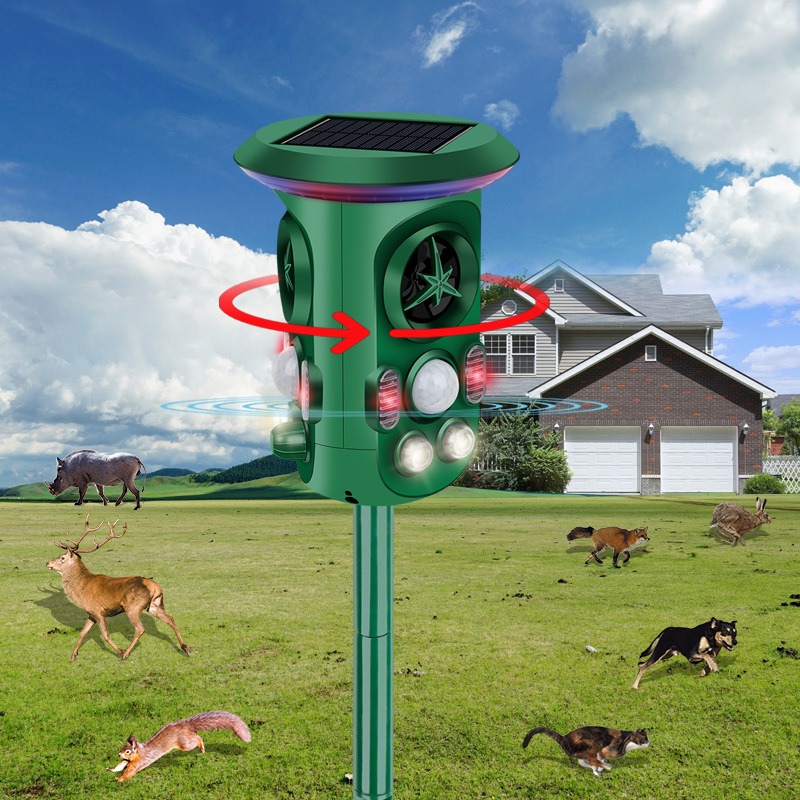
You walk out with coffee and find the bed dug up again, seedlings flattened and the lawn marked where something slept. Fencing takes a weekend and animals still dig under it. Sprays wash off after the first rain, and patrolling the garden at 2 a.m. costs sleep you do not get back.
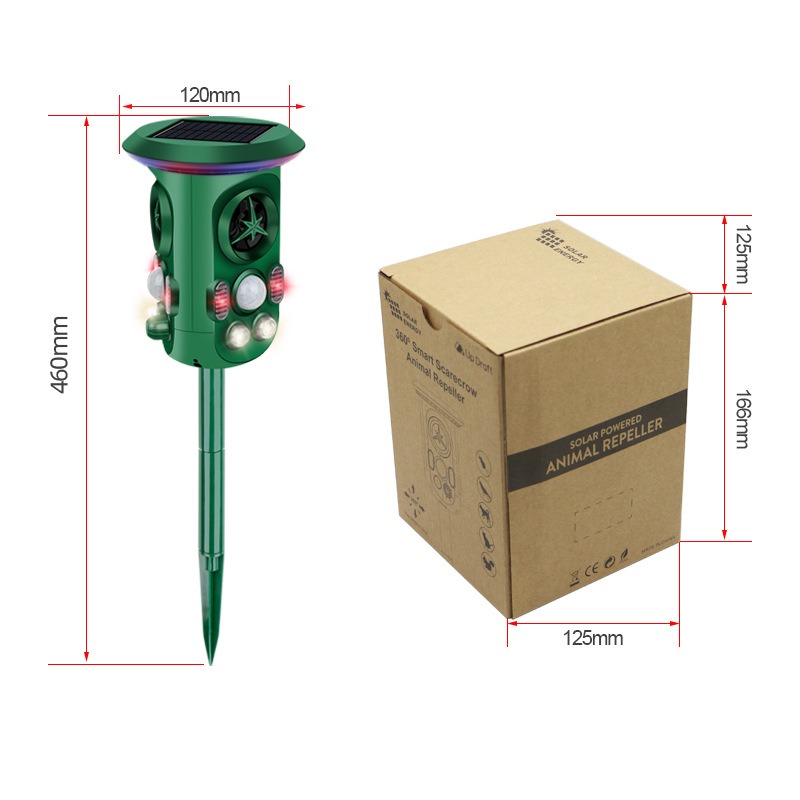
Push the ground rod into soil, face the sensors toward the bed, and let the top panel soak up daylight. There is no outlet to find and no cable to bury under the lawn. After a day of sun, the unit runs on its own and watches the approach path.
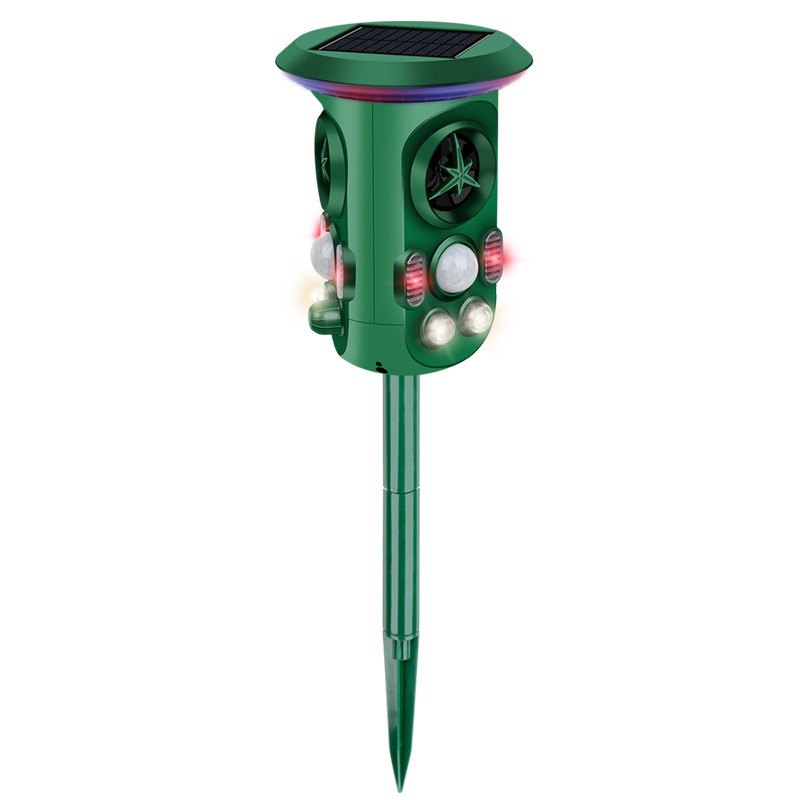
The beds stay intact because the unit reacts every time something moves toward them. Mornings are quiet. The cleanup you used to do before coffee is gone, and the garden looks the way you left it.
Push the ground rod into soil, angle the sensors toward the area you want covered, and let the solar panel get some daylight before expecting nightly activity.
Check whether visits drop in the protected area. If an animal keeps coming in from an uncovered side, adjust the position.
Note how the beds look compared with before. Some animals take longer to change their route, so keep the unit in the same spot and give it time.
| This solar repeller | Fencing | Animal sprays | |
|---|---|---|---|
| Covers all directions | Yes | Partial | No |
| Setup in minutes | Yes | No | Yes |
| Holds up after rain | Yes | Yes | No |
| Pulses and lights as a warning | Yes | No | No |
| Needs ongoing patrols | No | No | Yes |
It is built for that mix. The unit targets cats, dogs, foxes, deer and other animals, and the flashing lights add a visual warning. Results still vary by animal and by spot, so watch the first week. Animals can get used to one unit left in one place, so move it now and then or add a second unit when an animal keeps coming in from an open side.
The pulses and lights are meant to deter animals approaching the protected area, and your own pets may still notice them. Keep the unit away from the spots where your pets rest, and watch how they react during the first few nights. If a pet seems stressed, move the unit to the far side of the yard.
The panel sits on top of the unit and charges in daylight. Overcast days charge it more slowly, and deep shade under trees leaves it short of power. Put it where it gets several hours of direct sun. The micro USB port lets you top it up when you need to.
Stake it at the edge of the bed or lawn, on open ground, and face the sensors toward the planting area and the path animals use. Keep walls and fences out of the sensor view. For a long bed or a large lawn, add a second unit on the other side.
Neither. The solar panel is built in and charges the unit, so there is no outlet and no cable. The micro USB port is there for charging when the sun is weak.
It is built as an outdoor unit with a plastic body and a solar panel on top. Push the ground rod firmly into soil so it stays upright, keep the sensor lenses clear of debris, and check it after storms.


