
$34.90
Free delivery · 7–14 days
Non-Stick Rice Serving Scoop for Fluffy, Clean Rice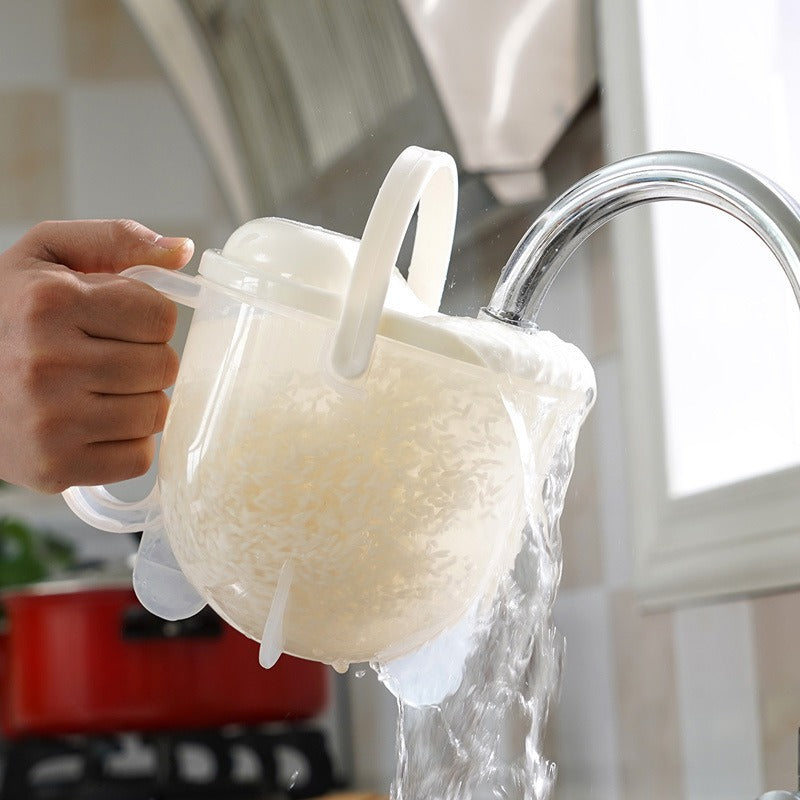
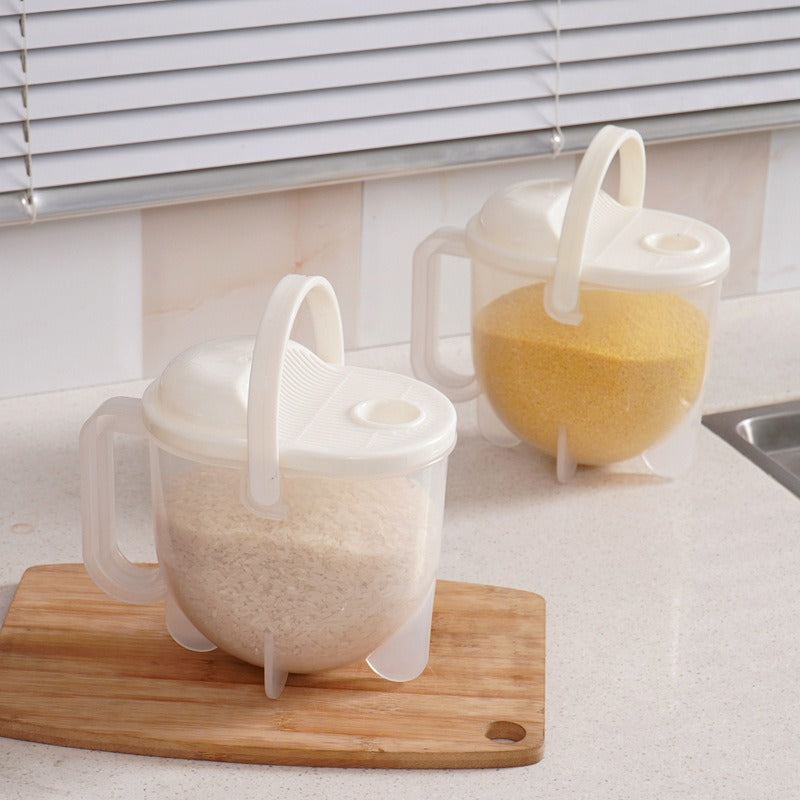
Rinse rice, pour off the cloudy water, and cook from the same bowl without chasing grains around the sink. The clear body shows the water level as you work, and the strainer lid keeps the grains where they belong. A plain, lightweight tool for daily rice and millet prep.
Read the full descriptionRinse rice, pour off the cloudy water, and cook from the same bowl without chasing grains around the sink. The clear body shows the water level as you work, and the strainer lid keeps the grains where they belong. A plain, lightweight tool for daily rice and millet prep.
Wash rice right in the bowl: rinse, drain, and keep grains from going down the sink
Rinsing rice usually means a colander, a second bowl, and grains lost to the drain. Here, one clear bowl with a strainer lid handles the whole job before you cook.
The lid has pour openings that let the cloudy water out while the rice stays in the bowl. Tip it slowly and the grains settle back into the base. You do not need a second strainer to catch what slips past.
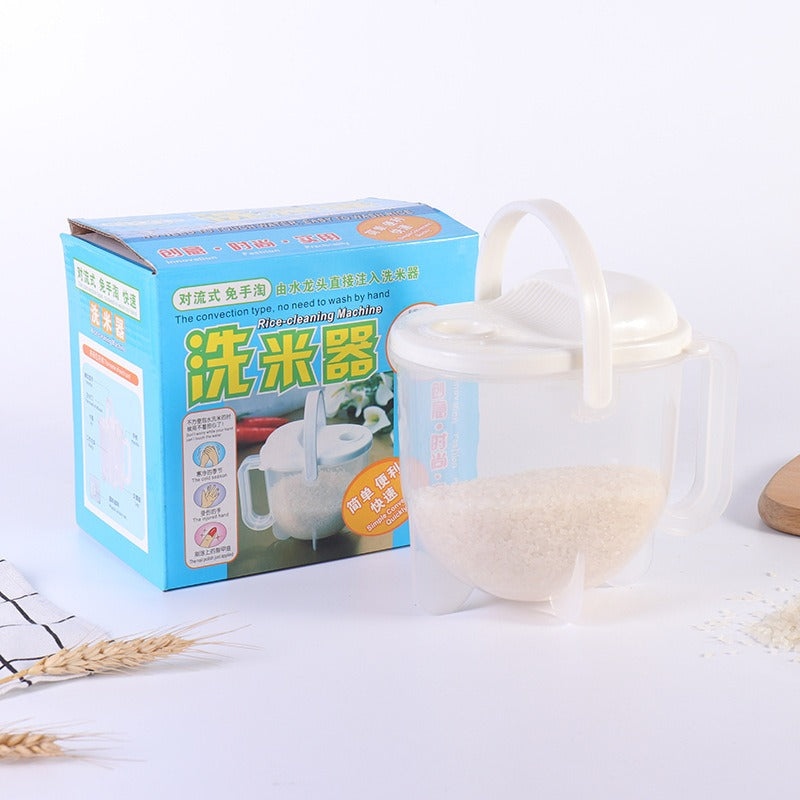
The translucent body shows the rice and the water level while you work. You can see when the rinse runs clear without lifting the lid or peering into a pot. White rice and yellow millet both show up plainly.
Rinse, drain, and cook from the same container. The arched handle lets you carry the bowl to the stove, and the footed base lifts it off the counter so it can drain once you are finished. Fewer transfers means fewer grains left behind.
Measure the rice into the bowl and fill with cold water to a moderate level. Too much water makes the rinse level harder to read.
Move the water with your hand for a few seconds. The clear body shows you when the water turns cloudy.
Hold the lid in place and tip the bowl so the cloudy water runs out through the openings. A slow pour keeps smaller grains in the bowl.
Refill and drain again until the water looks clear enough for the rice you are cooking.
Drain fully, then cook straight from the bowl. Rinse the lid under the tap afterward so starch does not build up in the openings.
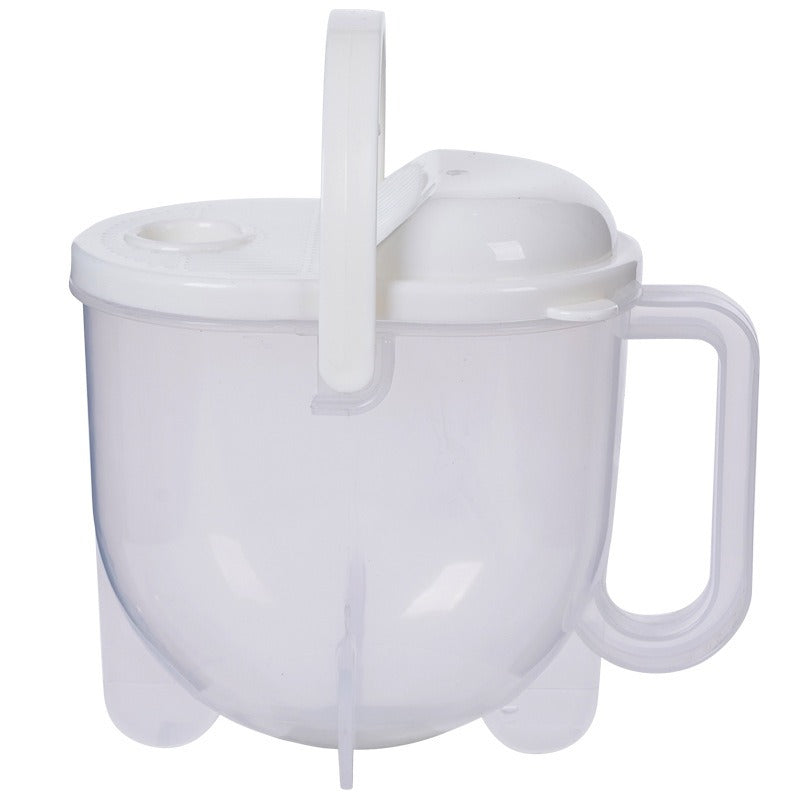
Clear body with an arched carry handle on top and a side handle
Pour openings drain the water while the grains stay in the bowl
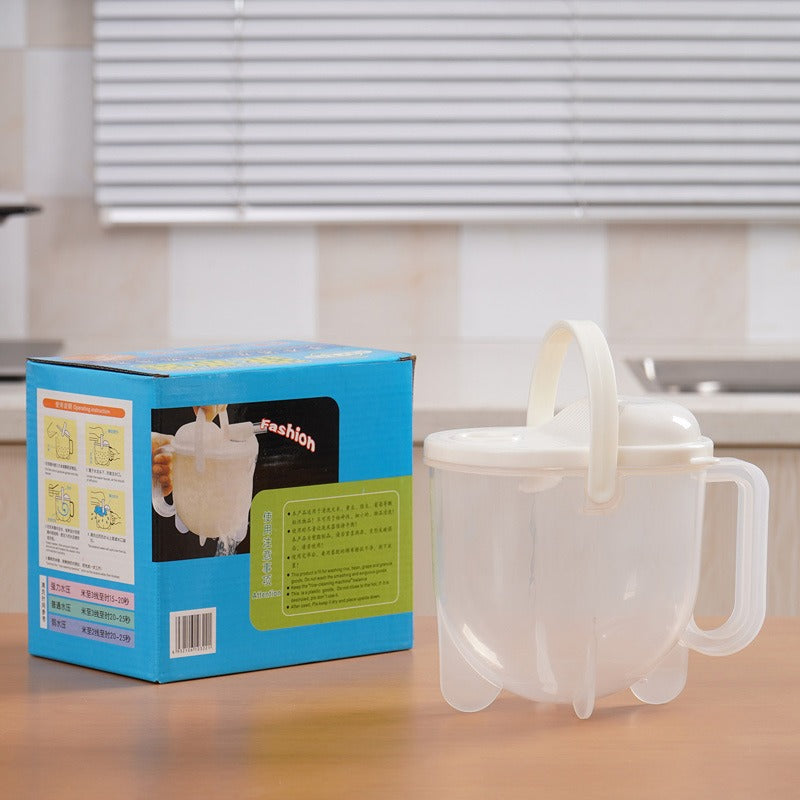
Illustrated rinse and drain steps on the box side panels
Smaller grains need a slower pour. The lid holds most of the grain when you tip the bowl gently, but a fast pour can carry some millet out with the water. Swirl gently and drain at an easy angle.
It is a budget plastic build, light in the hand and clear enough to see through. It handles daily rinsing well, but it is not glass or steel, so expect a lighter feel. For most home cooks that trade is fine, since the job is rinsing rice, not holding heat.
It is a compact bowl sized for everyday rice portions, not a large prep bowl. The footed base lifts it off the basin, so it sits on the counter or in the sink without taking much room. If your tap is high or your sink is shallow, check the clearance first.
You already own a bowl, and this replaces the colander and the transfer step in one piece. Over a week of daily rice, that means fewer grains lost down the drain and one less tool to wash every night.
Yes. Millet, brown rice, and multi-grain blends all rinse in it. The clear body helps you judge the water on each one, and smaller grains just need a gentler pour.
Rinse the lid under the tap after each use, then let it air dry before storing it. Rice starch can collect in the openings and slow the drain, so a quick rinse each time keeps them clear. A cleaning sponges kitchen pick handles the bowl itself.


 Rice Washing Bowl with Strainer Lid, Rinse and Drain