
$94.90
Free delivery · 7–14 days
Lightweight Behind-Ear Hearing Amplifier for Seniors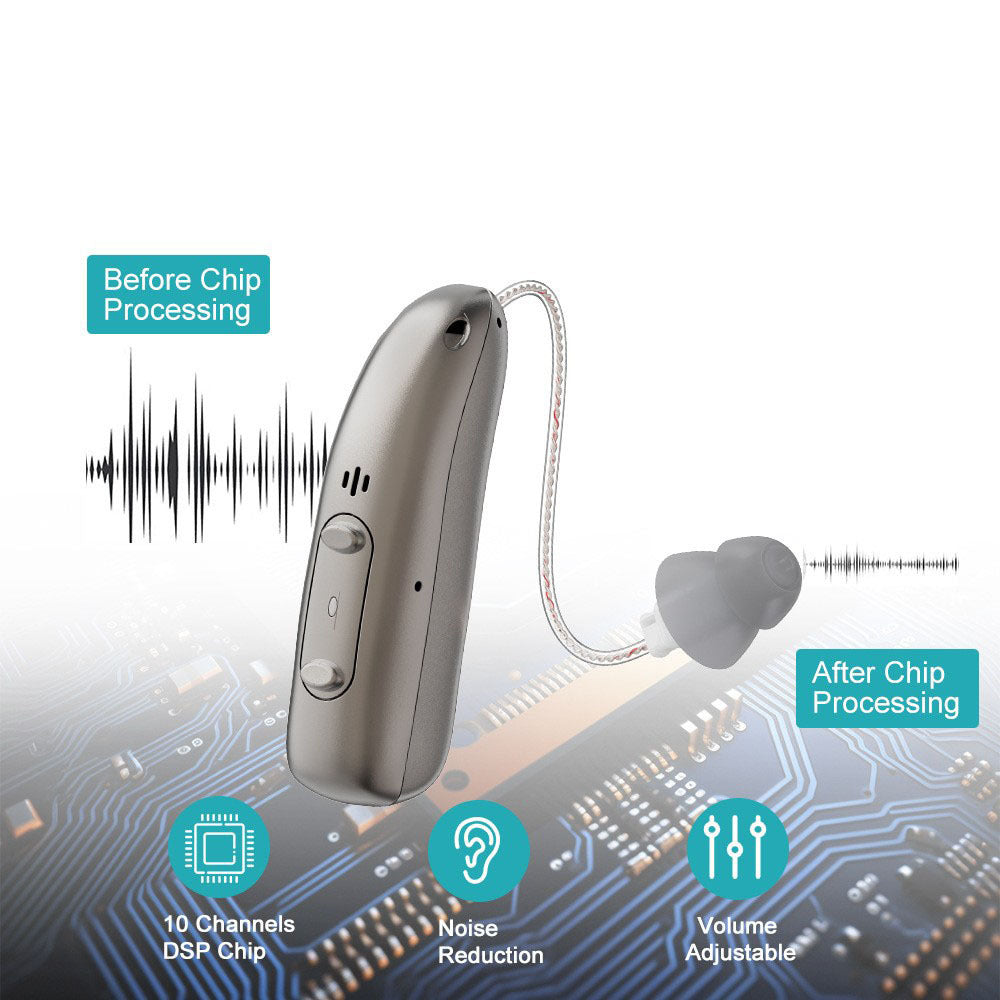
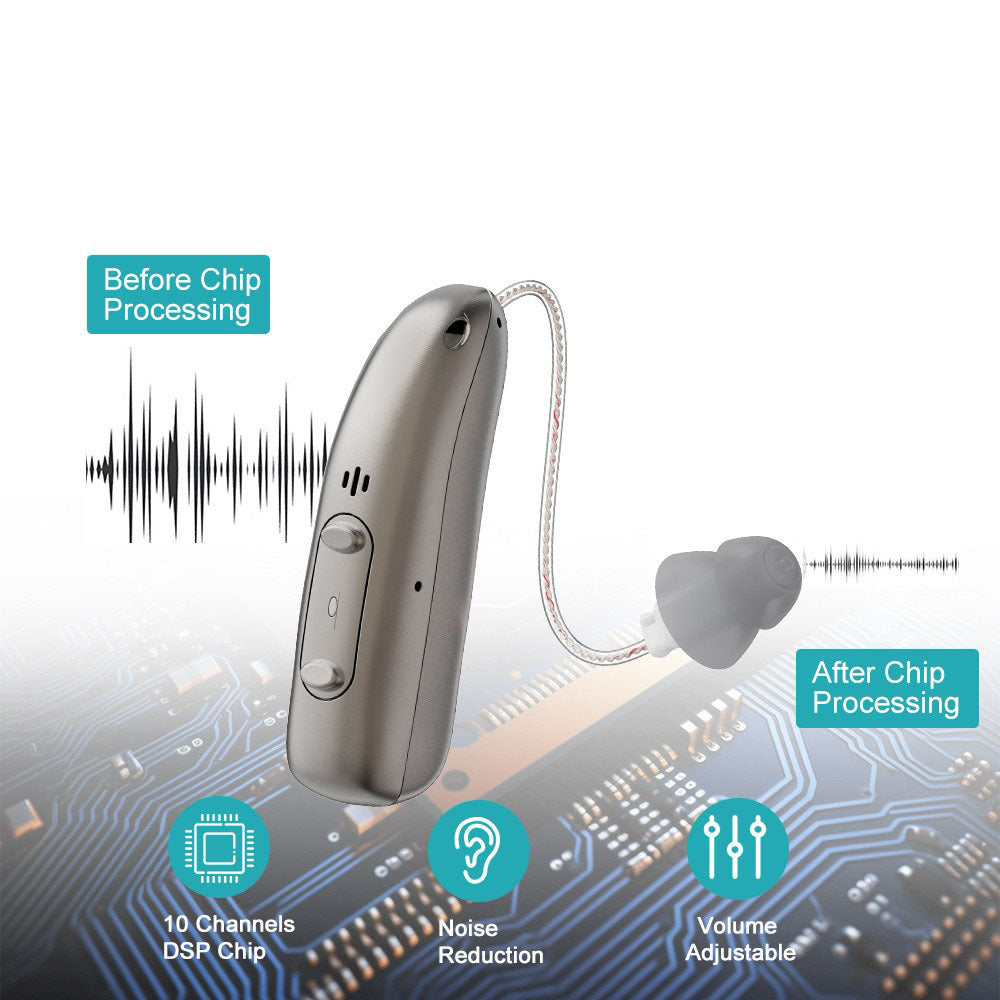
Conversations come back into focus when speech stands out from the room around it. This rechargeable behind-the-ear aid uses a 10-channel DSP chip to reduce background noise, and the Bluetooth app lets you tune volume and frequency sliders from your phone. The charging case keeps the aids ready every morning.
Read the full descriptionConversations come back into focus when speech stands out from the room around it. This rechargeable behind-the-ear aid uses a 10-channel DSP chip to reduce background noise, and the Bluetooth app lets you tune volume and frequency sliders from your phone. The charging case keeps the aids ready every morning.
Clearer hearing with intelligent noise reduction, adjustable from your phone
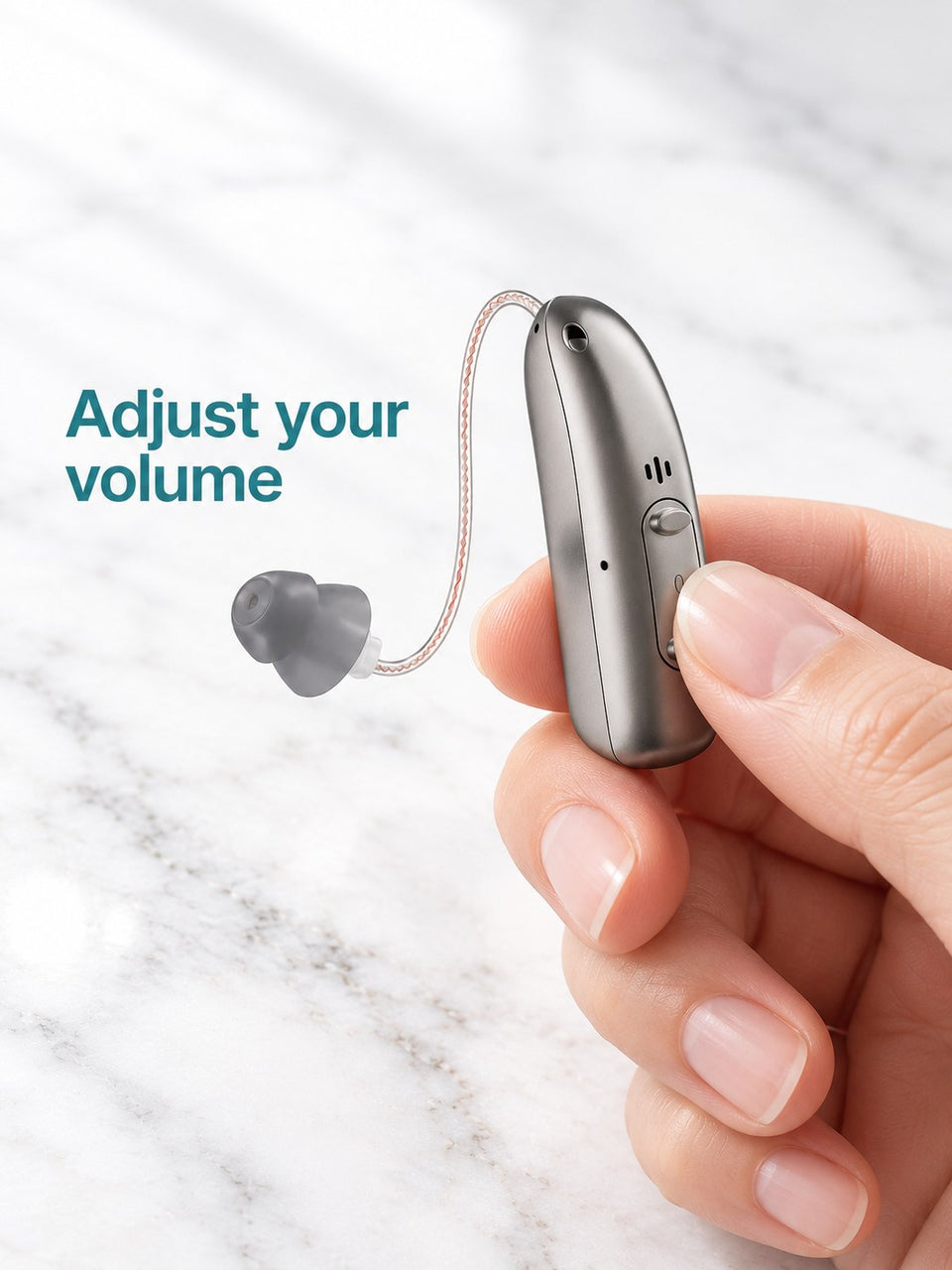
Words blur in restaurants and on the phone? Keep up with speech in noisy rooms, then adjust volume and tone from an app instead of fiddling with tiny buttons.

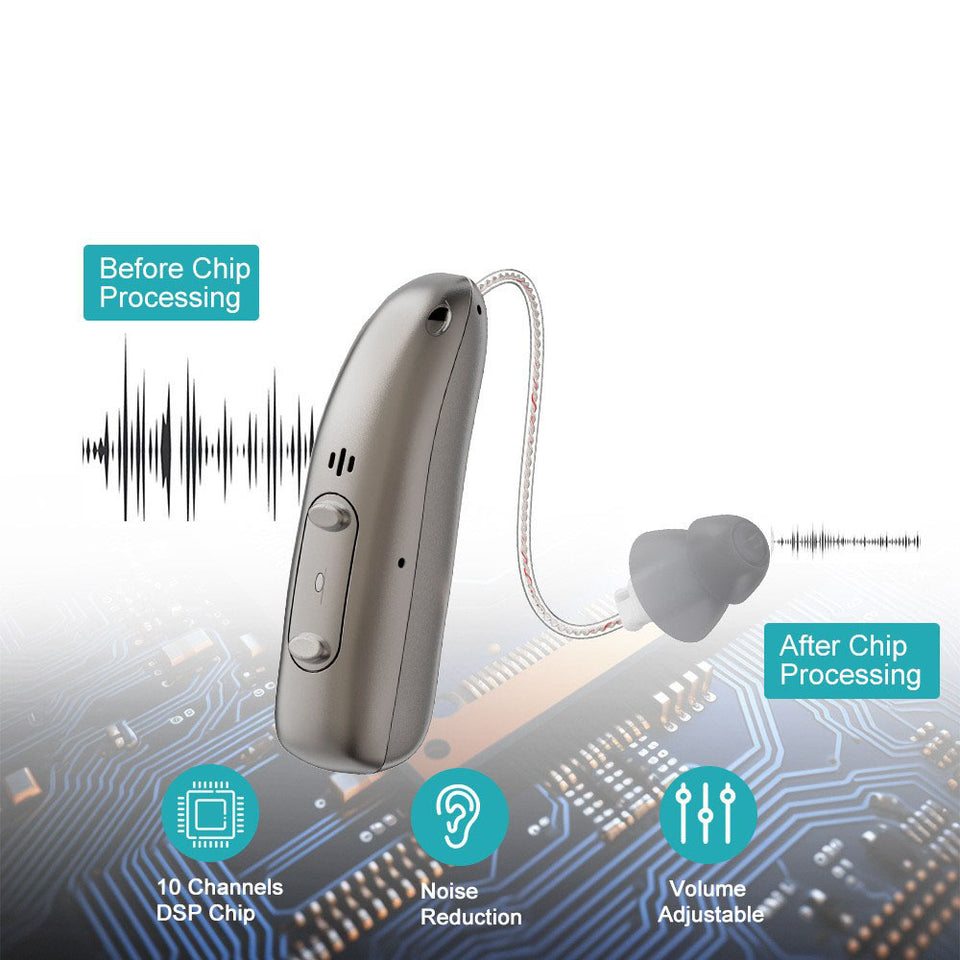
The 10-channel DSP chip processes incoming sound and reduces background noise, so voices across the table carry over clattering dishes and chatter. The processing is visible in the before and after chip graphic: the noisy waveform on one side, a cleaned one on the other.

Bluetooth connects the aids to the app, which offers equaliser-style frequency sliders from 500Hz to 4kHz along with volume and program controls. You shape the tone to your ears instead of guessing with two small buttons on the device.

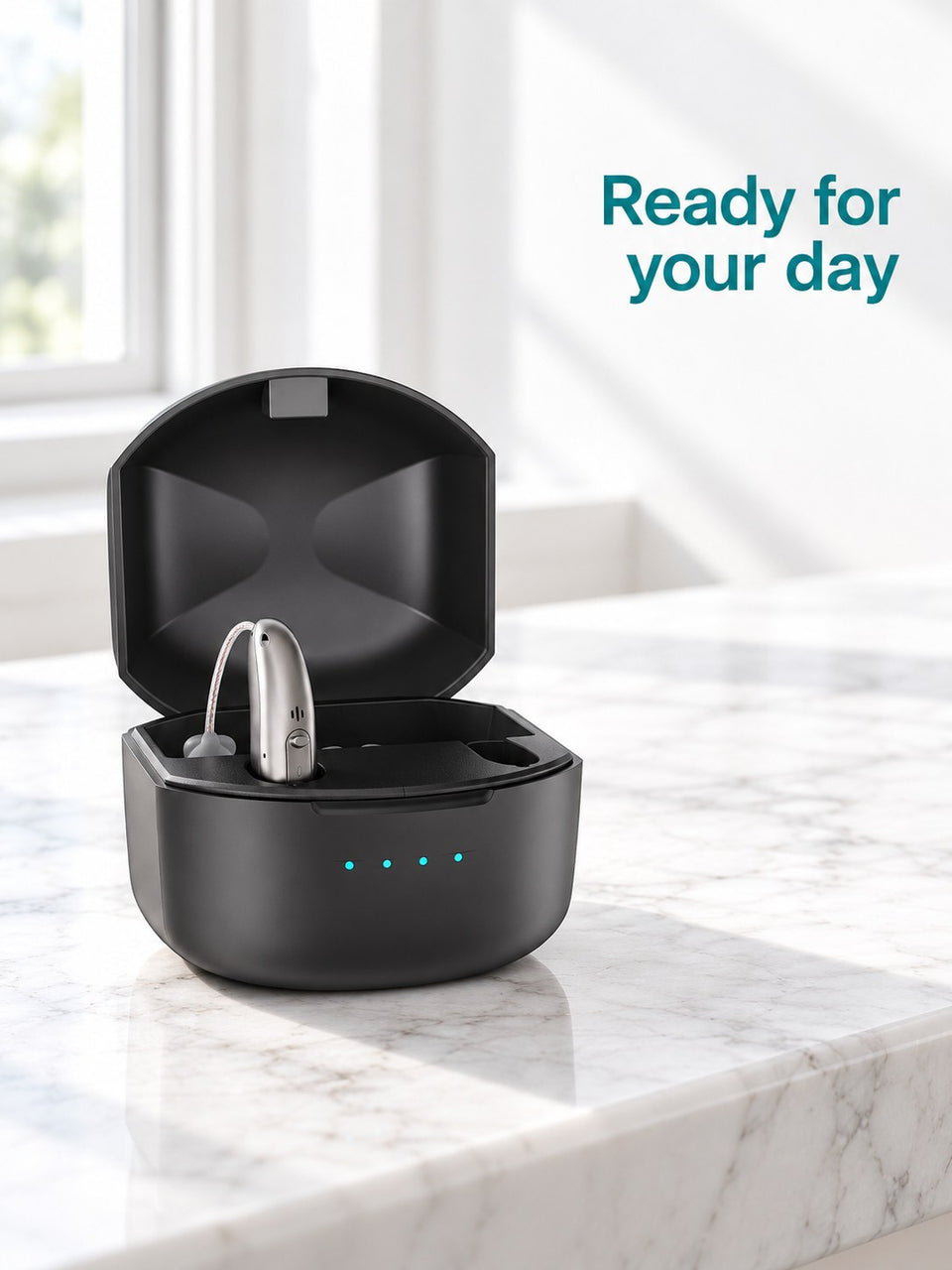
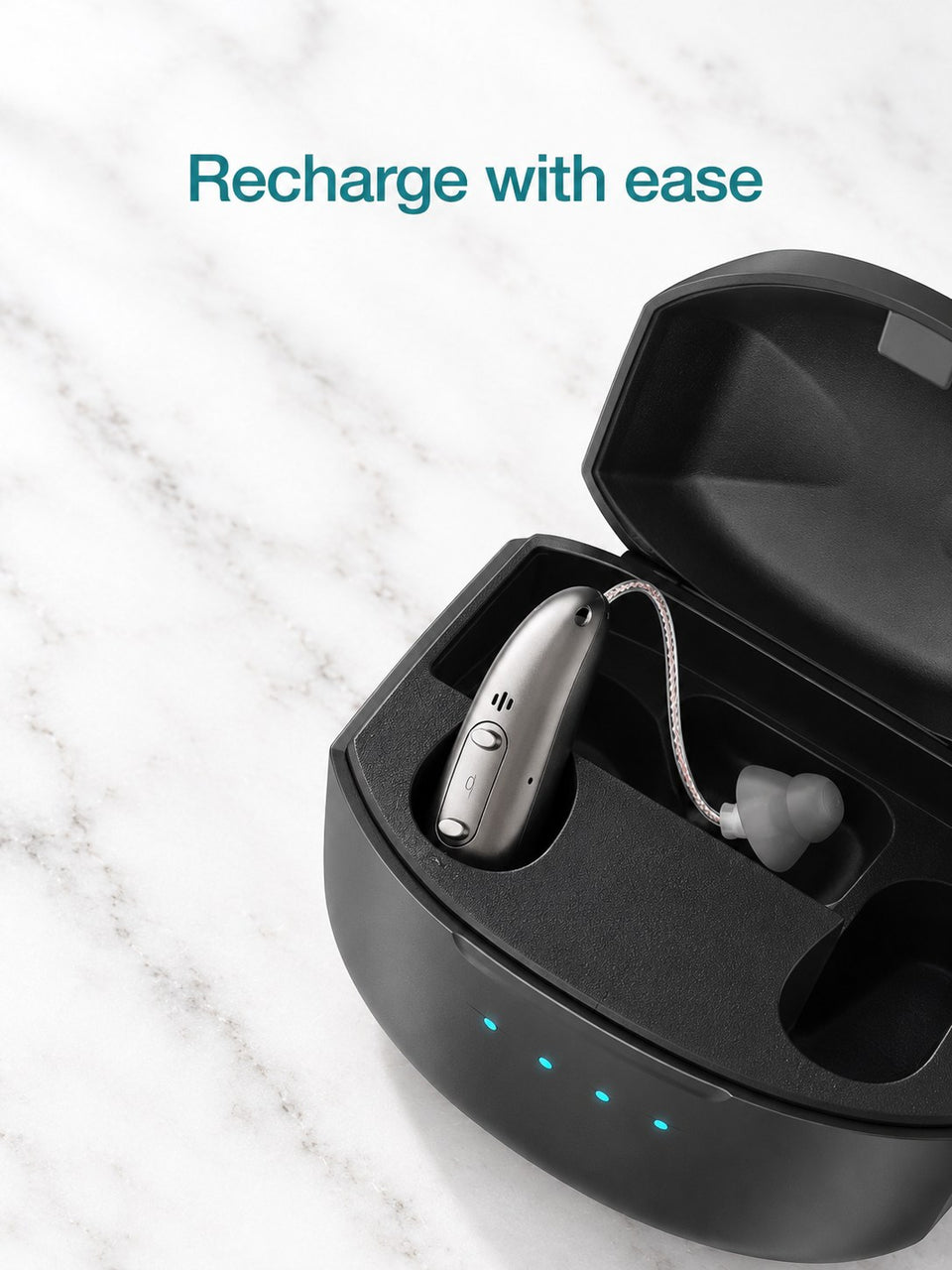
The charging case has LED indicators and charges the aids while you sleep. There are no batteries to buy, track or swap, and the case travels with the aids for the day.
Plug the USB cable into the wall adapter and place the case on charge. Let the LED indicators show a full charge before the first use.
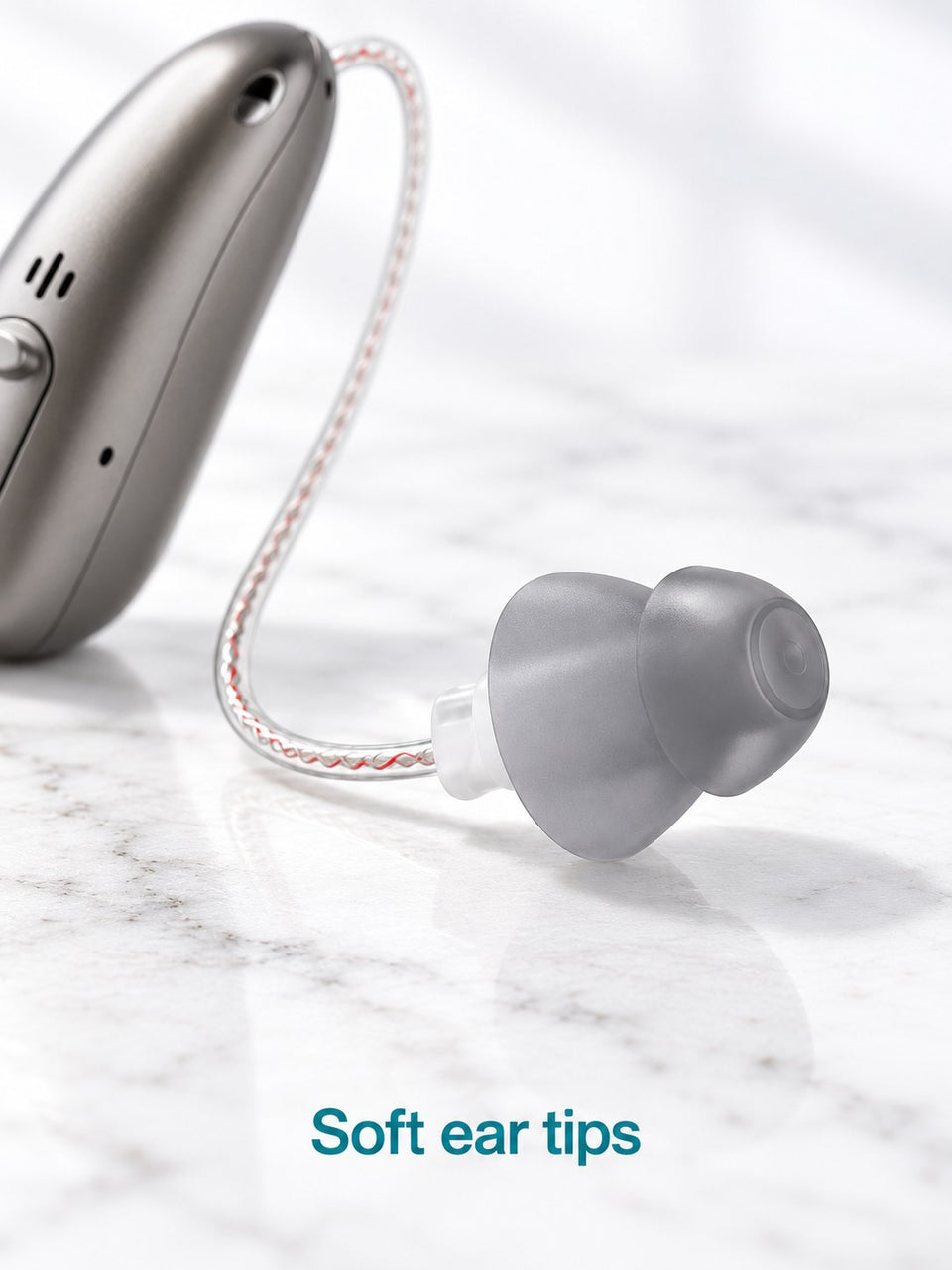
Test the six ear tip sizes and pick the one that holds the receiver snugly. Keep the tip on the receiver before you place the aid behind the ear.
Open the app on your phone and connect the aids. Pair both the left and right units so volume and tone match on each side.
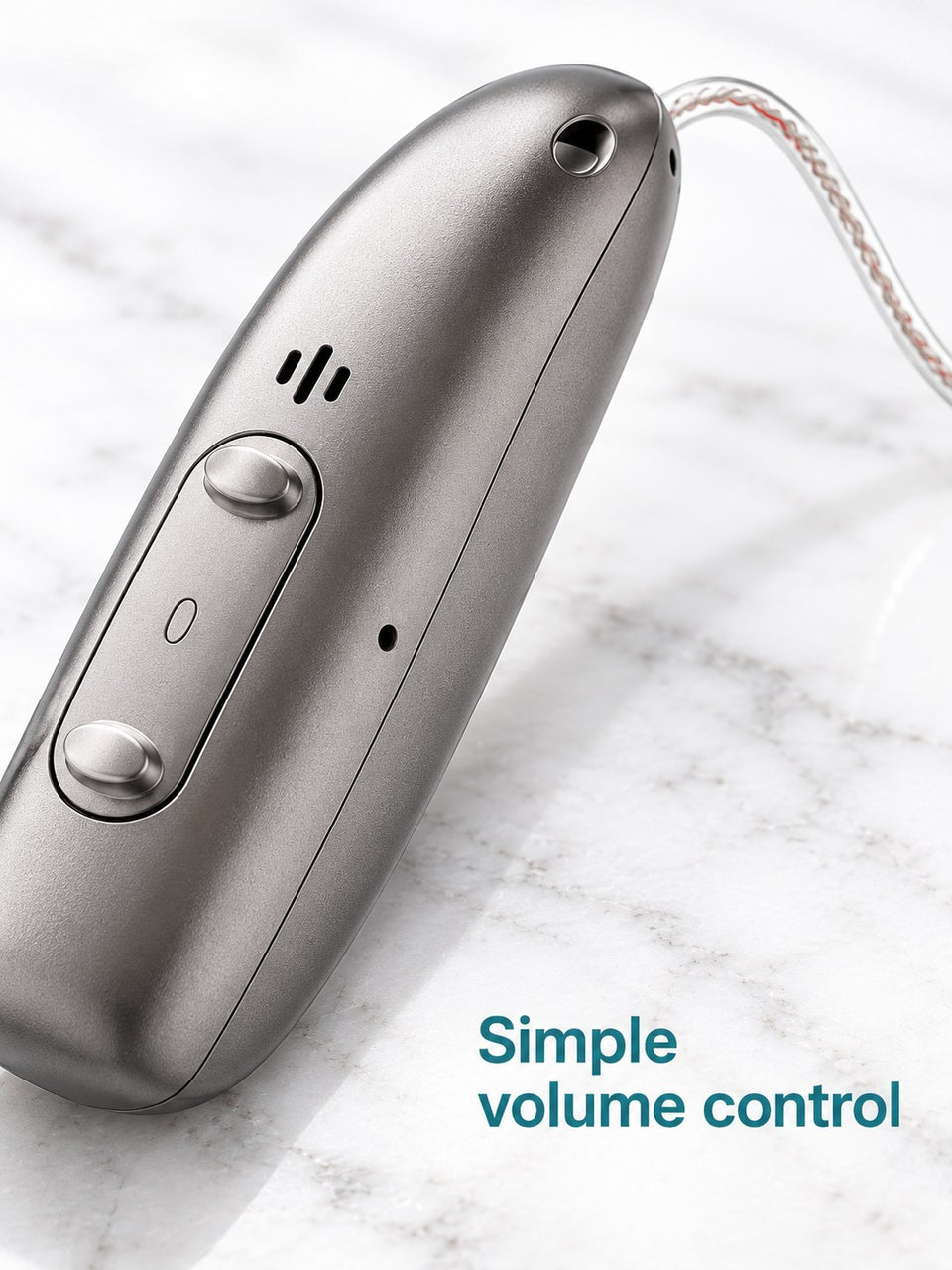
Use the frequency sliders and program settings in the app for conversation and TV. Raise volume in small steps, then use the buttons on the device for quick changes.
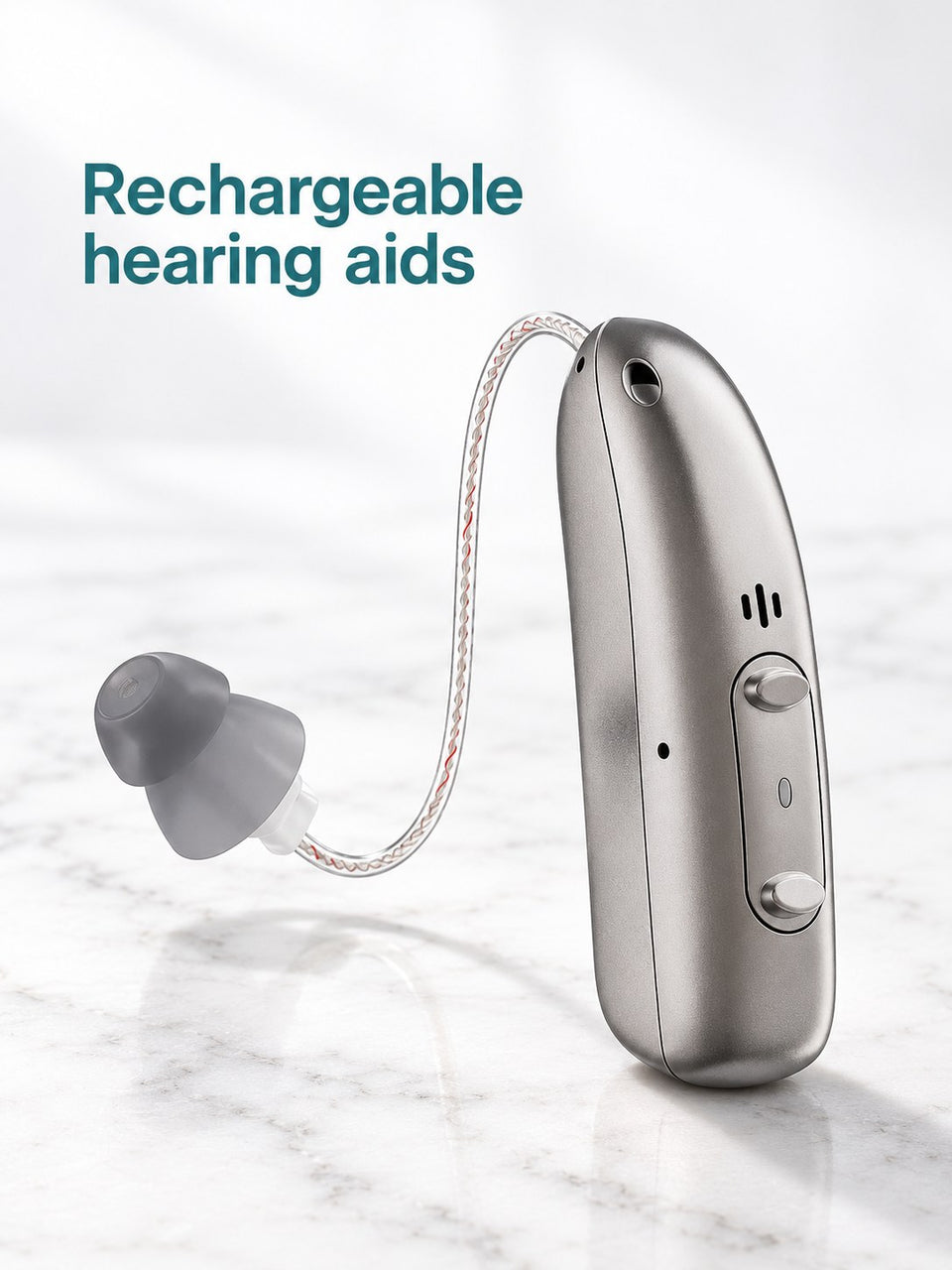
Left and right behind-the-ear units with receiver
LED indicators show charging status
Connects the case to power
Powers the USB cable
Six sizes to find a snug fit
Clattering dishes and overlapping chatter bury the speech you came to hear. You nod along, miss the punchline, and stop jumping into the conversation. A basic amplifier only makes everything louder, noise included, so the room still feels like a wall of sound.
This rechargeable behind-the-ear aid runs a 10-channel DSP chip that processes sound to reduce background noise. Speech comes through more clearly, and the Bluetooth app lets you tune the frequency sliders and volume without touching the device. No disposable batteries to swap, just a charging case that sits on the nightstand.
Set the volume and programs once, then change them with one tap in the app or a press of the button on the aid. Place both units in the case overnight and they are ready by morning. Conversations at the table, on the phone and in front of the TV start to feel like your own again.
Confirm the ear tip is snug and the app connects. Adjust volume gently and wear the aids for short periods in a quiet room first.
Try the frequency sliders and programs for conversation and TV. Note which settings feel clearer in your usual rooms.
Wear the aids for longer stretches as comfort allows and charge the case overnight. Tell a hearing professional about any soreness or feedback.
Most wearers have a routine for restaurants, calls and TV. Schedule a follow-up with a hearing professional to review the fit and settings.
Close the lid and let the LED indicators show a full charge.
Use a dry cloth on the casing and tube to clear moisture and wax.
Keep a spare size on hand so the fit stays snug.
Keep the aids in the case when not in use, away from heat and water.
| This | Basic amplifier | Disposable-battery aid | |
|---|---|---|---|
| Noise reduction | — | Partial | |
| Bluetooth app tuning | — | — | |
| Rechargeable case | — | — | |
| Volume control |
Six ear tip sizes come in the box. Try each one by feel and keep the tip that holds the receiver snugly without pressure. A loose tip lets sound leak, weakens the signal and can whistle, so switch sizes before you adjust the volume. If none of the six feel right, ask a hearing professional to check the fit.
Yes. This is a hearing aid, not a substitute for a professional hearing evaluation. A hearing check confirms whether the device suits your loss and rules out causes that need medical care. Book the check first, then use the aid for daily listening.
Yes. The app runs over Bluetooth on a smartphone, so a caregiver can pair the aids, set volume and frequency sliders, and make changes during a phone call or TV session. Pairing is a one-time task. Most daily changes are a single tap.
Place both aids in the charging case, connect the USB cable to the wall adapter and close the lid. The LED indicators show charging status, so you can check the case before bed. Charging the case each night means the aids start the morning ready to wear.
A basic amplifier raises the volume of every sound, including the noise you want to tune out. This aid uses a 10-channel DSP chip to reduce background noise, so speech stands out more. The before and after chip graphic shows the difference in the signal.
Disposable batteries need replacing every few days, and that cost repeats for as long as you wear the aids. Rechargeable aids cut that recurring spend to the cost of electricity. The charging case, USB cable, wall adapter and six ear tips are all in the box, so there is no extra kit to buy before you start. wireless earbuds are built for music, not for speech in a room, so they do not replace a hearing aid.


 Rechargeable Hearing Aids with Bluetooth Noise Reduction