


$54.90
Free delivery · 7–14 days
Pelvic Support Belt for Pregnancy & Lower Back Pain
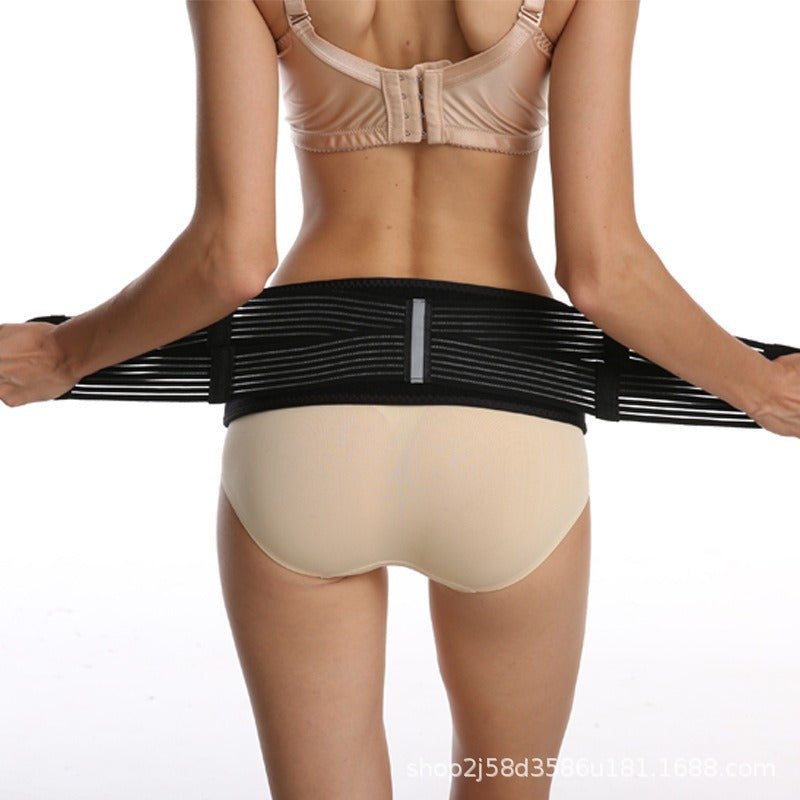
A therapeutic pelvic support girdle that uses adjustable compression straps to stabilise the sacroiliac joints, reduce lower back pain, and guide natural pelvic contraction after pregnancy.
Read the full descriptionA therapeutic pelvic support girdle that uses adjustable compression straps to stabilise the sacroiliac joints, reduce lower back pain, and guide natural pelvic contraction after pregnancy.
Clinical-grade pelvic support for safe, natural postpartum recovery and pelvic realignment
Regain pelvic stability and spinal alignment with targeted compression that supports your body’s natural healing after pregnancy.
Four independent velcro straps let you tailor compression exactly where you need it — across the hips, sacrum, or lower back — so pain relief isn’t a compromise.
The extended width wraps low enough to support the pubic symphysis yet high enough to reinforce sacral alignment — mimicking the support your pelvic floor needs.
A soft beige base with jet‑black compression bands is backed by breathable fabric that wicks moisture and stays discreet under clothing — no bulk, no irritation.
Place the central section over your sacrum (the flat triangular bone at the base of your spine). The beige panel should sit comfortably against your skin, with the black straps hanging free to each side.
Bring the two long front straps around your hips and cross them low over your pubic bone. Pull firmly but not tight enough to restrict breathing.
Reach behind and attach the velcro closures at the back. For extra lumbar support, pull the upper set of straps and fasten them diagonally across your lower back.
Main compression support with adjustable straps
Step‑by‑step application guide

After birth, your pelvis has widened and your sacroiliac joints are vulnerable. Everyday movements — bending to lift your baby, sitting up in bed, even walking — can trigger sharp, unsettling pain. It’s not just discomfort; it’s your body telling you it needs support.
Unlike a one‑size band, this girdle offers multiple strap configurations and velcro closures that adapt to your changing shape. The moment you wrap it around your hips, the targeted compression hugs your sacrum and lumbar region — quieting the instability.

Weeks into use, the daily ritual becomes second nature. You move with a confidence you didn’t think you’d regain so soon. The girdle hasn’t just supported your pelvis — it’s given you the freedom to focus on your baby, not your limitations.
The moment you tighten the straps, you’ll feel a gentle, even pressure that eases pelvic instability. Many mothers report walking more comfortably within minutes.
Wearing the belt 2‑3 hours daily starts to reduce the sharp sacroiliac twinges when standing or shifting weight. You’ll notice you don’t guard your movements as much.
By day 14, the girdle helps retrain your posture. You’ll find yourself standing taller, with less forward lean, because your pelvis is now in a more neutral position.
You can wear the belt for up to 8 hours without fatigue. Sacral clicking and lower back tension become rare — you feel like your core is doing its job again.
Cold water, mild soap. Avoid fabric softeners that can break down elastic.
Do not tumble dry — the heat warps velcro and weakens stretch.
Store flat or rolled in a drawer. Avoid folding velcro over itself to preserve grip.
With daily wear, expect 4‑6 months of optimal compression before the elastic softens.
| This Girdle | Basic Belly Band | No Support | |
|---|---|---|---|
| Targeted sacroiliac compression | — | — | |
| Multi‑strap adjustability | Partial | — | |
| Breathable, washable fabric | — | ||
| Discreet under clothing | — | ||
| Lumbar reinforcement | — | — | |
| One‑size progressive fit | — | ||
| Clinical design | — | — |
Yes, many mothers use it after C‑section once approved by their healthcare provider. The belt sits above the incision site and does not put pressure on the wound. Always consult your doctor before starting any postpartum support.
Hospital binders are often one‑size elastic tubes that can roll or slide. This girdle features independent velcro straps that allow targeted compression to the sacroiliac joints and lumbar spine, not just the abdomen. It also uses a breathable fabric that prevents moisture buildup.
The girdle is designed as a one‑size‑fits‑most solution. The straps adjust from a hip circumference of approximately 85 cm to 120 cm (33 in to 47 in), accommodating a wide range of postpartum shapes. The velcro closure allows progressive tightening as your body shrinks.
Start with 1‑2 hours per day during the first week, then gradually increase up to 6‑8 hours as comfort allows. Avoid sleeping in the belt to allow your muscles to relax naturally overnight.
Yes, the low‑profile design and soft beige base make it nearly invisible under most clothing. It lies flat without bulky buckles or rigid stays.
Hand wash in cold water with mild detergent and air dry. Do not bleach or machine wash, as the elastic bands may lose their resilience.


 Pelvic Support Girdle — Clinical‑Grade Postpartum Recovery