
$46.90
Free delivery · 7–14 days
Crib Hanging Toy for Baby Visual Stimulation & Play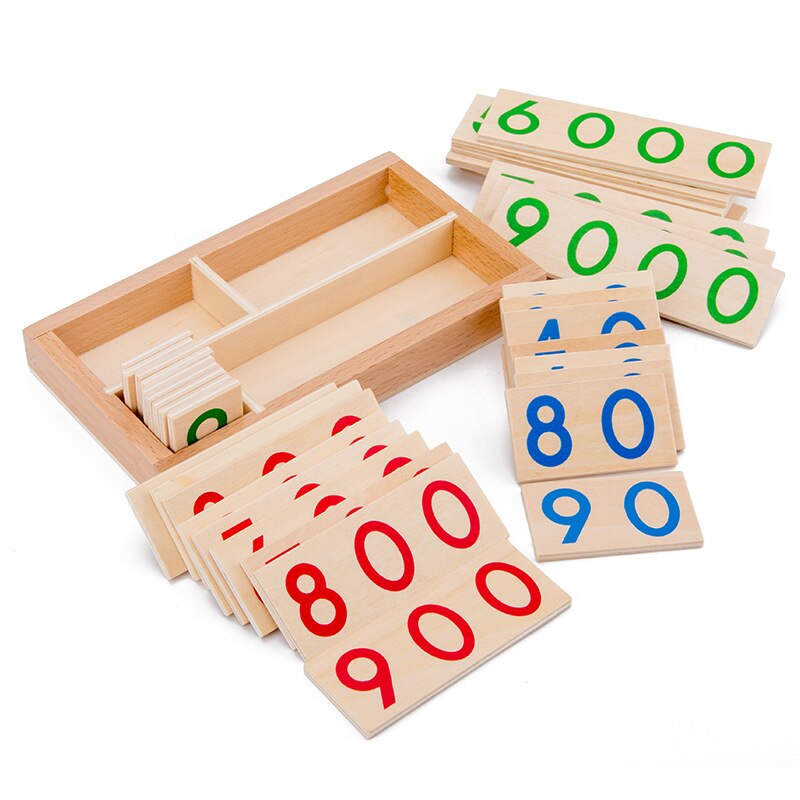
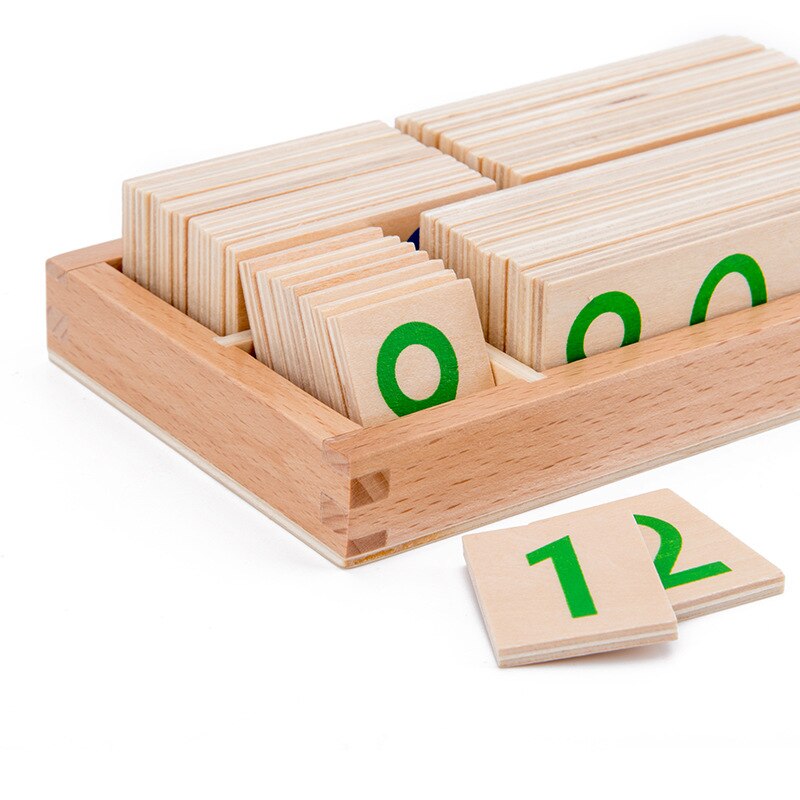
Turn number practice into a calm, hands-on discovery with wooden Montessori number cards that children can touch, sort, sequence, and build.
Read the full descriptionTurn number practice into a calm, hands-on discovery with wooden Montessori number cards that children can touch, sort, sequence, and build.
Hands-on Montessori number learning with organized wooden cards for early math practice
Replace abstract worksheets and scattered cards with a hands-on way to recognize, sort, and build numbers. Children practice sequences and place value while learning through touch and repetition.

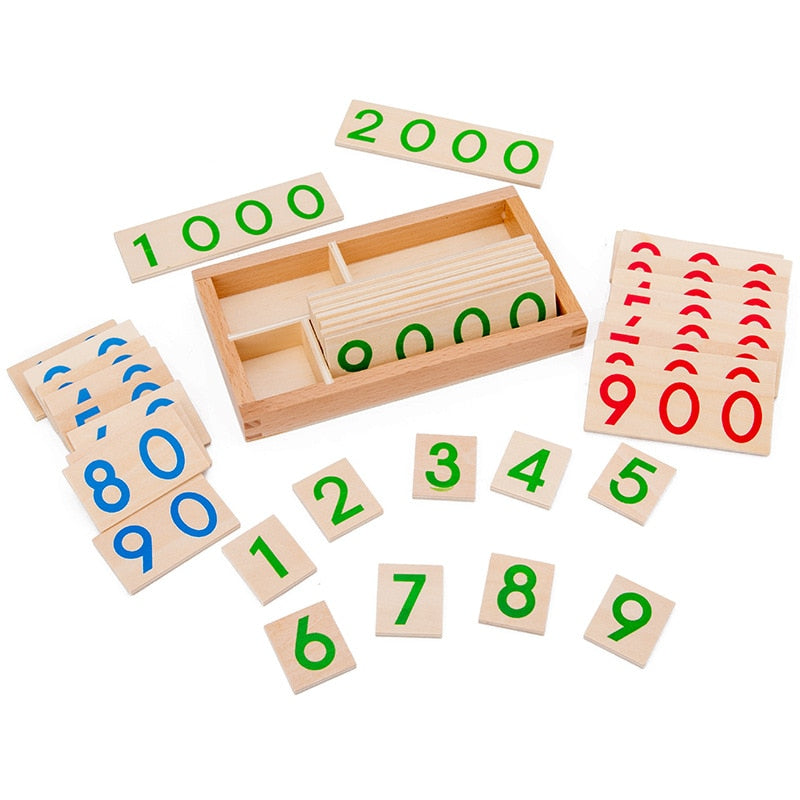
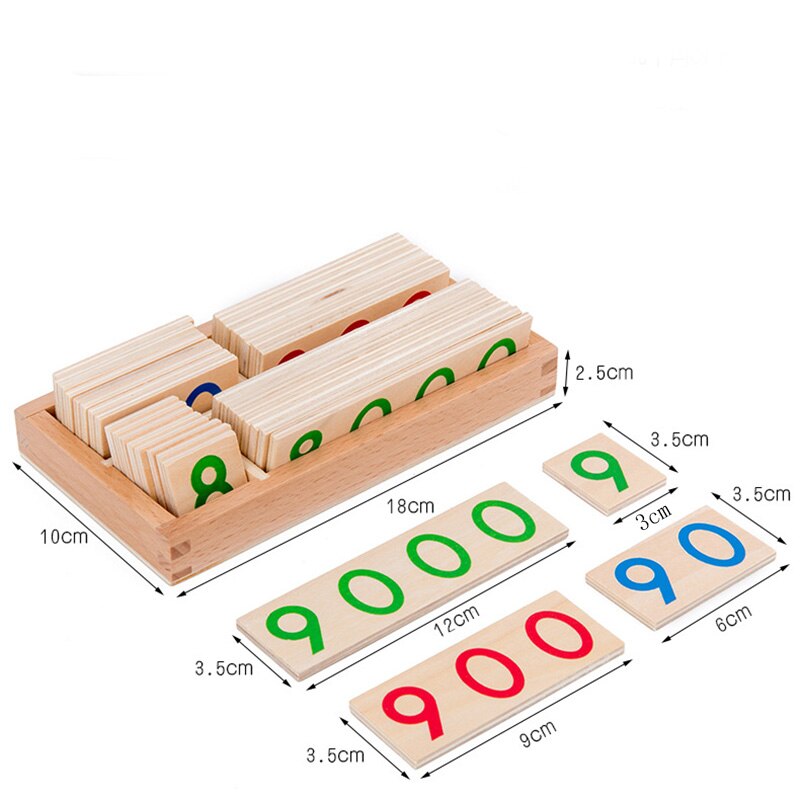
Individual numerals and larger printed numbers give adults a physical way to demonstrate how number groups and positions change value.

Brightly color-coded number groups make matching, sorting, and sequencing easier to demonstrate during short guided activities.

Smooth, uniform wooden cards make number practice a physical activity rather than a purely visual or screen-based exercise.
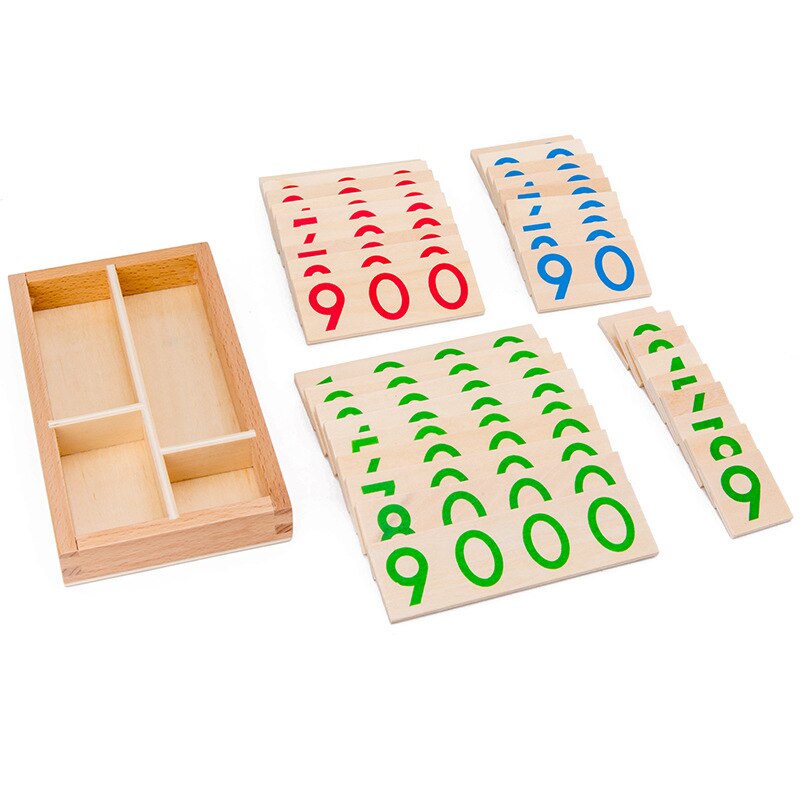
The compartmentalized wooden tray gives the collection a dedicated home, reducing scattered pieces and simplifying lesson reset.
Choose a small group of familiar cards. Ask the child to find a numeral, name it, and match it with another card when appropriate.
Place selected cards out of order and invite the child to arrange them from the smallest familiar number to the largest. Add cards gradually.
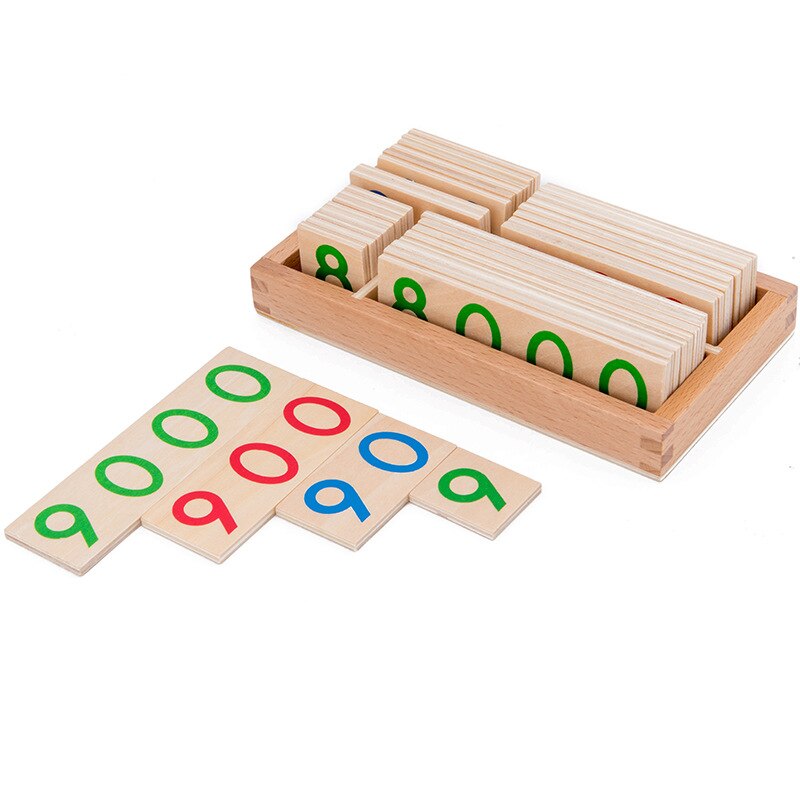
Introduce a larger printed value and talk through its groups and positions. Let the child move the cards while the adult gives calm prompts.
Color-coded cards with clearly printed numerals from 1 to 9000.
Divided storage for sorting and returning the cards after practice.
A child can sing counting songs and still mix up printed numerals or lose track of number order. Worksheets and loose cards often leave the difference between 9, 90, 900, and 9000 hard to see.
These wooden Montessori number cards bring the lesson onto the table. Bright color groups, large printed numerals, and a divided tray turn sorting and number building into visible actions.
With short, supervised activities, children can revisit recognition, sequencing, and place-value conversations at a comfortable pace. The tray keeps the materials ready for another calm try.
Use a soft, dry or lightly damp cloth for everyday cleaning.
Return each group to its tray compartment after the activity.
Keep the wooden set in a dry learning area away from prolonged moisture.
| Wooden number card set | Paper flashcards | Math apps | |
|---|---|---|---|
| Tactile number building | Partial | — | |
| Color-coded sorting | Partial | — | |
| Built-in storage | — | — | |
| Screen-free practice | — | ||
| Place-value conversation | Partial | Partial |
They suit preschool and early-elementary learners working on numeral recognition, sorting, sequencing, and early place-value ideas. Adults can begin with a small group of familiar cards and add more as recognition grows.
Yes. The set includes individual digits and larger printed values, including examples such as 1000, 2000, and 9000. Adults can place selected cards together and talk through how groups and positions change the number.
The bright colors give children a visible way to group matching cards before arranging them. That makes the order of a selected sequence easier to discuss without relying on a worksheet alone.
The set includes two main components: the wooden number cards and a divided wooden compartment storage tray.
The fitted tray is made to organize the collection by compartment and color group. Returning cards after each activity keeps the next lesson easier to begin.
Yes. They fit supervised preschool lessons, homeschool math practice, Montessori classroom stations, and short caregiver-and-child activities. The tactile format gives adults a concrete material for guided number work, while the tray supports shared organization.


 Montessori Number Cards for Hands-On Place Value Math