

Montessori Activity Toy for Screen-Free Learning Play
Turn playtime into bright problem-solving
Replace passive screen time with satisfying clicks, turns, switches, and wire movements that invite preschoolers to explore. Children get focused, tactile play while grown-ups get a more engaging screen-free activity.

More Than Buttons To Press
Unlike a single-action puzzle or passive busy toy, this molded activity board brings several kinds of tactile play into one inviting surface.

A Control Panel For Curious Hands
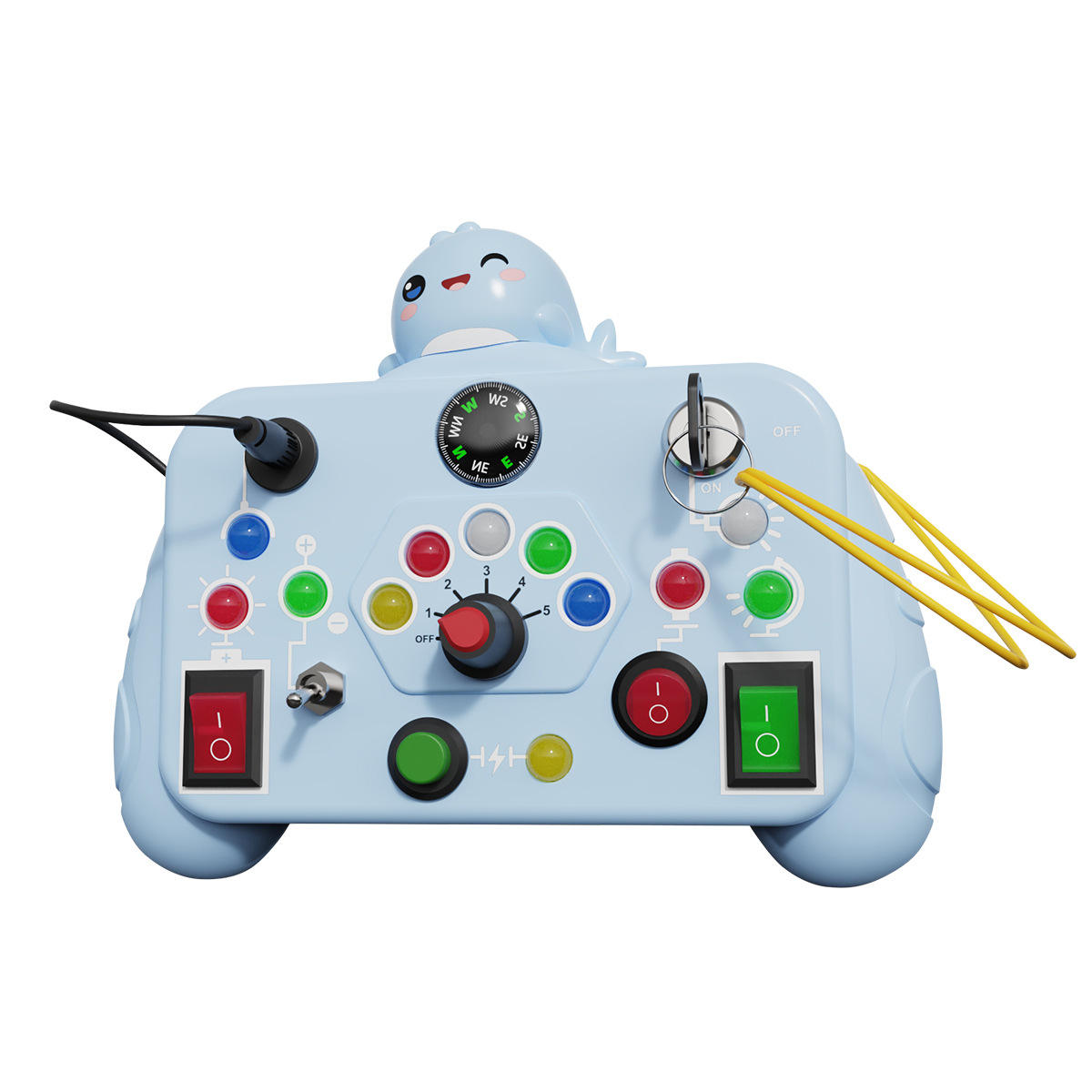
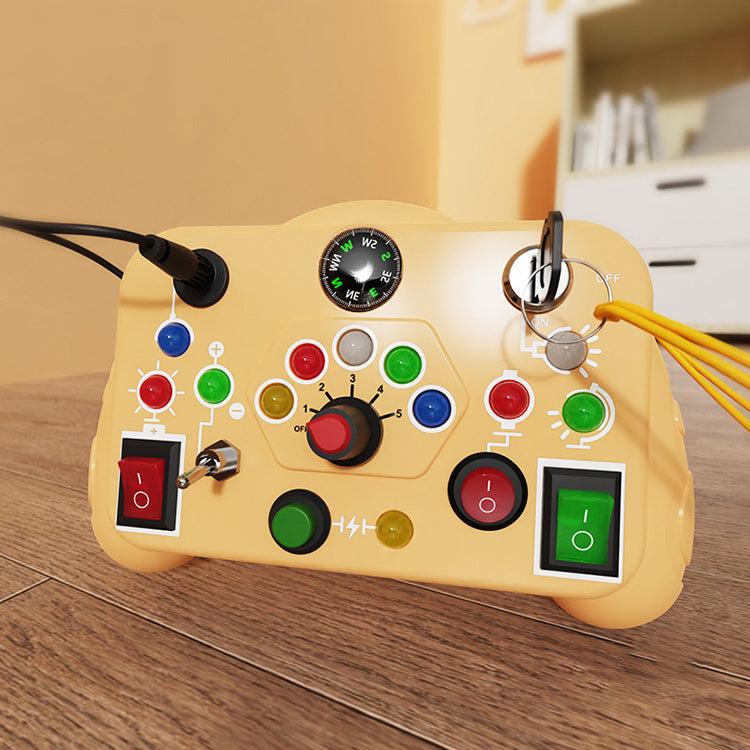
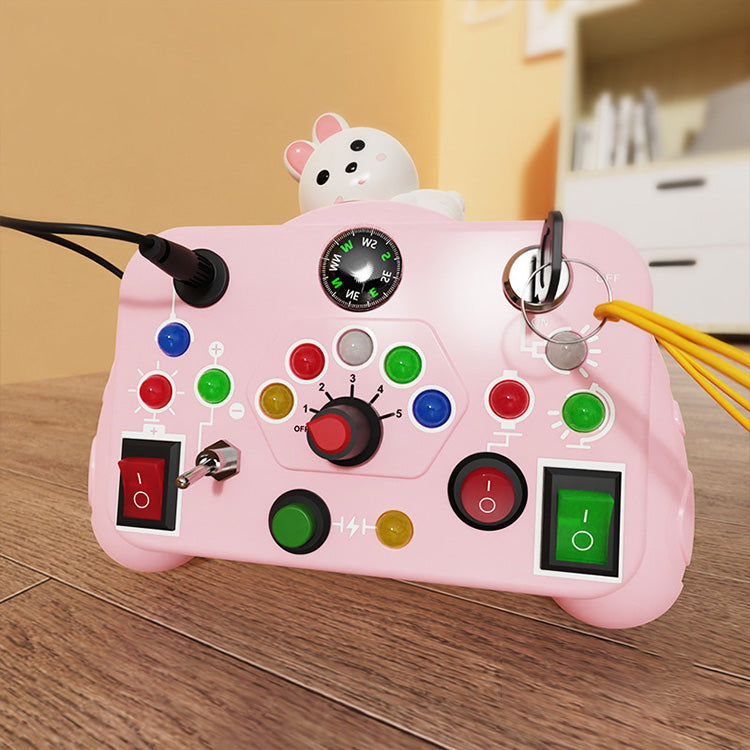
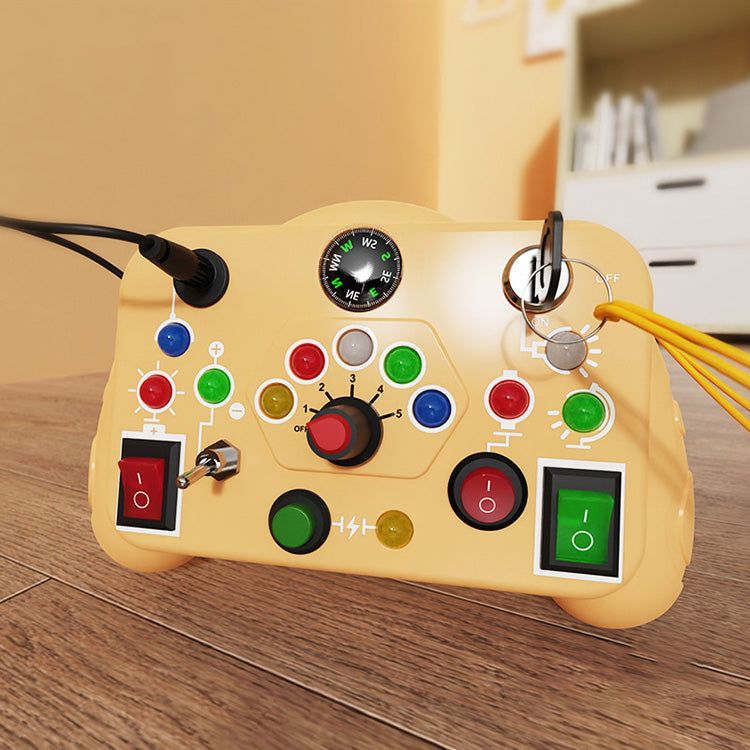
The molded board brings together push buttons, rotary controls, toggle and rocker switches, colorful wires, and a circular display. Each control invites a different hand movement, so play does not depend on one repeated action.

Color-Coded Cause And Effect
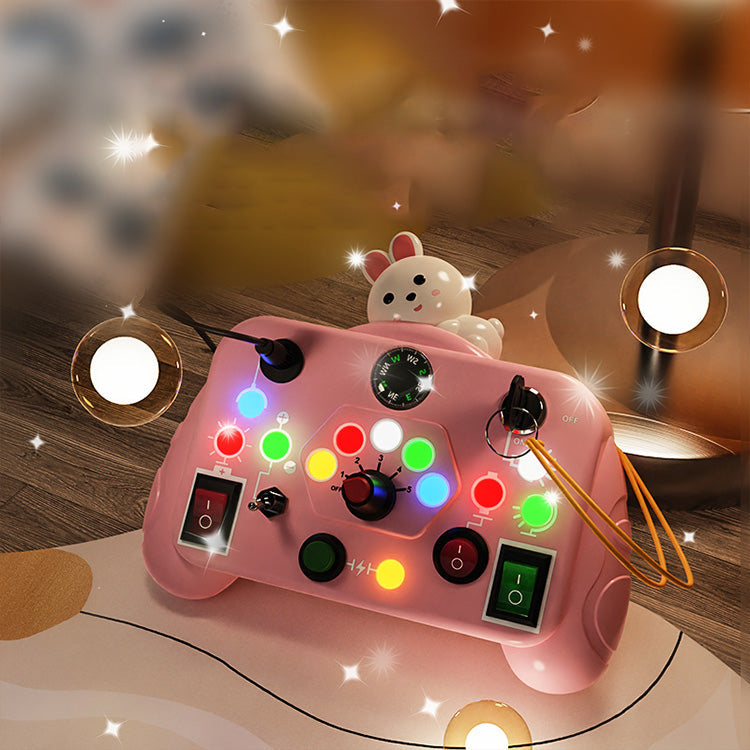
Distinct colors and familiar control shapes give children an easy starting point. They can test an action, notice what changes visually or physically, and choose where their curiosity goes next.

An Animal Guide To Keep Interest
The animal-themed topper gives the board a friendly visual anchor. It adds personality to open-ended play and gives children a character to include in their own little control-panel stories.

Built For Shared Discovery
The board works for independent exploration, parent-child prompts, classroom stations, and screen-free indoor play. There is no fixed sequence, so adults can offer a gentle question and let the child lead.
Three Ways To Explore
Keep the invitation simple. The best play often starts with one prompt and plenty of room for the child to investigate.
Choose One Control
Place the board flat on a stable surface and invite the child to find a color, press one button, or turn the dial.
Follow The Next Question
Let the child move from buttons to switches, wires, or the circular display. Describe what their hands are doing without asking for a right answer.
Let Curiosity Lead
Step back when the child settles in. Return to the board for independent play, shared discovery, or a calm transition away from screens.
Why Tactile Play Wins
The value is in having several ways to explore in one activity instead of buying another single-action puzzle or defaulting to passive screen time.
| Activity boardBEST FIT | Single-action puzzle | Passive screen | |
|---|---|---|---|
| Tactile variety | Yes | Partial | No |
| Open-ended play | Yes | Partial | Partial |
| Color-coded controls | Yes | No | No |
| Screen-free | Yes | Yes | No |
| Shared discovery | Yes | Partial | Partial |
Everything In The Set
Three coordinated pieces create a complete activity surface with no extra puzzle parts to sort before play.
A Better Kind Of Quiet Time
Every satisfying switch, dial, and wire turn makes screen-free thinking practice feel like play.

When Screens Become The Default
Preschoolers need purposeful play, yet many quiet activities lose their pull before meaningful exploration begins. When a puzzle, book, or busy toy feels repetitive, a screen becomes the easiest next choice.

A Board Full Of Possibilities
This colorful control board gives small hands more than one way to begin. Push a button, turn a dial, flip a switch, or move a wire, then follow the next question that catches attention.

Small Movements, Big Attention
Pressing, turning, switching, and moving wires give children a reason to stay with the activity. The varied controls create repeated opportunities to coordinate hands, notice changes, and investigate what happens next.
The Easier Screen-Free Choice
Keep it within reach for the next rainy afternoon, restaurant wait, or screen-time transition. The board is ready for independent exploration, shared discovery, or a classroom activity station.
About this item
Give curious preschoolers a screen-free activity they can return to, with colorful buttons, switches, dials, wires, and an animal figure to explore. It brings hands-on problem-solving practice into qu
Interactive Montessori-style control board that turns play into hands-on problem-solving practice
- limited fine-motor practice
- screen-dependent play
- lack of engaging cognitive activities
- difficulty maintaining young children's attention
Questions Parents Ask
Clear answers for choosing the right kind of screen-free play.
Explore More Play
You might also like