
Metal Repair Adhesive for Strong Cast Iron Repairs
Turn damaged metal into a workable repair
Cracks, gaps, and worn metal parts do not have to stay a permanent problem. Mix the two-part paste, rebuild the damaged area, then smooth, drill, polish, or paint after curing.

Build Back Damaged Metal
This two-part metal repair adhesive fills and rebuilds damaged areas, then gives you a workable surface after curing.

A Two-Part Bond
Separate A and B pastes are mixed before application so the repair compound sets into a strong, durable metal-repair mass.

Rebuild The Defect
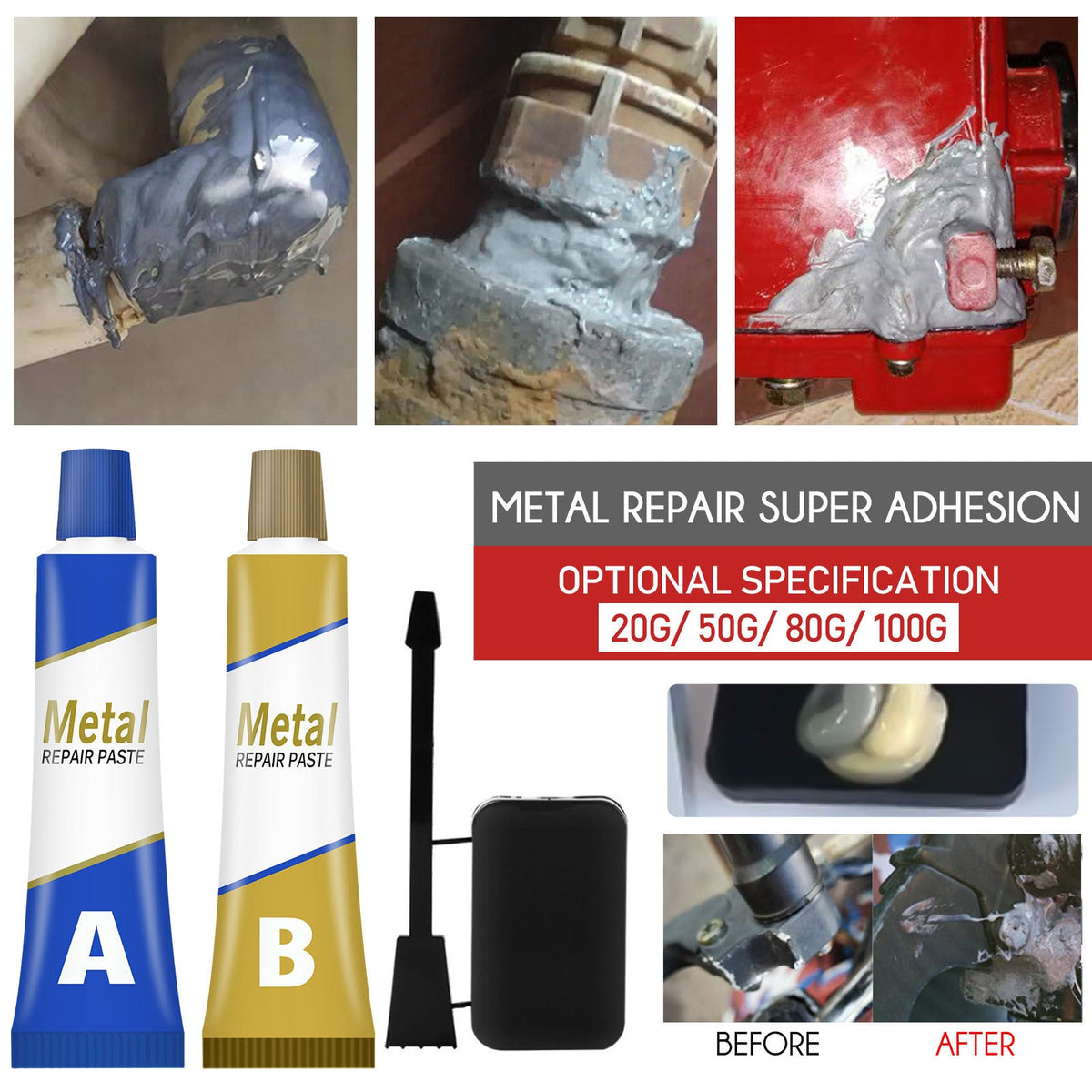
The thick gray paste fills gaps, holes, cracks, and damaged metal areas rather than simply covering the surface.

Finish It Afterward
After curing, the repaired area can be smoothed and processed through drilling, polishing, or painting for a more complete finish.
Ready For The Next Fix
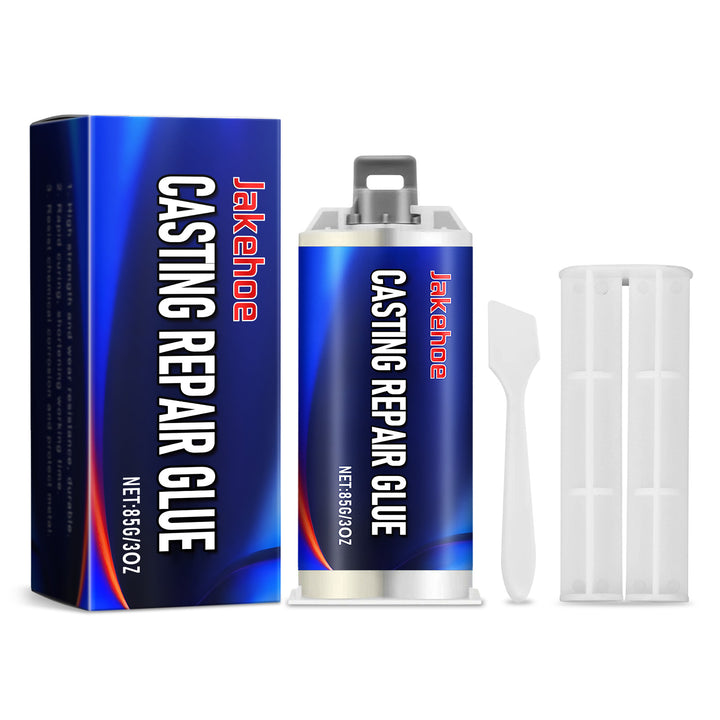
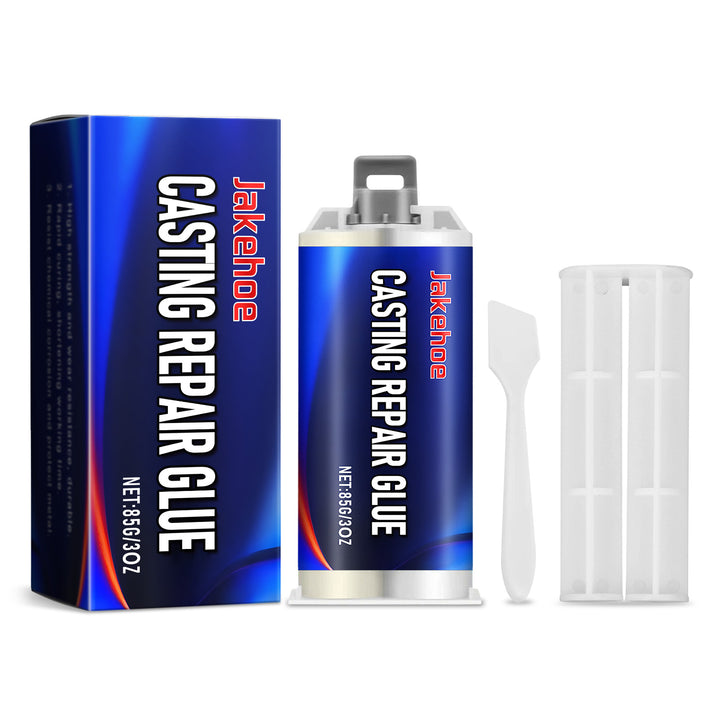
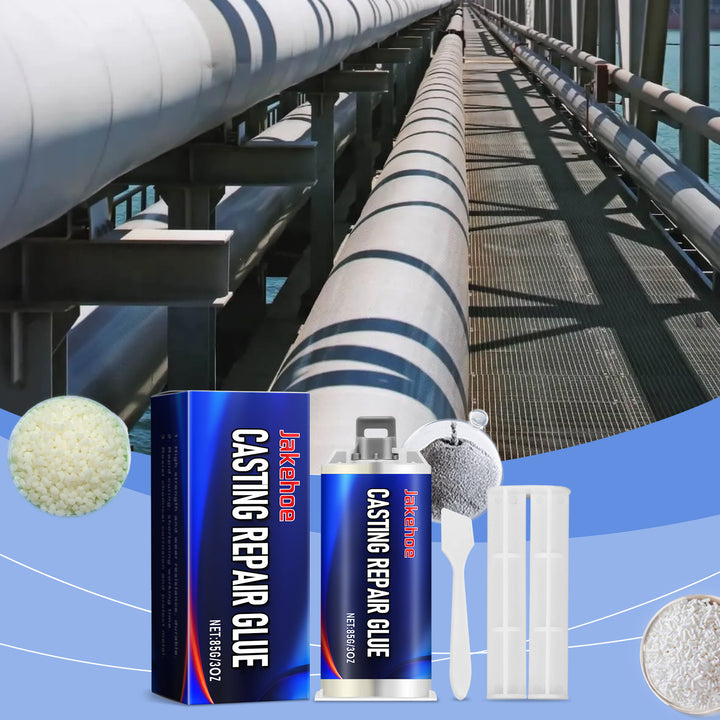
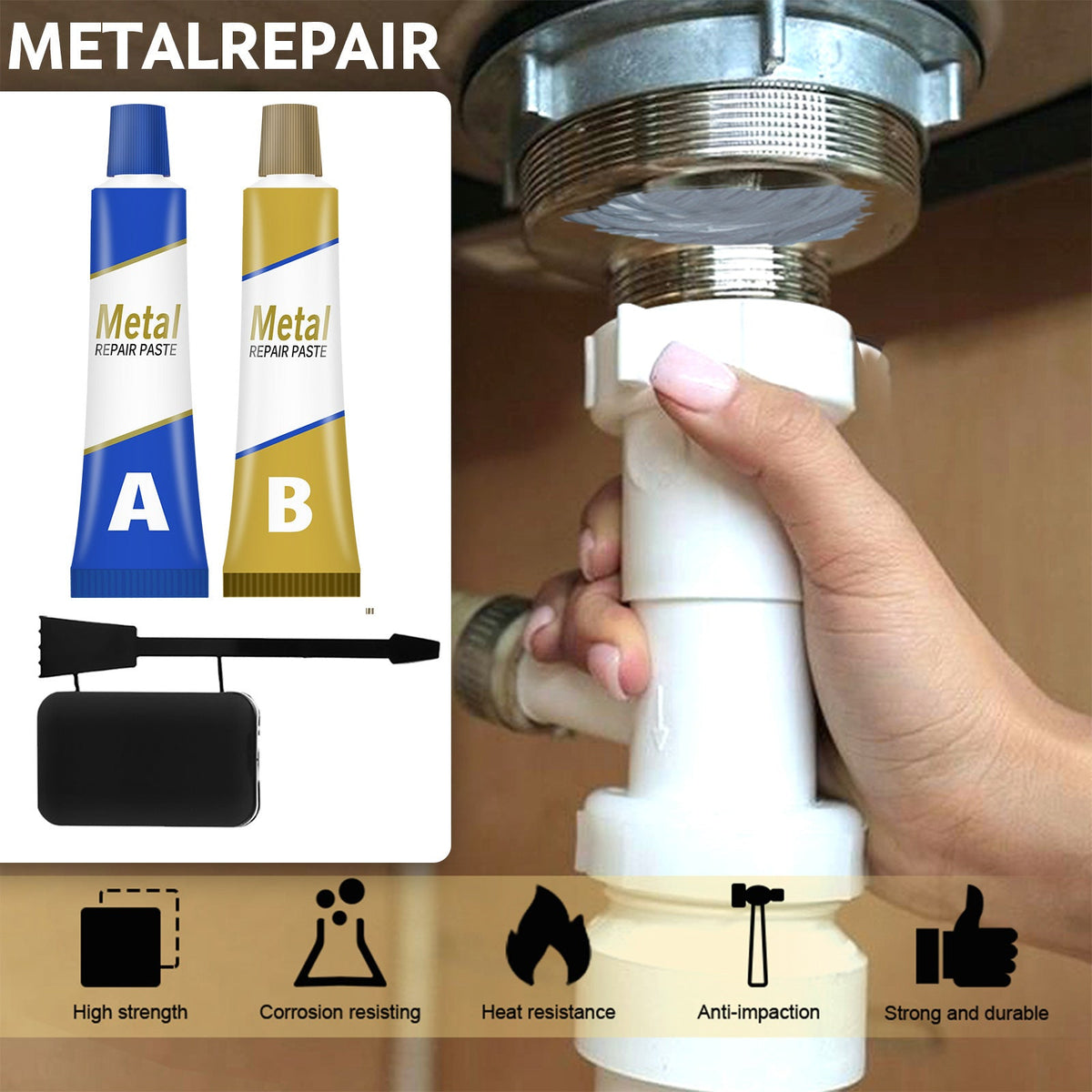
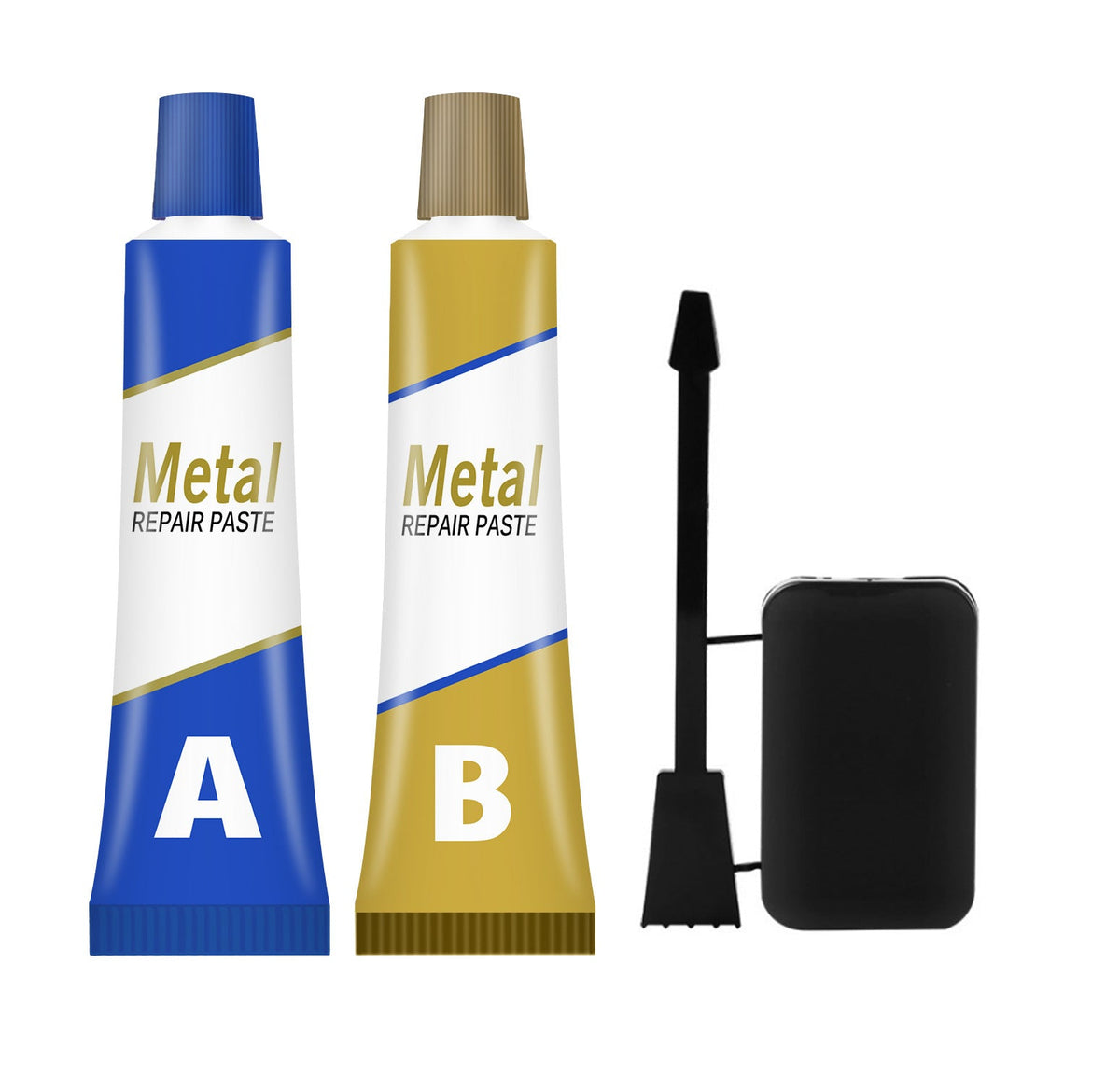
The included scraper, push-out accessories, and black storage case keep the four-piece repair setup together for home or workshop use.
Mix, Apply, Finish
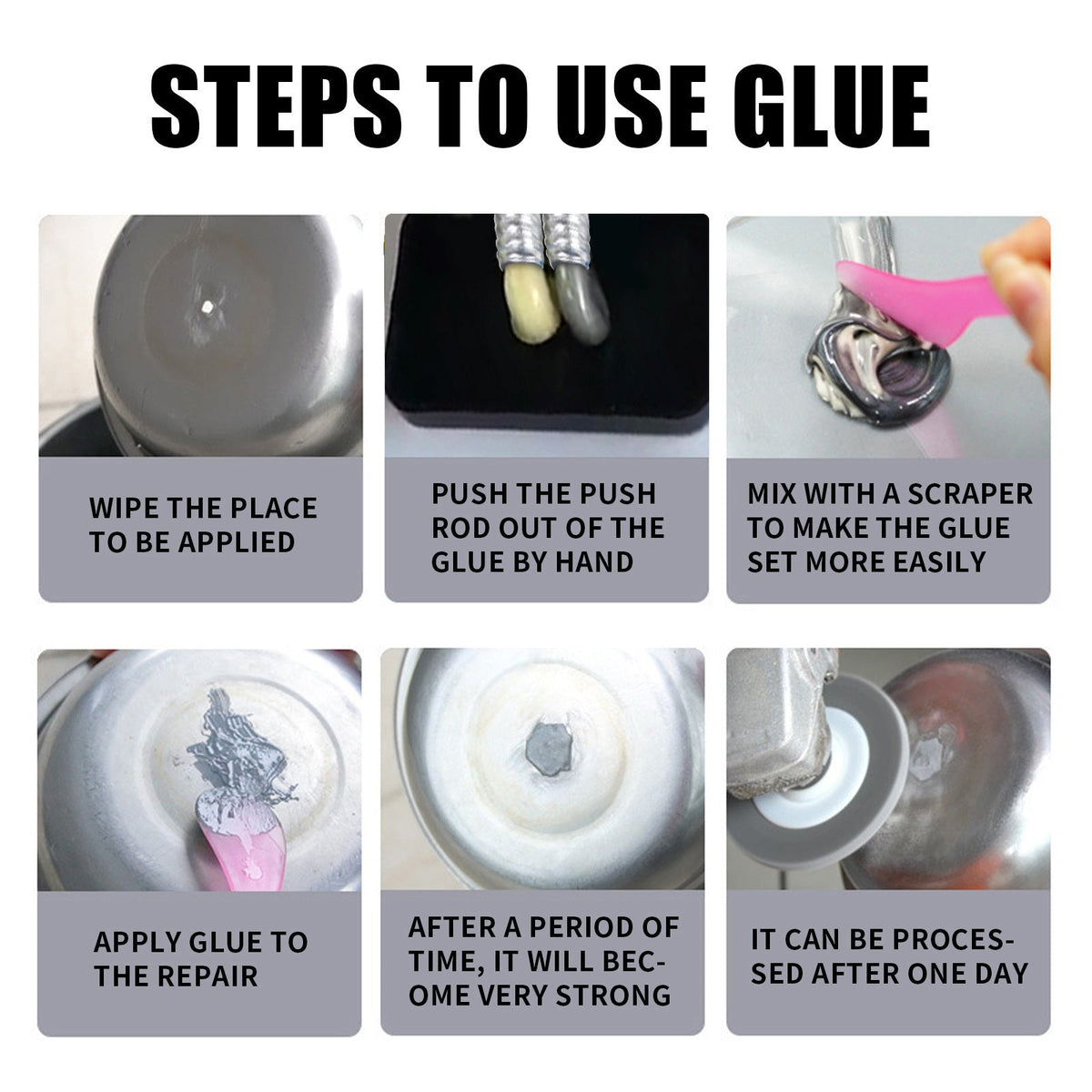
Follow the included workflow to keep the repair controlled from surface preparation through post-cure processing.
Prepare The Surface
Wipe the application area clean so the paste can contact the damaged metal directly.
Dispense Both Parts
Push the A and B pastes out of their tubes by hand and keep both components ready for mixing.
Mix With The Scraper
Use the included scraper to combine the two pastes thoroughly so the repair compound sets properly.
Fill And Shape The Defect
Apply the mixed gray paste to the crack, gap, hole, or damaged section. Press it into place and shape the surface.
Wait Before Processing
Let the repair cure for 1 day before smoothing, drilling, polishing, painting, or evaluating it for use.
The Numbers That Matter
A compact format with a clear two-part process and a stated curing milestone.
A Practical Alternative
Choose the repair route that matches the defect, equipment, and finish you need.
| Two-part repair pasteBEST FIT | Ordinary glue | Silicone sealant | |
|---|---|---|---|
| Fills gaps and defects | Yes | Partial | Yes |
| Rebuilds damaged areas | Yes | Partial | No |
| Requires mixing | Yes | No | No |
| Can be smoothed after curing | Yes | Partial | Partial |
| Can be drilled, polished, or painted after curing | Yes | No | No |
| Needs specialized welding equipment | No | No | No |
Everything Needed To Start
The core repair components stay together in one compact setup.
From Defect To Done
A damaged fitting or cast-iron part needs a clear process. Prepare it, rebuild it, then finish the repair for the job ahead.
The Part That Failed
A crack, gap, leak, or corroded edge can interrupt an entire job. Instead of staring at a part that is difficult to use or trust, prepare the damaged area for a controlled rebuild.

The Controlled Rebuild
Wipe the surface, push out both pastes, and mix them with the scraper. Apply the gray compound into the defect, shape it carefully, and give the repair time to set.

Ready To Finish
After curing, the repaired area can be smoothed and processed through drilling, polishing, or painting. The result is a finishable repair instead of a part set aside for replacement.
About this item
Rebuild damaged metal into a strong, finishable repair instead of replacing the whole part. This two-part metal repair adhesive fills defects and leaves a workable surface for post-cure finishing.
Strong, corrosion-resistant AB metal repair adhesive that can be processed after curing
- Cracks and defects in cast iron
- Leaks and damaged metal surfaces
- Gaps and holes requiring filling
- Corrosion-related surface damage
Before You Mix
Clear answers for choosing, preparing, curing, and finishing a metal repair.