
$149.90
Free delivery · 7–14 days
Mini Ionic Air Purifier with Triple Filter for Desks


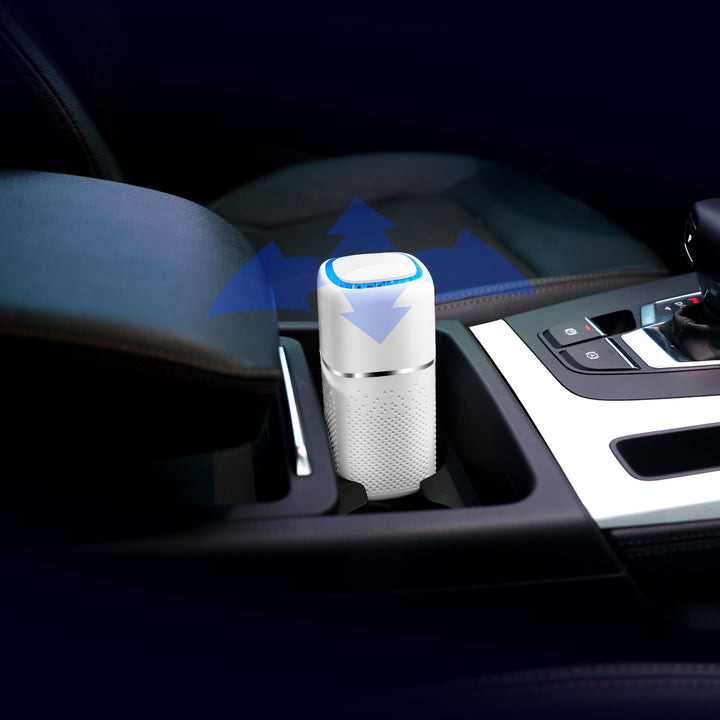


Find compact air purifiers for smoke, dust, and everyday odors in small spaces, vehicles, and personal-use situations. This selection includes a car unit with UV-C and HEPA filtration, portable necklace designs, a negative-ion device, and an adsorption purification patch, so compare the technology, coverage, power source, and intended setting before you buy.
Start with the space where you will use the product. The Car Air Purifier with UV-C & HEPA is designed for a vehicle, while the portable necklace models and negative-ion purifier are intended for personal, on-the-go use rather than treating an entire room. Check the product listing for its stated coverage, power requirements, operating controls, filter details, and replacement-part information. For smoke or strong odors, look for a product that specifically identifies odor adsorption or filtration; a simple ionizer or small personal device may not be suitable for a whole room. If you are comparing the best air purifiers for home, prioritize room coverage and filter availability. For bedrooms, also consider noise, indicator lights, timer settings, and whether the unit can operate safely while you sleep.
Different technologies address air concerns in different ways. A HEPA-equipped purifier is designed to capture particles such as dust, while an adsorption material is intended to hold certain odor molecules. The car purifier combines UV-C and HEPA features, but its vehicle-focused design does not make it a substitute for a larger home unit. Negative-ion products charge airborne particles so they may settle onto nearby surfaces; they do not provide the same filter-based collection approach. The necklace products are compact personal devices, and the adsorption patch is a passive option for a small, close-range use case. When comparing top rated HEPA air purifiers for home, confirm that the model actually includes a replaceable filter and is sized for the room you want to treat.
Check five practical details before ordering: intended location, filtration method, coverage information, power source, and maintenance. For the car purifier, confirm that its power connection fits your vehicle and that replacement filters are available. For portable necklaces and the negative-ion purifier, review battery or charging requirements, controls, and how the device is meant to be worn or carried. If odors are your main concern, look for adsorption or activated-carbon information rather than relying only on a particle filter. A washable prefilter can make routine cleaning easier, but it does not remove the need to replace other filter layers when specified.
Place a room purifier where air can move freely around its intake and outlet; avoid pushing it behind furniture, curtains, or other obstructions. In a car, secure the unit on a stable surface and keep cables away from controls, pedals, and passengers. Personal necklace products should be used only as described by their instructions and should not be treated as whole-room purifiers. Keep doors and windows closed when you are trying to reduce indoor smoke or odors, while still following normal ventilation and safety practices when appropriate. Clean the exterior and prefilter according to the instructions, and replace disposable filters when indicated. Do not cover any device, block vents, or use a damaged power cable. If the product produces ozone or has an ionizing mode, review its operating guidance before use.
A frequent mistake is choosing a personal purifier for a whole room. Necklaces and compact negative-ion devices are convenient for individual use, but their small format does not establish that they can clean an entire bedroom or living area. Another mistake is assuming every purifier removes odors; particle filtration and odor adsorption are different functions. Buyers also overlook replacement-filter costs, noise, charging needs, and the difference between vehicle and household use. Do not treat marketing language such as best air purifiers for allergies or air purifiers tested as a substitute for checking the actual filter type, coverage, and instructions. Finally, avoid placing a purifier beside a wall or under clutter. Good airflow, regular maintenance, and realistic expectations matter as much as the device itself.
These products suit shoppers who need a compact option for a car, desk, travel bag, or personal space. The Car Air Purifier with UV-C & HEPA is the most location-specific choice for vehicle use. The necklace designs may appeal to commuters or travelers who want a wearable device, while the portable negative-ion purifier offers another small, carryable format. The adsorption patch is useful when a passive, lightweight option is preferred, but it should not be confused with a powered room purifier. For homes with pets, compare the product’s intended coverage and odor-related features carefully; a personal device may not address odors throughout the home. If you need an air purifier for a bedroom, living room, or allergy-focused routine, look for a room-rated model with clearly stated filtration and maintenance information.
Air purifiers can reduce some airborne particles or odors when the product is appropriate for the space and used correctly. Results depend on the filtration method, room size, airflow, maintenance, and the source of the smoke or odor. They should complement, not replace, cleaning, source control, and suitable ventilation.
There is no single best choice for every shopper. For a vehicle, the Car Air Purifier with UV-C & HEPA is the category’s purpose-built option; for personal use, consider a necklace or compact negative-ion model. For a room, choose based on stated coverage, filter type, noise, power, and replacement-filter availability.
Price varies with the product’s size, filtration system, controls, and ongoing filter costs. Compact personal and vehicle products generally serve narrower use cases than larger room units. Compare the purchase price with replacement parts, charging or power needs, and the space you actually need to treat.
Possible drawbacks include noise, filter replacement, energy use, limited coverage, and the need for regular cleaning. Ionizing products may require additional consideration because they do not collect particles in the same way as filter-based units and may have specific operating guidance. Always review the instructions and avoid using a damaged or obstructed device.
You may want one if your space has recurring smoke, dust, pet odors, or other airborne concerns that are not fully addressed by cleaning and source control. A compact purifier can also be useful in a vehicle or during travel. Select a model based on the source and the size of the area, rather than choosing solely from general air-quality concerns.
Many people use air purifiers while sleeping, provided the device is designed for indoor use and operated according to its instructions. Check noise levels, timer settings, ventilation clearance, and any guidance about ionizing or UV-C modes. Keep the unit stable, unobstructed, and away from water, bedding, and damaged outlets or cables.
Browse related: Shop all Wall Tapestry - Decorative Tapestries for Every Room · explore wall hangings - vintage & antique tapestry decor for any room.