
$41.90
Free delivery · 7–14 days
Liquid Electrical Tape for Waterproof Wire Insulation


Crumbling plaster and a damp corner under the sink do not have to keep spreading. This waterproof repair paste fills the gap, cures into a smooth patch and holds up in wet rooms. One tube covers sink edges, tub seams and small wall cracks.
Read the full descriptionCrumbling plaster and a damp corner under the sink do not have to keep spreading. This waterproof repair paste fills the gap, cures into a smooth patch and holds up in wet rooms. One tube covers sink edges, tub seams and small wall cracks.
Instant waterproof repair paste that cures into a durable, multi-use patch
Crumbling plaster and peeling sealant around the sink, then a smooth, sealed surface that stays dry. One squeeze tube handles the repair.
Once the paste sets, it becomes a moisture-resistant, ageing-resistant layer for sink, tub and wall joints. That is the point of the product: the repair holds up in the room where water is most likely to get in.
The nozzle is narrow enough to push paste into a hairline crack or a seam without spreading it across the tile. You get a clean bead where you need it, and less cleanup afterwards.
Walls, seams, sealant gaps and window frames all take the same tube. One purchase covers the sink, the bath and the cracked wall in the hallway, which is usually how these repairs pile up.
The cap twists off cleanly and reveals the fine nozzle tip. The tube feels firm and light, so you can control the squeeze.
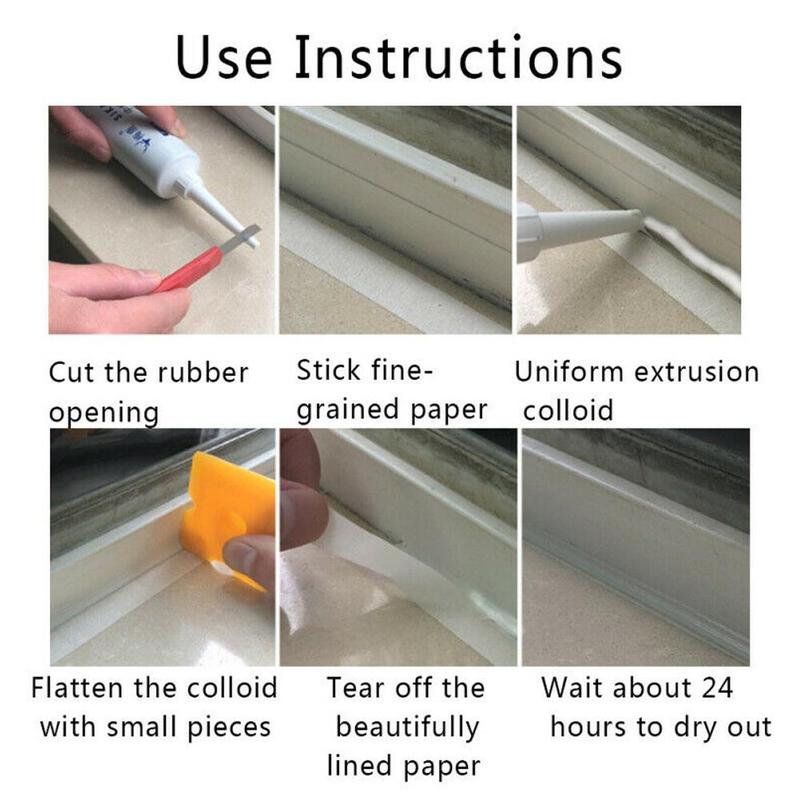
Cut a small clean opening to the size of the gap. The paste is thick and cream-like, so it holds its shape on the tip without dripping.
Steady pressure pushes the cream into the crack or seam. Fill deeper gaps in thin layers rather than one thick bead.
Run a damp finger or tool across the bead for a flat finish. Leave it to cure fully before the sink or bath gets used again.

Every shower brings another damp corner and another dark patch creeping along the joint. Most people wipe it down and hope it stops. It rarely does, because water keeps finding the same gap.
Standard silicone peels in wet areas and filler tape lifts at the edges. Waiting means soaked plaster behind the tub and a repair that now needs a tradesperson. A single tube costs far less than that call-out.
The fine nozzle places the paste into the gap, and the cream holds its shape while you smooth it. Once cured, the patch resists moisture and ageing, so the spot stays dry and you stop checking it every morning.
After the paste cures, the gap or crack should look flat and closed. Check the edges to confirm the bead has bonded to the surface before water exposure.
Use the repaired area as normal, like a sink edge or tub seam, and check for new moisture. A well-prepared surface stays dry and intact.
Look for any lifting, staining or fresh mould at the patched area. If the paste is still firmly bonded and dry, the repair is doing its job.
| Repair Paste | Standard silicone | Filler tape | |
|---|---|---|---|
| Holds in wet areas after curing | Yes | Partial | No |
| Fills a crack, not just a seam | Yes | No | Partial |
| Smooth finish ready for paint | Yes | Partial | No |
| Fine nozzle for narrow gaps | Yes | Partial | No |
Yes, once it has fully cured. The paste is sold as waterproof and resistant to moisture and ageing, which is what makes it suited to sink rims and tub seams. Dry the surface before you start and keep water off the patch until it has set.
Yes. The hairline crack use is aimed at getting a smooth surface ready for a clean finish. Let the patch cure completely, sand it lightly if it sits proud, then prime and paint as normal.
It is built for walls, seams, sealant gaps and window frames, which covers plaster, drywall and the joints around sinks and baths. Test a small area first on an unusual surface such as painted metal.
Standard silicone and filler tape often peel or lift in wet spaces. This paste cures into a patch that stays sealed and smooth after it sets. One tube also covers several jobs, so it can replace a drawer full of single-use fixes.
It is made for indoor repair work in kitchens and bathrooms. Keep the room ventilated while it cures, because the paste has a strong smell during that stage.
For a small leak or crack, one tube is usually far cheaper than a single call-out. The real saving comes from catching the gap early, before soaked plaster or mould turns it into a larger repair.


 Instant Waterproof Repair Paste for Leaks and Cracks