
$949.90
Free delivery · 7–14 days
4K Action Camera with 155° Wide View & Dual Screens


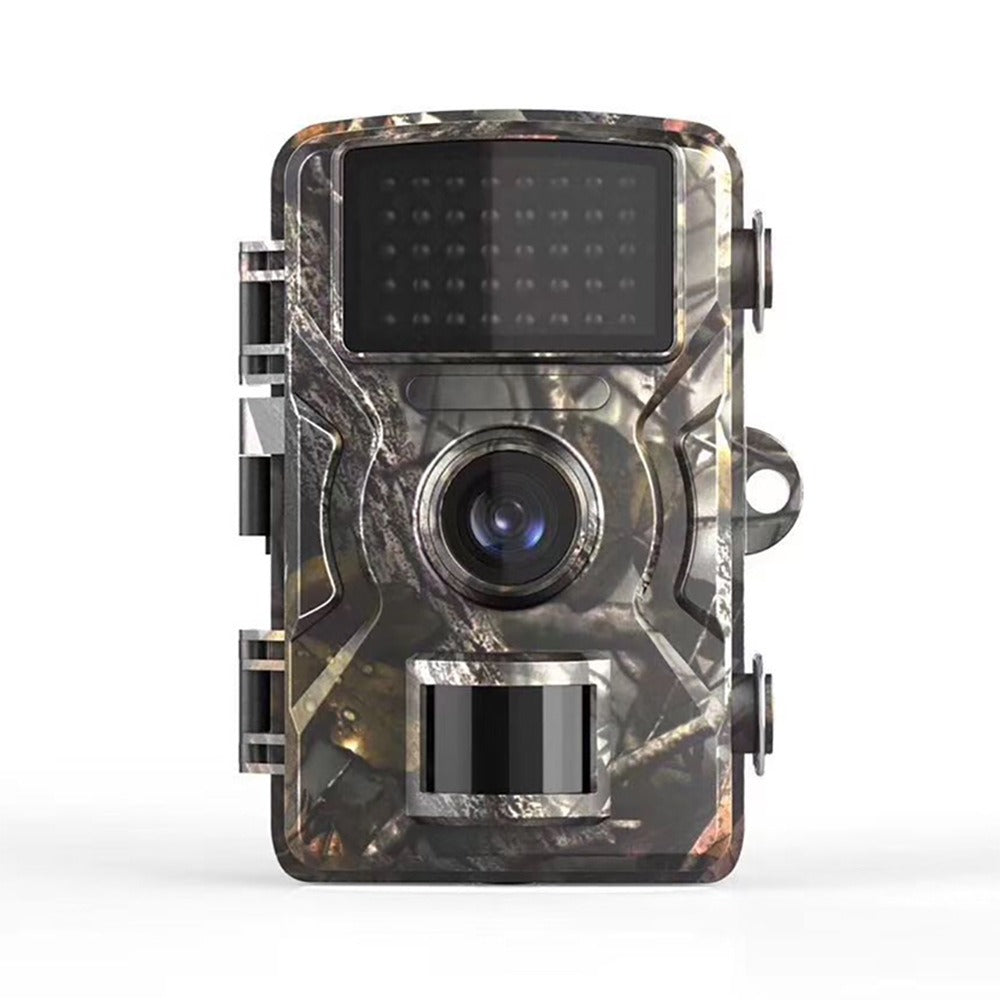
Know what crosses your land before you walk out to look. This camo trail camera wakes on motion and heat, records wildlife day and night with its infrared LEDs, and shows captures on a 2-inch screen right at the tree. Built with a sealed, hinged housing and metal latches for the field.
Read the full descriptionKnow what crosses your land before you walk out to look. This camo trail camera wakes on motion and heat, records wildlife day and night with its infrared LEDs, and shows captures on a 2-inch screen right at the tree. Built with a sealed, hinged housing and metal latches for the field.
Automatic day-and-night wildlife monitoring with built-in night vision and motion sensing
Stop driving out to guess whether game moved through. Mount it on a tree or post, test the trigger, and review what passed by in the morning.
The infrared LED array lights the trail without visible white light. Animals pass through a dark field with no flash to spook them, and you get the same trail at midnight that you get at noon.
The PIR motion sensor sits on the front panel and wakes the camera when heat and movement cross the field of view. Set the trigger zone with the OFF / TEST / ON switch, and you only collect frames that matter.
The built-in 2-inch display shows captures on the spot. Check a frame at the tree, adjust the angle if the trail sits too high, and skip the card reader trip back to the truck.
Strap the camera to a tree or post through the side mounting loop. Keep it at a height that covers the trail, and aim the lens across the path rather than into open sky.
Set the OFF / TEST / ON switch to TEST. Walk through the trigger zone the way an animal would, then check the 2-inch screen to confirm the sensor reacts.
Move the switch to ON before you walk away. The camera only records in the ON position, so a switch left in TEST or OFF means an empty record in the morning.

Driving out at dusk tells you where the sign is, not what made it. Most of the animals that matter move after dark, when you are already back in the truck. Every missed night is a gap in what you know about your own land.

The infrared LEDs light the trail without a white flash, so the camera records what walks through after dark without announcing itself. The PIR sensor wakes the camera on heat and motion, which means the frames you get are the ones with something in them.

Mount it on a tree or post, switch to TEST and walk through the frame to confirm the trigger. Switch to ON, close the latches and walk away. The next morning, the 2-inch screen and your storage hold the record, so you walk in with answers instead of guesses.
Mount the camera, switch to TEST and walk through the frame. Confirm the motion sensor reacts, then switch to ON before you leave.
Check the 2-inch screen for the first captures. If the trail sits too high or too far away, adjust the angle and test again.
With regular checks you start to see when animals move through, both at dusk and after dark.
Over a season you hold a record of movement on the trail, so you plan your time around evidence rather than guesses.
| This camera | Basic trail camera | |
|---|---|---|
| 2-inch on-camera screen | — | |
| Infrared night-vision LEDs | — | |
| PIR motion sensor | ||
| Sealed hinged housing with metal latches | — | |
| OFF / TEST / ON switch to confirm the trigger | — |
The LEDs emit infrared light, so there is no white flash at night. The camera is built to record the trail without lighting it up, which keeps the animals moving through the frame the way they normally would.
The housing is sealed and weatherproof, with a hinged body that closes over the screen and controls. Metal latches hold the lid shut in the field, so it handles a wet trail and a muddy post without fuss.
Use the side mounting loop to strap the camera to a tree or post at waist height or a little higher. Aim the lens across the trail rather than straight at the sun, then switch to TEST and walk through the frame to confirm the trigger.
Yes. The 2-inch built-in screen shows captures without a separate device. You can check the frame at the tree and adjust the angle before you leave, which saves a second trip.
A basic camera gives you a memory card and a guess until you get home. This one adds a 2-inch screen for in-field review and infrared LEDs for night capture, so the first useful check happens at the tree instead of the kitchen table.
The housing uses rugged matte camo plastic, metal hinge latches and a sealed, weatherproof body. That is the difference between a camera that survives a season on a post and one that needs replacing after the first wet autumn.


 Hunting Trail Camera With Night Vision and Motion Sensing