
$47.90
Free delivery · 7–14 days
Natural Bamboo Tea Cup, Handmade Small Sipping Cup
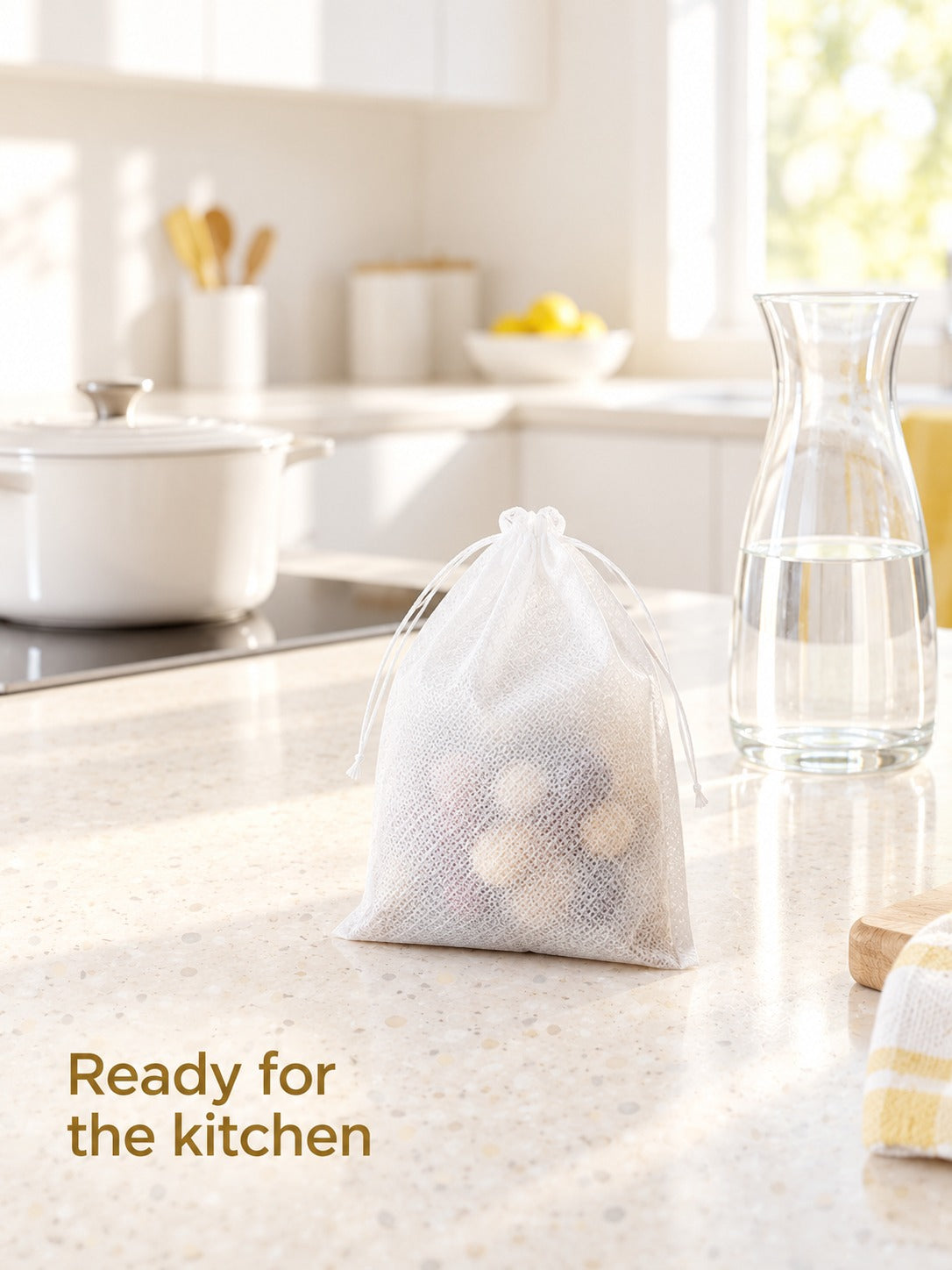


Fill the bag, pull the drawstring, and drop it in. The pot stays clear from the first simmer to the last ladle, and the cleanup is one bin of spent bags. Made from food grade non-woven fabric with heat-sealed edges, the 100-count pack is set up for daily herbal soup and tea.
Read the full descriptionFill the bag, pull the drawstring, and drop it in. The pot stays clear from the first simmer to the last ladle, and the cleanup is one bin of spent bags. Made from food grade non-woven fabric with heat-sealed edges, the 100-count pack is set up for daily herbal soup and tea.
Drawstring non-woven bags for fast, mess-free herbal decoctions and soups
Before, loose herbs drift through the broth and straining turns dinner into cleanup. After, you fill a drawstring bag, pull it closed, and the pot stays clear from start to finish.

The drawstring cinches the opening shut with a single pull, so there is no tying and no second hand needed. Fill the bag, close it, and drop it in. The whole step takes seconds, which matters when the pot is already on the boil.

The bags are made from food grade non-woven fabric with heat-sealed edges, so there are no loose threads to shed into the broth. The mesh is see-through, which makes it easy to check how full the bag is before it goes in the pot.

One pack of 100 covers frequent herbal soups and tea without rationing bags. Keep the unused ones sealed and dry, since the material is rated for a 3-year shelf life. Pair them with a tea cups set for a quick mug of tea.
Add the herbs to the bag. Fill it about two-thirds full so the herbs have room to move and the drawstring can close fully.
Pull the string snug and press the top of the bag closed. Check that no herbs sit in the opening.
Lower the bag into the water or broth. Keep it submerged during the simmer so the flavour can release through the mesh.
When the broth is ready, lift the bag out by the string and discard it. The pot is already clear, so there is nothing to strain.

Loose herbs spread through the pot the moment they hit water. Bark chips, seeds and grit end up in every ladle, and the strainer catches only part of it. By the time dinner is served, the cleanup has taken longer than the simmer.

Fill the bag, pull the drawstring, and the herbs stay where you put them. No knots, no kitchen string, no fumbling with gauze. The closed pouch does the job the strainer used to do, and the broth comes out clear.

On a weeknight the routine is short: fill, close, lower, lift. The pot stays clean, and the spent bags go straight into the bin. You spend the evening on dinner instead of the sink.
Keep the pack closed until you need it. The material is rated for a 3-year shelf life when stored this way.
Store the spare bags away from the stove and sink. Humidity makes the fabric musty and weakens it.
The bags are single use. Lift them out after the simmer and discard them with your food waste.
| Drawstring bag | Loose herbs | Gauze tied with string | |
|---|---|---|---|
| Knot-free closing | — | — | |
| Herbs kept out of the broth | — | Partial | |
| Strainer cleanup afterward | — | — | |
| Works for loose tea too | — | — |
The bags are made from food grade non-woven fabric, the material listed for the pack. They are built for a steady simmer in water or broth. Rinse a bag under the tap before the first use if you like to start clean.
Chunky herbs, bark and seeds stay inside. Very fine powder can sift through any non-woven mesh, so use a second layer for powders, or keep them out of the bag. Fill to about two-thirds to limit leakage at the opening.
The drawstring pulls the opening closed in one motion. An overfilled bag is the most common reason a seal fails, so leave room for the herbs to move. Check the string is snug before the bag goes in.
Muslin needs washing, drying and boiling between batches, and it still stains. These bags are single use, one per batch, and a 100-count pack covers months of daily soup for most households. The trade is a few cents of material for a pot you do not have to strain.
Yes. The listed uses include tea bags and sachets, so loose-leaf tea works the same way: fill, close, steep, lift out. Keep a stainless steel soup spoons set nearby for lifting bags out of hot water.
The bags are rated for a 3-year shelf life when stored sealed and dry. Once opened, keep the rest in an airtight container away from steam and sink humidity.


 Drawstring Non-Woven Herbal Decoction Bags, Pack of 100