$45.90
Free delivery · 7–14 days
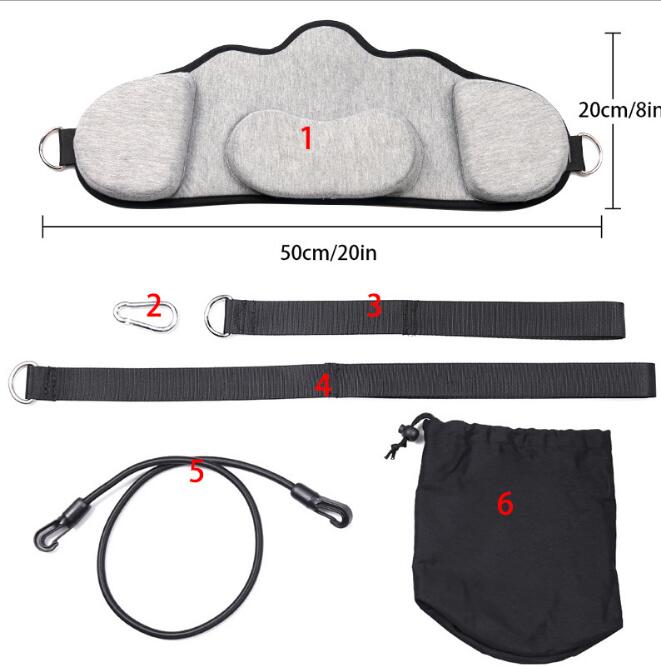
Neck Hammock Memory Foam — Portable Tension Relief Travel


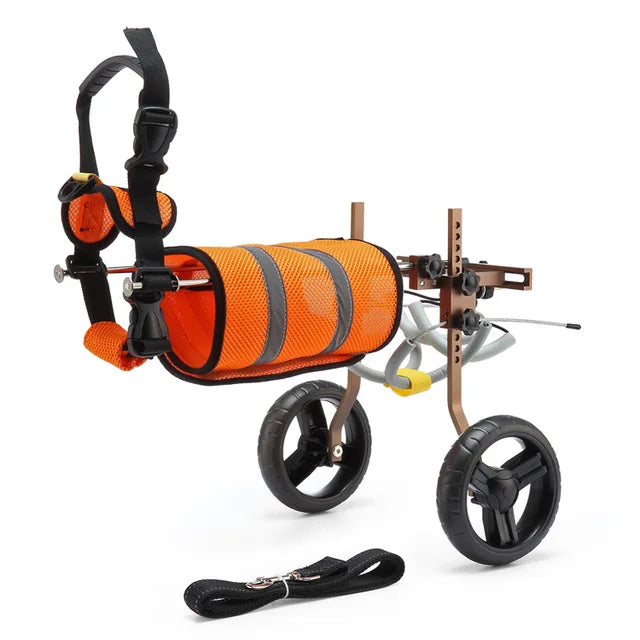


Supported movement gives mobility-limited dogs more room to stand, walk, exercise, and join everyday routines. The adjustable frame, padded harness, and large rear wheels create structured assistance for small and medium-sized dogs.
Read the full descriptionSupported movement gives mobility-limited dogs more room to stand, walk, exercise, and join everyday routines. The adjustable frame, padded harness, and large rear wheels create structured assistance for small and medium-sized dogs.
Helps disabled and recovering dogs regain assisted mobility for walking and exercise
When hind-leg weakness or recovery makes walking difficult, this adjustable cart supports the rear body so your dog can stand, walk, exercise, and join you again.

The adjustable metal support frame lets owners set up the cart around the dog’s body instead of relying on one fixed position. Visible adjustment hardware makes fitting easier to assess.

Two large rear wheels carry or assist the rear body so your dog can practice upright walking without bearing the full hind-leg load. It gives a sling alternative more freedom to roll forward.

The orange mesh body support, padded harness, and adjustable straps create structured contact around the dog’s body. This is more considered than holding the rear with improvised fabric.
Use the cart for assisted walks, home mobility, rehabilitation training, gentle exercise, and travel. Pair the mobility routine with practical pet grooming wipes after outdoor sessions.
Inspect the frame, wheels, orange mesh support, harness, and straps before fitting. Clear the area and keep your dog calm.
Position the padded harness around the body and connect the adjustable frame. Check that the support is secure without rubbing or pulling.
Let your dog experience the upright position and wheel movement on a clear, non-slip surface. Stay close and observe balance.
Start with brief supervised movement and stop if your dog shows discomfort, stress, or fatigue. Build activity gradually.
Check the straps, frame alignment, and contact points before each use. Ask a veterinary or rehabilitation professional for guidance when recovering from injury.
Complete two-wheel mobility cart
Structured padded body support
Metal frame with visible adjustment hardware
Large wheels for assisted rolling movement
Your dog may still want to walk, explore, and stay close while weak hind legs make standing a daily struggle. Carrying, improvised slings, and short unsupported walks can leave both of you with limited options.
The adjustable metal frame, rear wheels, and structured harness give the back half of the body a steadier base. Your dog remains involved in upright movement while the cart carries or assists the rear body.
With a calm fitting process and short supervised sessions, the cart can become part of daily walks, home movement, rehabilitation training, exercise, and travel. Each outing gives your dog more room to participate.
| Dog Wheelchair Cart | Simple Sling | Carrying | |
|---|---|---|---|
| Repeated rolling assistance | Yes | No | No |
| Upright movement | Yes | Partial | No |
| Adjustable frame | Yes | No | No |
| Hands-free movement | Yes | Partial | No |
| Structured padded harness | Yes | No | No |
| Best for repeated daily mobility | Yes | Partial | No |
The cart is intended for small and medium-sized dogs and has an adjustable metal frame, harness, and straps. Check your dog’s body measurements against the available product fit information before choosing a variant.
It is intended for rehabilitation training and recovery support, including post-fracture mobility. Use it within a veterinarian- or canine-rehabilitation-guided plan, especially after surgery or a fracture.
Begin with the dog calm and standing on a clear surface. Adjust the frame and straps so the rear body is supported without pulling, rubbing, or forcing the legs into an unnatural position. Check the fit again before every session.
Yes. Start indoors with a short, supervised introduction so your dog can become familiar with the harness, upright position, and wheel movement. Increase activity gradually as comfort and balance improve.
The cart is intended for home walking, outdoor exercise, daily assisted walks, rehabilitation sessions, and travel walking. Use predictable, suitable surfaces and stay close throughout each session.
No. A cart is a mobility aid, not a substitute for professional assessment. A veterinarian or canine rehabilitation professional can advise whether assisted movement is appropriate and how long each session should be.


 Dog Wheelchair Cart for Assisted Walking & Rehab Aid