
$36.90
Free delivery · 7–14 days
USB-C to USB-C Charging Cable, 100W PD Fast Charge


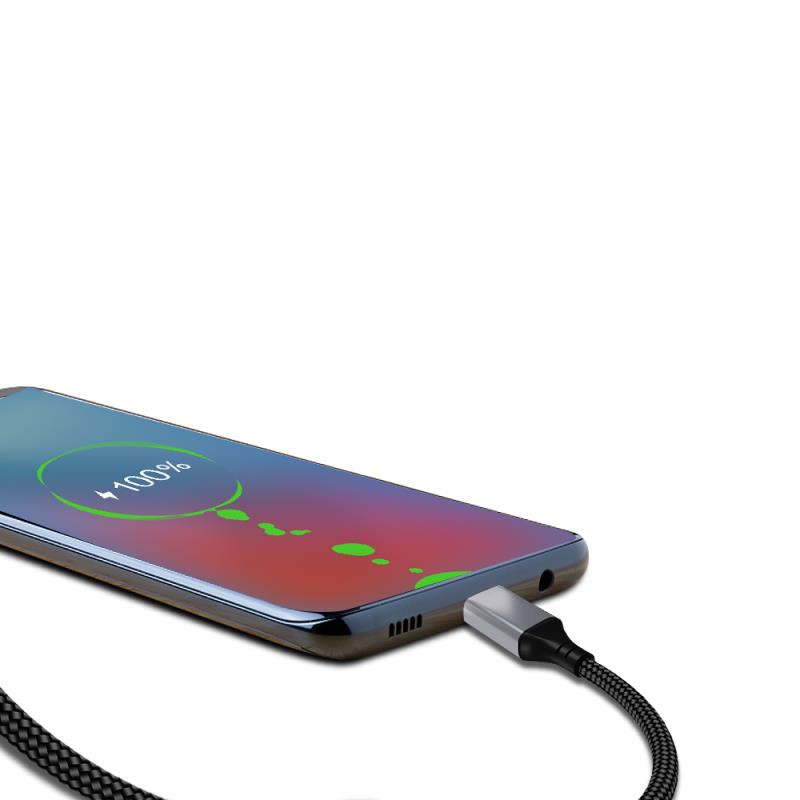
A 5A rated braided cable that charges your phone or laptop quickly and keeps its shape through daily carry. Aluminium connector housings and strain relief at both ends protect the parts that fail first. One cable works at the nightstand, the desk and the dashboard.
Read the full descriptionA 5A rated braided cable that charges your phone or laptop quickly and keeps its shape through daily carry. Aluminium connector housings and strain relief at both ends protect the parts that fail first. One cable works at the nightstand, the desk and the dashboard.
Fast 5A charging and data sync in a durable braided cable
Tired of a frayed cable that charges slowly and dies early? Switch to a braided USB-C cable with aluminium connectors built for daily phone and laptop use.
The braided nylon jacket is built to take the bends and tugs of a backpack, a desk drawer and a car console. Bare plastic cracks along one line and splits. A braid spreads that load across the whole length, so the cable keeps its shape. Pair it with a car charger and it handles the daily trip in and out of the dashboard.
Brushed aluminium shells cover the USB-A and USB-C ends, with strain relief sitting right where the braid meets each plug. That join is where most cables fail first, so this is the part that gets the reinforcement. The purple-tipped contacts inside the USB-A end sit cleanly in the housing.
The packaging lists a 5A rating for fast charging, with data sync on the same single-head USB-A to USB-C cable. The USB-C end seats firmly in a Type-C phone port. Your charger sets the final output, so pair the cable with an adapter rated for fast charging to get the speed the cable can carry.
Look over the aluminium housings and the strain relief before the first use. The shells should sit flat and the braid should be even along the length.
Use a USB-A wall adapter, car adapter or computer port rated for fast charging. The adapter's output sets how quickly your device charges.
Seat the USB-C plug fully in your phone or laptop. Keep a loose loop in the cable so it does not pull at either end.
Keep the cable out of tight coils and store spares in cable organizers so the plug ends stay clear of kinks.
Hold the aluminium housing and pull straight out. Tugging the braid loosens the strain relief over time.
Loop the cable loosely near both ends. Sharp bends at the plug stress the internal wires.
Coil it in a wide loop or tuck it into a bag without knotting it.
Yes. The USB-C end fits iPhone 15 and other USB-C phones and laptops. The USB-A end goes into a USB-A adapter or port. If your charger only has USB-C ports, you need a USB-C to USB-C cable instead.
The 5A rating is printed on the packaging. The charger and device decide how much current actually flows, so pair the cable with a charger rated for your phone's fast-charging output.
Yes, for the parts that usually fail. The braided nylon jacket resists fraying better than bare plastic, and the aluminium housings with strain relief at both ends protect the join. Bending it sharply at the plug still wears any cable out, so loop it loosely.
Use a USB-A wall adapter or a car charger with fast-charging output. The adapter sets the speed ceiling, and a weak one slows charging no matter which cable you use. The charger is sold separately.
Yes. The cable carries data between a computer and a phone as well as power, so file transfers and sync run over the same cable you charge with.
The extra cost goes into the parts that fail first: a braided jacket, metal housings and strain relief at both ends. A cable that stays firm through daily use replaces the cheap one you would otherwise buy again.


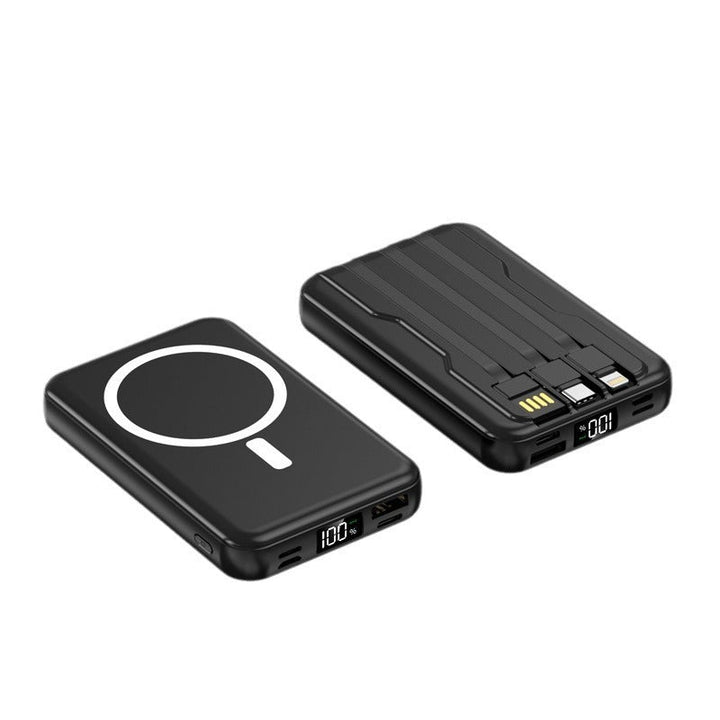
 5A Braided USB-C Fast Charging Cable for Phones & Laptops