
$40.90
Free delivery · 7–14 days
Magnetic Yarn Winder Stand for Smoother Thread Handling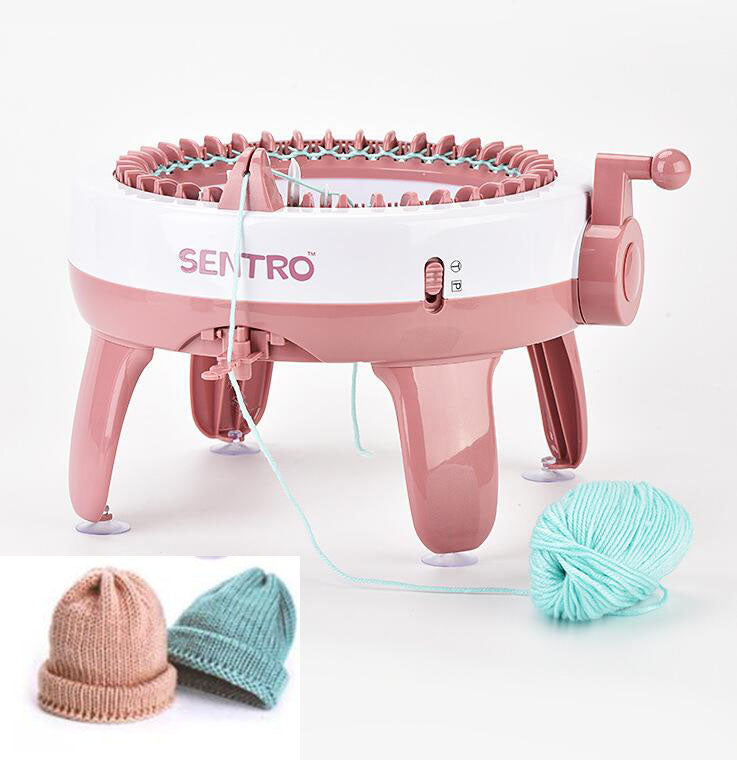
Turn yarn into family-made hats, tubes, and scarves without the slow, fiddly start of traditional knitting.
Read the full descriptionTurn yarn into family-made hats, tubes, and scarves without the slow, fiddly start of traditional knitting.
Create knitted projects quickly with an easy-to-use 40-needle hand-crank knitting machine
Skip slow, tricky first stitches and turn yarn into hats, tubes, and scarves through an engaging hand-crank activity. Beginners and children aged 8 and up can create together at home.

The circular 40-needle bed creates knitted rows through a hand crank, so beginners can watch their work grow without first mastering traditional needle technique.

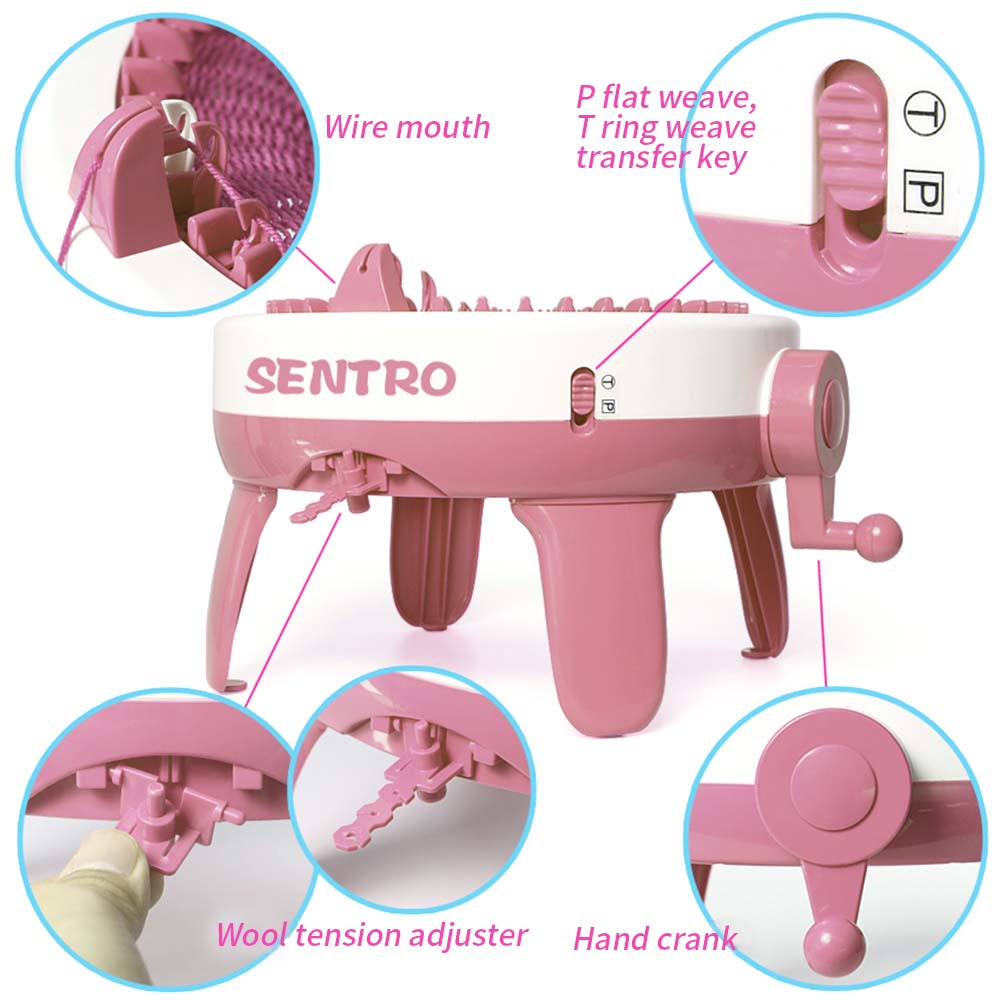
The built-in yarn guide and wool tension adjuster give beginners a clearer way to manage yarn flow while they learn the crank rhythm.

The flat-weave and ring-weave transfer key gives families more than one starting format for scarves, tubes, hats, and other simple projects.
Four supporting legs create a dedicated tabletop setup. A child can turn the crank while an adult helps guide the yarn and check the growing rows.
Place the machine on a stable table and fit the hand crank. Keep the four supporting legs flat against the surface.
Follow the yarn path through the built-in guide and wool tension adjuster. Check that the yarn feeds freely before turning.
Start with slow, even turns while an adult watches the yarn path. A child can crank while a parent guides, then swap roles.
Pause to inspect the needles and the developing piece. Once the rhythm feels comfortable, explore flat-weave or ring-weave projects.
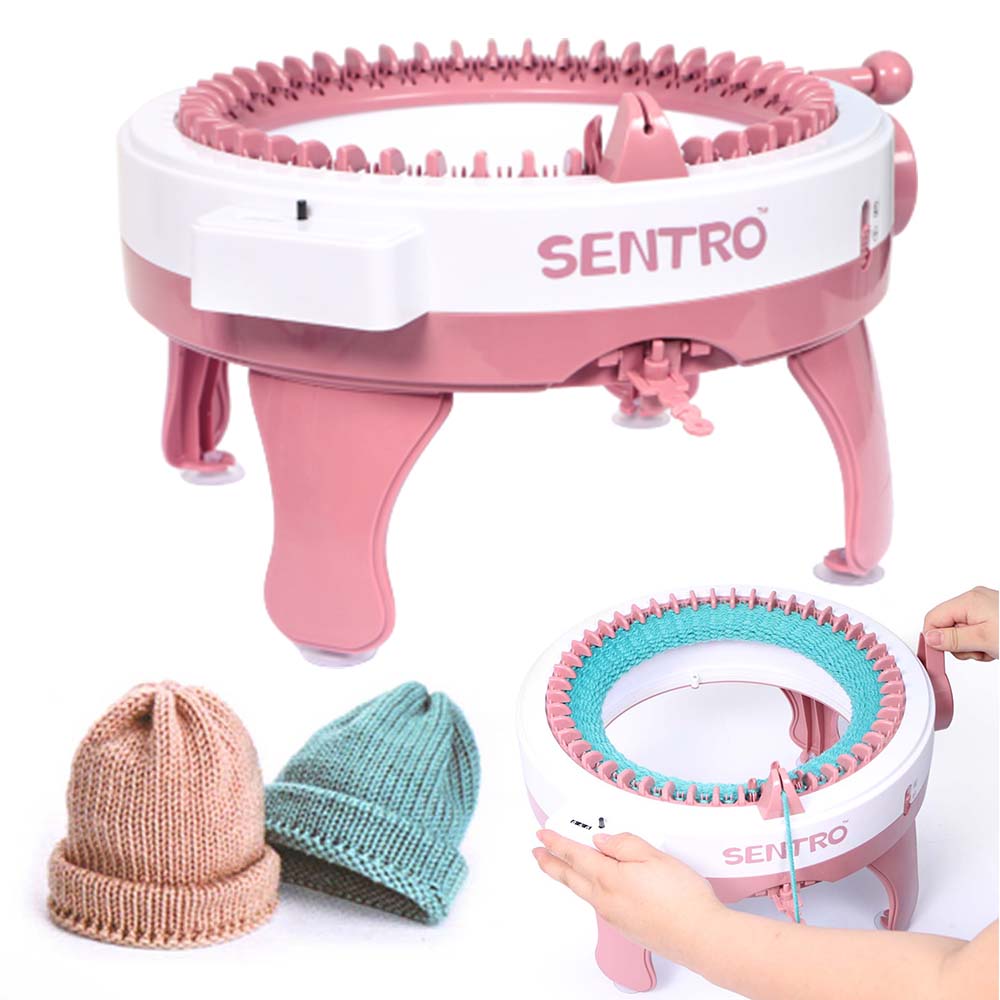
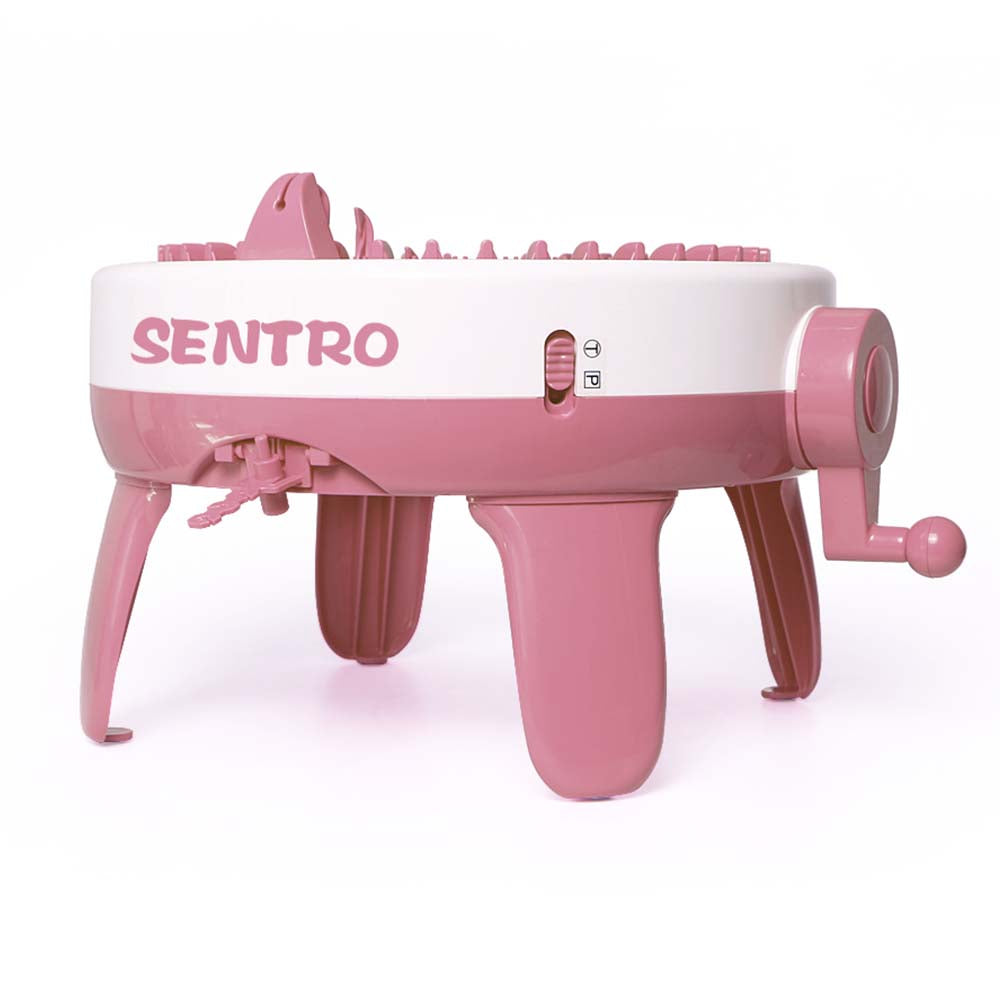
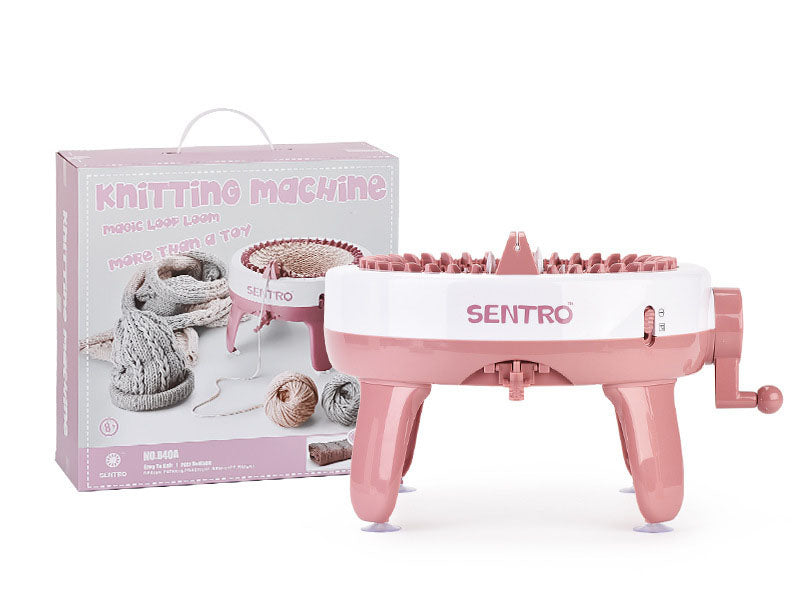
Glossy pastel-pink and white machine with 40-needle circular bed.
Manual crank for creating knitted rows.
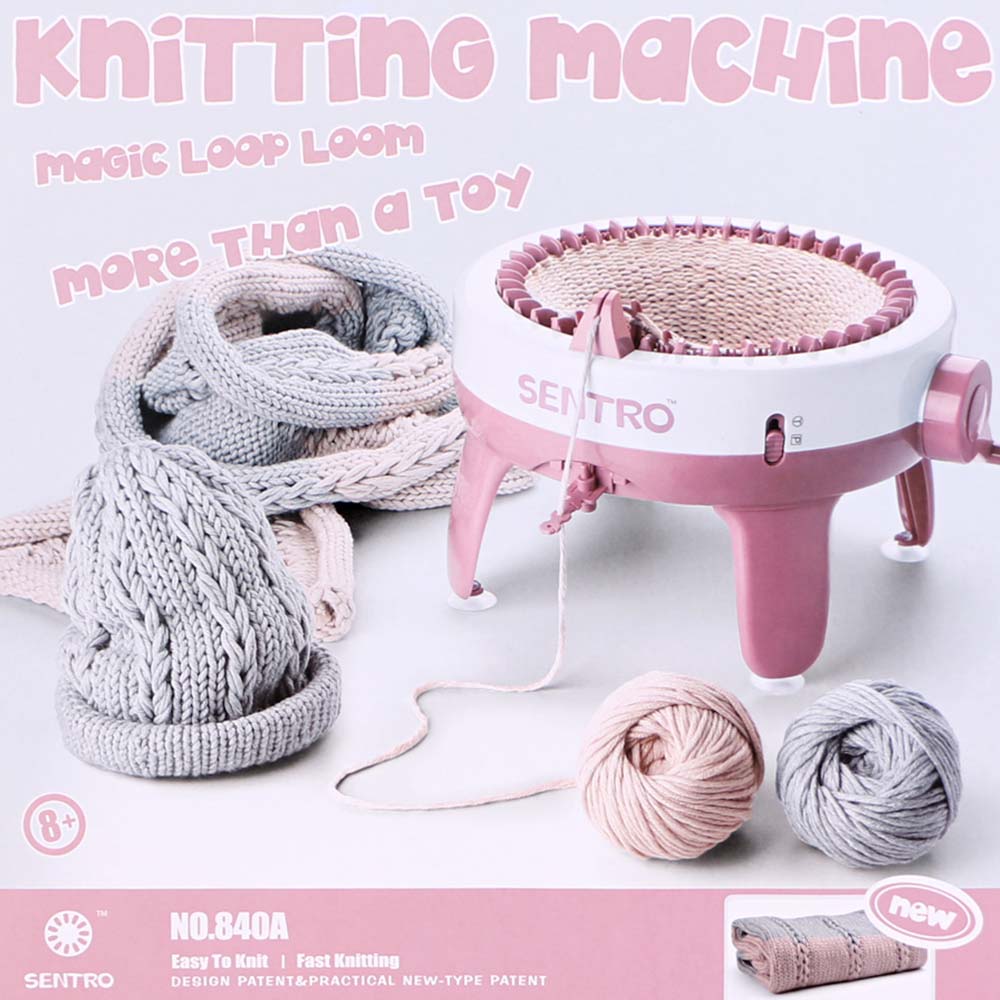
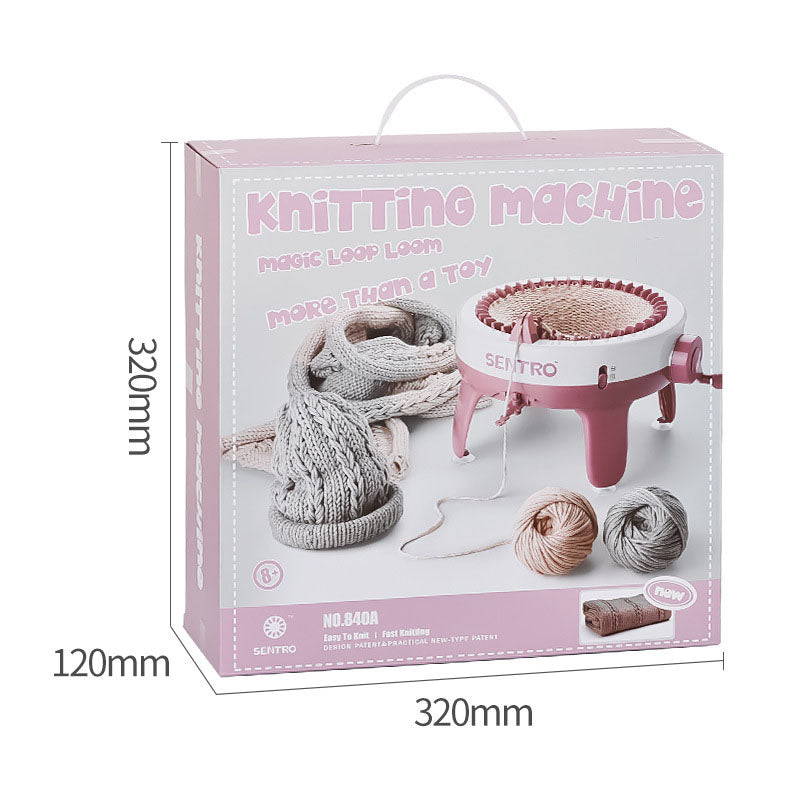
Yarn appears with the demonstration projects. Add your preferred yarn for ongoing crafting.
Traditional knitting can turn a promising craft into dropped stitches, tangled yarn, and a lot of waiting. For a child or first-time maker, the fiddly parts often arrive before the fun does.
The 40-needle bed gives everyone a clear place to begin. One person can guide the yarn while another turns the crank, creating an easy parent-child rhythm that keeps the activity shared.
As the yarn moves through the circular needle bed, loose material becomes a recognizable knitted piece. Hats, tubular projects, and chunky scarves give beginners a result worth wearing, gifting, or showing off.
The next rainy afternoon, school project, or gift-making session has a place to start. Clear controls, supporting legs, and a guided yarn path make this a practical screen-free activity for the craft table.
| 40-Needle Machine | Traditional Needles | |
|---|---|---|
| Learning entry | Guided hand-crank rhythm | Manual technique first |
| Yarn handling | Built-in guide and tension adjuster | Handled by the knitter |
| Shared participation | Easy parent-child turn-taking | Usually one knitter at a time |
| Project formats | Flat-weave and ring-weave modes | Depends on needle skills and pattern |
| Value over time | One machine supports repeated home projects | Requires separate needles and ongoing technique practice |
Yes, it is intended for children aged 8 and up with adult supervision. The exposed moving needles and yarn path make calm guidance important, especially during setup and the first turns.
Yes. The transfer key switches between flat-weave and ring-weave modes, giving families a way to make flat scarf sections as well as tubular pieces and hats.
The three shown items are the main knitting machine, the hand crank, and the yarn shown in the demonstrations. The product description does not promise extra accessories.
Yes. The hand crank creates the repeated motion, while the built-in yarn guide and tension adjuster make the yarn path easier to manage. Traditional knitting knowledge is not required to begin.
It gives you a way to manage yarn flow as you learn the rhythm. Keep the feed relaxed, turn slowly, and pause to inspect the rows if the yarn feels tight.
No. The machine uses a hand crank, so it is a manual tabletop activity with no battery or electrical operation described.


 40-Needle Knitting Machine for Fast, Easy Projects