
$64.90
Free delivery · 7–14 days
Tire Shine Spray With Carnauba Wax Tire Protection
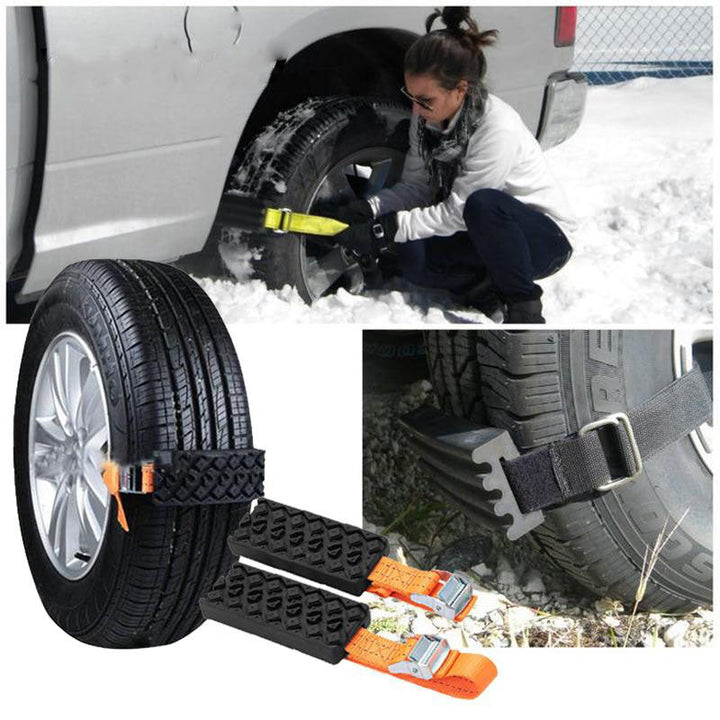
Tire chains help improve traction when snow and ice make ordinary tires struggle. This category features Tire Chain Strap products designed to help reduce wheel slip on compatible vehicles, with selection based on tire size, vehicle type, clearance, and local driving requirements.
Start by checking your tire size on the tire sidewall, such as 215/65R17, and compare it with the product’s listed tire chains sizes. Next, confirm whether the Tire Chain Strap fits your vehicle type, including cars, SUVs, vans, or trucks. Vehicle clearance matters too: some cars have limited space between the tire and suspension or bodywork, so consult the owner’s manual before buying. Check whether your vehicle manufacturer specifies a particular axle for traction devices. If you are shopping for tire chains for cars, prioritize fit and clearance. For tire chains for trucks, also consider tire width, load use, and whether the vehicle has dual rear wheels. When comparing tire chains price, include the cost of proper sizing and installation—not just the lowest listing price.
Traditional tire chains use linked metal sections that wrap around the tire and connect across the tread and sidewalls. A tire chain strap uses strap-style traction elements intended to provide additional grip while being fitted around a compatible tire. The right choice depends on the vehicle, tire dimensions, available clearance, and the product’s instructions. Tire chains for ice and packed snow should be selected for the conditions you expect, but no traction device replaces careful driving. Before ordering, compare the attachment method, included hardware, fit range, and storage requirements. If you are searching for the best tire chains, look beyond material or appearance: a correctly sized product that can be installed securely is generally more useful than one that does not match your tires. Always follow the vehicle and product instructions.
Look for a clearly stated tire-size range and instructions that explain how the Tire Chain Strap attaches, tightens, and comes off. The product should be suitable for your tire type and vehicle clearance, with no part left loose enough to contact brake lines, suspension components, wheel wells, or bodywork. Check whether the package includes all required straps, connectors, or tensioning parts, and review the storage guidance so the product stays ready for the next storm. For frequent winter travel, ease of fitting can matter as much as traction performance. For occasional use, compact storage and straightforward inspection may be priorities. Shoppers looking for tire chains near me should still verify local availability and fit before purchasing. Do not choose based only on a product photo, because wheel and tire dimensions can vary significantly.
Practice installing tire chains before you need them beside a snowy road. Park on a level, safe surface, engage the parking brake, and follow the Tire Chain Strap instructions for positioning and tightening. Remove twists, keep the strap centered over the tread, and check that the fastening points are secure. After fitting, move the vehicle a short distance in a safe area, stop, and recheck the tension and clearance. Drive slowly at first and stop immediately if you hear striking, rubbing, or unusual vibration. Carry gloves, a flashlight, and a way to kneel without placing yourself in traffic. The exact installation method varies by product and vehicle, so do not substitute a generic tire chains for snow how-to for the supplied instructions. Remove the straps when conditions no longer require them or when driving on surfaces where they may be damaged.
A frequent mistake is buying by vehicle name alone instead of matching the tire-size marking. Another is installing the wrong number of traction devices for the vehicle’s drivetrain or the manufacturer’s instructions. Drivers may also fit chains too loosely, skip a clearance check, or wait until traffic and deep snow make installation difficult. Do not use a damaged, tangled, or incomplete Tire Chain Strap, and do not continue driving if it shifts or contacts the vehicle. Avoid sudden acceleration, hard braking, and sharp steering while traction straps are fitted. Speed limits for traction devices vary by product, road conditions, and local rules, so use the lower applicable limit and follow the packaging. Finally, check state and local requirements before winter travel: some roads require chains during designated conditions, while certain vehicles, roads, or traction devices may be restricted.
Tire chains and Tire Chain Straps suit drivers who may encounter snow, ice, steep grades, unplowed roads, or chain-control areas and want an added traction option for compatible tires. They can be useful for cars, SUVs, vans, and trucks when the vehicle manufacturer permits the device and the fit is correct. AWD and 4WD vehicles are not automatically exempt from chain requirements or traction limitations; drivetrain type does not remove the need to check the manual and local road rules. Drivers who rarely see winter weather may value a compact product that can be stored in the vehicle, while frequent mountain travelers should inspect fit and condition before each trip. These products are not a substitute for winter tires, safe following distance, or reduced speed. Confirm compatibility before purchase, especially with low-clearance vehicles, specialty wheels, or dual-wheel truck setups.
Not always. Follow your vehicle owner’s manual and the Tire Chain Strap instructions for the approved axle and quantity. Some vehicles require traction devices on a specific axle, while others may allow or recommend installation on more than one axle; clearance and drivetrain configuration also matter.
Properly fitted tire chains or tire chain straps can improve traction on suitable snow- and ice-covered surfaces by adding gripping elements around the tire. Their effectiveness depends on correct fit, road conditions, tire condition, and careful driving. They cannot guarantee stopping or steering control on every surface.
Use the maximum speed stated in the product instructions and vehicle manual, along with any lower speed required by local law or road conditions. Drive slowly enough to maintain control, avoid sudden maneuvers, and stop to inspect the straps if you notice looseness, noise, or rubbing.
AWD does not automatically determine how many traction devices you need. Check the vehicle manufacturer’s instructions for approved locations, tire clearance, and the number of devices, then review local chain-control rules. Never install them where the vehicle manual prohibits them.
The answer varies by vehicle, tire size, clearance, and local requirements. Some 4-wheel-drive vehicles use devices on one axle, while others may require or permit more; the owner’s manual and product instructions take priority. Confirm the required quantity before purchasing so you do not rely on an incomplete setup.
Rules differ by state, roadway, weather condition, vehicle type, and traction-device design, and they can change seasonally. Some locations restrict chains on certain roads or when pavement is clear, while others require them during chain-control periods. Check the transportation department or road authority for every state and route you plan to use.