$44.90
Free delivery · 7–14 days
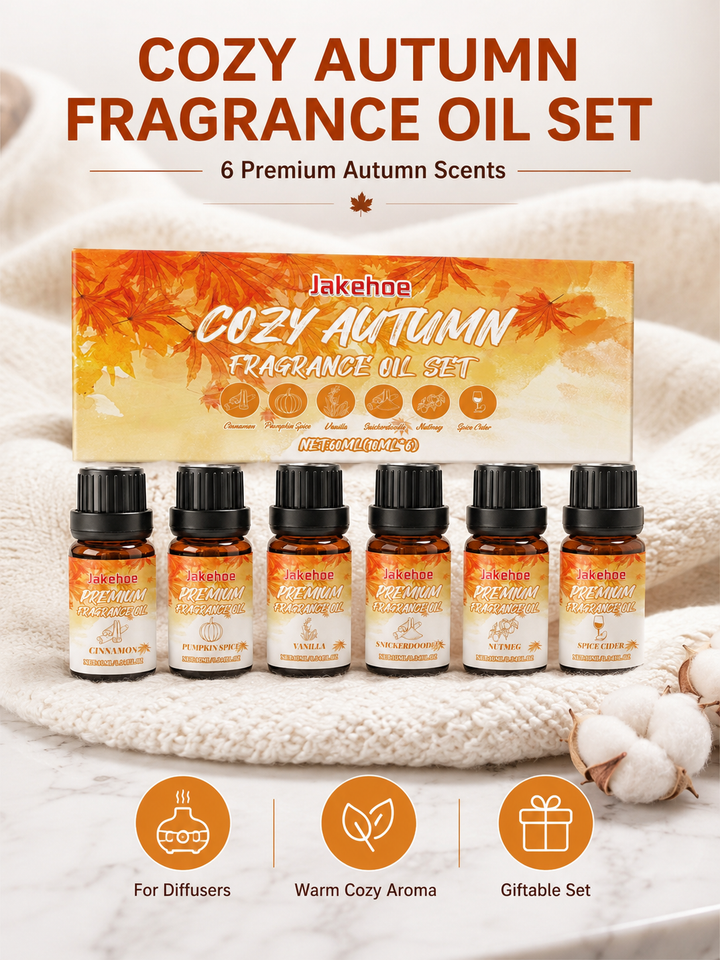
Autumn Essential Oil Set — 6 Warm Scents for Cozy Atmosphere


Explore rose-scented oils, aromatherapy blends, mouthwash, deodorant, and body-care products in one place. Use the product label to check whether you are choosing a true rose essential oil, a fragrance blend, or a carrier oil infused with a rose scent.
Start by deciding how you plan to use the product: room scenting, personal fragrance, massage, or body care. A true rose essential oil should clearly identify the botanical ingredient and tell you whether it is undiluted or blended with a carrier oil. For skin use, a ready-to-apply body oil may be more convenient than a concentrated aromatic oil. This category also includes rose-scented options with different purposes, such as Vanilla Rose Body Oil, Whole Body Deodorant Stick, and Rose Essential Oil Mouthwash. If you are shopping for Bulgarian rose essential oil, check the product description for the stated source rather than assuming every rose-scented item contains Bulgarian rose oil.
Rose essential oil is a concentrated aromatic extract from rose plant material, while rose oil can be a broader term for several products. It may describe an essential oil, a rose-infused carrier oil, or a fragrance oil formulated to smell like roses. A body oil such as Vanilla Rose Body Oil is designed for topical application and may contain carrier oils and fragrance ingredients, so it should not automatically be treated as a pure essential oil. When comparing products, read the ingredient list, product type, dilution guidance, and intended use. This distinction is especially important when searching for rose essential oils for skin, because concentrated oils generally require different handling from pre-diluted body products.
Look for clear labeling rather than relying only on the word “rose.” Useful details include the botanical name, plant part, extraction method, country of origin, ingredients, volume, and whether the formula is diluted. A product should also explain whether it is intended for diffusion, topical use, massage, oral care, or fragrance. Avoid treating a rose-scented deodorant, mouthwash, or massage blend as interchangeable with a pure essential oil. The Rose Essential Oil Mouthwash is made for freshening breath and routine mouth care, while the Whole Body Deodorant Stick offers an aluminum-free rose scent. Product names can suggest an aroma, but the ingredient panel confirms what you are buying.
Follow the directions supplied with each product because use varies across this category. Use a diffuser or other suitable aroma device only as directed, and do not place concentrated essential oil directly into the eyes, mouth, or on sensitive skin. For massage or body application, choose a product labeled for topical use; a ready-made Body Massage Essential Oil or Vanilla Rose Body Oil may already be formulated for that purpose. Do not use the Rose Essential Oil Mouthwash as a skin or diffuser product, and do not swallow it unless its instructions specifically say to do so. Patch-test new topical products, keep oils away from children and pets, and stop use if irritation occurs.
A common mistake is assuming every rose fragrance is a pure rose essential oil. Shoppers may also confuse a body oil with an undiluted aromatic extract, overlook the intended-use instructions, or choose a product based only on a promise such as “firming,” “slimming,” or “stamina.” In this category, several products are purpose-specific blends: the Intimate Wellness Oil, Men's Massage Essential Oil, Butt Lift Essential Oil, and Autumn Essential Oil Set are not automatically interchangeable with a pure rose oil. Another mistake is ignoring scent preference; vanilla rose, warm seasonal blends, deodorant, and mouthwash can all smell different from a classic rose aroma. Compare ingredients, format, and directions before ordering.
Rose products suit shoppers who enjoy floral fragrance and want a convenient format for personal care, massage, oral care, deodorizing, or home atmosphere. Choose a body oil if you want a ready-to-use topical product, a deodorant stick for everyday underarm fragrance, or a mouthwash for the specific routine described on its label. The Autumn Essential Oil Set is aimed at shoppers who want several warm scents rather than a single rose aroma. If you specifically want rose essential oils for aromatherapy, focus on products that identify an essential oil and provide aroma-use directions. People with sensitive skin, fragrance sensitivities, or questions about using essential oils during pregnancy should check the label and ask a qualified healthcare professional before use.
Rose essential oils are commonly chosen for their floral aroma in personal fragrance or suitable aromatherapy applications. Their exact use depends on the product format, so follow the label rather than applying a concentrated oil directly to skin or using a body product in a diffuser.
Rose essential oil is a concentrated aromatic extract, while “rose oil” may refer to an essential oil, a carrier oil infused with rose, or a fragrance blend. Check the ingredients and intended use to tell whether a product is pure, diluted, infused, or simply rose-scented.
The best choice depends on how you plan to use it and whether you want a pure, diluted, or fragrance-focused product. Compare the botanical name, ingredients, origin information, concentration, scent description, and directions instead of choosing by the word “best” alone.
Rose essential oil has the most direct rose aroma, but products described as rose fragrance or rose blends may also smell similar. Vanilla Rose Body Oil and the Whole Body Deodorant Stick are rose-scented options, while their formulas and uses differ from a pure essential oil.
A product can be described as pure only when its labeling and ingredient list support that description. Look for a rose botanical ingredient, no unlisted carrier or fragrance ingredients, and clear guidance for handling a concentrated oil. Not every item in this category is a pure essential oil.
Rose fragrance, rose essential oil, and rose blends can all provide a rose-like scent, but the aroma may vary from fresh and floral to sweet or warm. Vanilla Rose Body Oil adds a vanilla note, while the rose deodorant and mouthwash are formulated for their specific product uses.