$47.90
Free delivery · 7–14 days
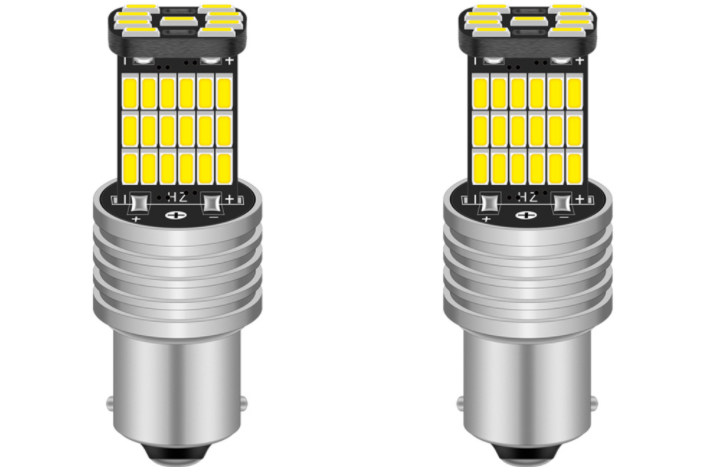
P21W 1156 BA15S LED Bulbs — 50,000‑Hr Error‑Free Brilliance


Find the right reverse lights for a clearer view behind your car, SUV, or truck when backing up. This category includes T15, T10, 1156, and P21W LED replacement bulbs in bright white styles, with options for standard sockets, lower power use, and different vehicle fitments.
Start by checking your vehicle owner's manual or removing the existing reverse lights bulb and matching its base and size. T15 bulbs are common in backup-light applications, while T10 and 1156 or P21W BA15S bulbs fit different sockets and are not interchangeable. Confirm the bulb number, socket style, physical length, and available clearance before ordering. If your vehicle uses a bulb-out warning system, look for a compatible option such as a CANbus-free T15 LED bulb or an error-free P21W 1156 bulb. Also check whether you need one bulb or a pair. Matching the original specification is more important than choosing the brightest-looking listing.
T15 LED bulbs are designed for many backup-light housings and can provide 360-degree illumination from a compact wedge base. T10 LED bulbs are smaller and may be used in vehicles with a matching narrow socket. P21W and 1156 BA15S LED bulbs use a bayonet-style base, so they suit housings designed for that connection rather than wedge bulbs. Some replacement bulbs are also marketed for brake and signal applications, but their fit and light pattern should match your reverse-light housing. For trucks, check the original bulb number and housing depth carefully. Bright white light is the usual reverse lights color because it clearly distinguishes the backup function.
Look beyond a headline brightness claim and check how the bulb distributes light inside the housing. A 360-degree design can help spread illumination around the reflector instead of concentrating it in one direction. Bright white LEDs are commonly chosen for reverse lights because they make the area behind the vehicle easier to see without changing the intended function of the lamp. Lower power use may reduce electrical demand compared with the original bulb, while a heat-managing construction can support consistent operation. Check the listing for socket compatibility, polarity information, dimensions, and whether the bulb is designed to work with your vehicle's warning system.
Switch off the vehicle, engage the parking brake, and allow the original bulb to cool before opening the reverse-light housing. Remove the lens or socket according to the vehicle manual, then take out the old bulb without forcing the connector. Insert the replacement with the correct base and test it before fully reassembling the housing. If the LED does not illuminate, remove it, rotate it 180 degrees if the design is polarity-sensitive, and test again. Confirm that the housing seal, lens, and socket are seated securely. Test both reverse lights, if fitted, in a safe area before driving at night.
The most common mistake is ordering by appearance instead of matching the bulb number and base. A T15 wedge bulb, T10 wedge bulb, and 1156 BA15S bayonet bulb may look similar in an online photo but fit different sockets. Another mistake is assuming every LED works with a dashboard bulb warning system; some vehicles need an error-free or CANbus-compatible design. Do not install a brake or signal bulb simply because it has the same color or a similar shape. Avoid touching the LEDs or forcing the bulb into place, and check that the reverse-light color remains bright white rather than using colored bulbs intended for another function.
LED reverse lights suit drivers replacing a failed factory bulb, updating older incandescent backup lights, or looking for a bright white replacement for a car, SUV, van, or truck. They are especially useful when you want a compact bulb with a 360-degree light pattern or lower power use, provided the replacement matches the original socket and vehicle system. A T15 option may suit many backup-light applications, while T10 and 1156 or P21W options serve different fittings. These bulbs are not wireless reverse lights: they install into the vehicle's existing socket and wiring. Check local vehicle requirements and your owner's manual before making changes.
Reverse lights are the white lamps that illuminate when the transmission is placed in reverse. They help signal that the vehicle is backing up and provide light behind the vehicle. The bulb type varies by vehicle, so check the original bulb number before buying a replacement.
Vehicles may have one or two reverse lights, depending on the design and market specification. Check the rear light housings or your owner's manual to confirm how many bulbs your vehicle uses. If replacing a pair, matching bulbs can help keep the light output consistent.
Rules for required reverse lights vary by location and vehicle type. A vehicle may need working equipment to meet local road-use or inspection requirements, so check your local regulations rather than removing a failed lamp. Replacing the correct bulb is generally preferable to driving without a functioning reverse light.
The reverse light is usually the clear or white section of the rear lamp assembly, not the red brake or tail-light section. It illuminates when reverse gear is selected. Your owner's manual or the marking on the original bulb can confirm its location and bulb type.
A vehicle with no working reverse lights may be harder for others to see when backing up and may not meet local requirements. Inspect the bulb, fuse, socket, and wiring before driving normally, and replace the failed bulb with the correct fitment. If the problem is electrical rather than the bulb, professional diagnosis may be needed.
The correct bulb depends on your vehicle's year, model, housing, and socket. Common options in this category include T15, T10, and 1156 or P21W BA15S LED bulbs, but these bases are different. Verify the number in the owner's manual or match the original bulb before ordering.