$49.90
Free delivery · 7–14 days
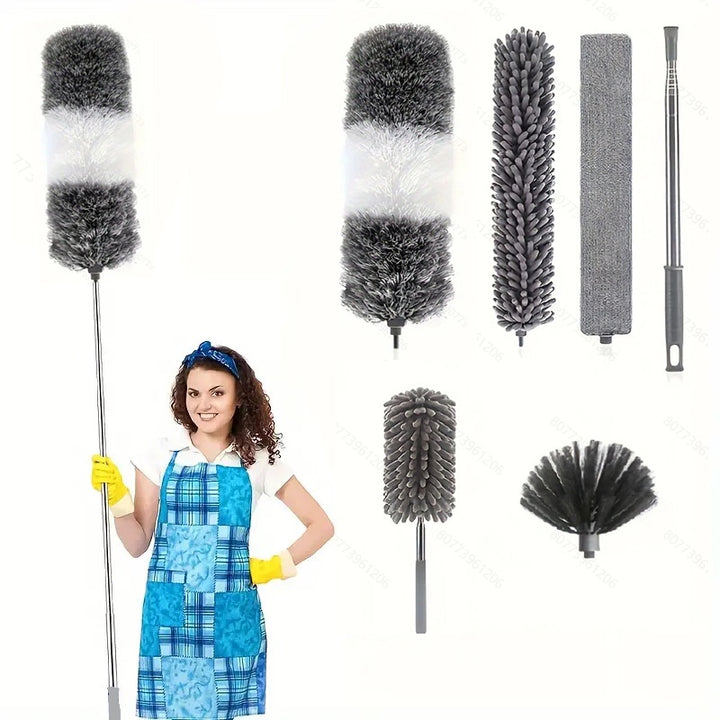
Extendable Duster Set: Reach Every Ceiling Without a Ladder
Dusters help remove loose dust from ceilings, fans, shelves, blinds, furniture, and other hard-to-reach areas. This category features an extendable duster set designed to help you clean high surfaces without using a ladder, with a practical format for routine home cleaning and detailed dusting.
Start with the areas you need to clean most often. For ceiling corners, light fixtures, tall cabinets, and fan blades, an extendable duster is more useful than a short handheld cloth because it gives you added reach from the floor. Look for a handle that is comfortable to grip, a head that can collect dust rather than simply push it around, and a design that stores easily between uses. An extendable duster set is a practical choice when one tool needs to cover several heights and surfaces. If you are comparing dusters at a general retailer or searching for dusters online, check the product dimensions, included attachments, cleaning instructions, and whether the head can be repositioned for awkward angles.
Microfiber dusting cloths are useful for shelves, tables, screens, trim, and other reachable surfaces because the fabric can pick up loose particles during a wipe. Extendable dusters and mops are better suited to ceilings, walls, vents, blinds, tall furniture, and light fittings where reaching by hand is inconvenient. Feather dusters can be gentle on delicate objects, but they may move dust into the air or onto nearby surfaces instead of capturing it. A reusable extendable duster set offers a broad middle ground for everyday cleaning, especially when you want one tool for high and low areas. Searches such as “dusters Swiffer” may reflect a desire for a familiar flat or long-handled format; compare the actual head shape and reach rather than relying on the search term alone.
Professional cleaners typically need a duster that supports consistent, efficient passes across many surfaces. Prioritize a handle that extends securely, a head that reaches corners and edges, and a shape that can move across ceilings, fan blades, molding, and furniture without excessive bending or stretching. A washable or replaceable cleaning head can also make routine maintenance simpler, depending on the product design. The Extendable Duster Set is suited to shoppers who want more reach than a basic cloth while keeping the tool easy to use at home. Before buying, consider storage space, the total length when extended, the head’s flexibility, and how easily it can be cleaned after collecting dust. These details matter more than appearance or vague labels such as “professional.”
Begin with the highest surfaces and work downward so loosened dust does not settle on areas you have already cleaned. Extend the handle only as far as needed, then use slow, overlapping strokes across ceiling edges, light fixtures, shelves, fan blades, and tall cabinets. For corners and narrow gaps, angle the duster head instead of pressing hard. On delicate or unstable objects, shorten the handle and support the item when possible. After high surfaces are finished, dust furniture and floors last. Follow the care instructions for the duster head; shake or clean it as directed rather than assuming every microfiber tool can be machine-washed. An extendable set is especially helpful when you want to avoid climbing on chairs or carrying a ladder from room to room.
One common mistake is dusting from the bottom up, which can leave freshly cleaned surfaces covered again. Another is moving too quickly or using excessive pressure, which may spread loose particles instead of collecting them. Do not use a long-handled duster as a substitute for inspecting fragile fixtures, unsecured objects, or wet spills. A dry duster is intended for dust; use a suitable cleaning cloth and product when a surface needs washing or polishing. Avoid pushing the head into delicate decorations, exposed wiring, or unstable ceiling fittings. Clean the duster head when it becomes loaded with dust, and store the handle retracted if possible. These habits help an extendable duster work more effectively and reduce unnecessary contact with surfaces.
An extendable duster set suits shoppers who regularly clean high ceilings, fans, vents, light fittings, blinds, tall bookcases, and cabinet tops. It can be useful in homes with limited storage, since one adaptable tool may cover areas that would otherwise require several dusters or a separate step stool. It is also a practical option for people who prefer cleaning from floor level rather than stretching or moving furniture. Searches for “dusters clothes,” “dusters women,” or “dusters show” may refer to clothing, fashion, or entertainment rather than household cleaning, so check that the listing describes a cleaning tool before purchasing. For reachable furniture and electronics, pair the extendable duster with a clean microfiber cloth for more controlled wiping.
The best duster depends on the surfaces and heights you clean most often. For ceilings, fans, tall furniture, and corners, an extendable duster set is a practical choice because it provides additional reach without requiring a ladder. Look for a secure handle, a useful head shape, and clear care instructions.
For high or awkward areas, an extendable duster is usually more versatile than a short handheld tool. Microfiber cloths work well for reachable surfaces, while a feather duster may suit light decorative dusting. Choose the format that matches the surface rather than assuming one type works best everywhere.
“Duster” can have different meanings depending on context, including a household cleaning tool, a long coat, or other slang uses. On this category page, dusters refers to cleaning tools used to remove loose dust from surfaces. If you are searching for dusters clothes or a dusters show, check the category carefully because those searches may have a different meaning.
A tool works best when its head suits the surface and it is used with slow, overlapping strokes. An extendable duster is effective for high areas such as ceiling corners, fan blades, shelves, and light fittings, while a microfiber cloth provides more control on tables and smaller surfaces. Cleaning the head regularly also helps maintain useful dust pickup.
A simple routine is to dust from high surfaces down, then clean furniture and floors afterward. Use a slightly damp microfiber cloth where appropriate for reachable surfaces, and use an extendable duster for ceilings, fans, and tall furniture. Dust cannot be permanently eliminated, but regular top-to-bottom cleaning helps keep it under control.
Professional cleaners choose tools based on the surface, height, and size of the area. Commonly useful formats include microfiber cloths for controlled wiping and extendable dusters for ceilings, vents, fans, blinds, and tall furniture. A well-designed extendable duster set can simplify high-area cleaning while reducing the need to move ladders or step stools.
Browse related: Keyboard Cleaners: Mini Vacuums, Sprays & Compressed Air · explore screen cleaning kit for tvs, laptops and computer monitors.