
$38.90
Free delivery · 7–14 days
Baby Bath Support Cushion for Gentle Newborn Comfort



Make baby bath time easier with gentle, practical essentials for washing, rinsing, drying, and caring for delicate skin. This category includes soft bath mitts, silicone scrubbers, a scalp massage brush, and post-bath skin care, while a suitable baby bath tub or sink insert may be purchased separately.
Start with your baby’s age, bathing setup, and skin sensitivity. For a newborn’s first bath, choose a stable baby bath tub or a properly supported baby bath tub for sink use, plus a soft cloth or mitt and a clean towel. An animal bath mitt can help you wash gently without relying on rough sponges, while a silicone baby scalp massage brush is designed for light shampoo application. For older babies and toddlers, an antimicrobial silicone body scrubber may be useful when you want an easy-to-rinse tool. Keep baby bath soap mild and use only as directed on its label. Choose a simple routine with fewer products if your baby’s skin becomes dry or irritated, and ask a healthcare professional for individual guidance.
A newborn bath tub is often shaped to support a small baby during washing, while a baby bath tub for sink use can fit into or over a clean sink area. Some families prefer a larger infant tub that can be used on a stable floor or counter only according to its instructions. Whichever style you choose, check that it sits securely, drains easily, and is suitable for your baby’s size and stage. These bath accessories do not replace hands-on supervision. The products in this category complement a tub rather than provide one: the animal bath mitt helps with gentle washing, the scalp brush supports light shampooing, and the silicone body scrubber suits babies or toddlers only when its texture and size are appropriate.
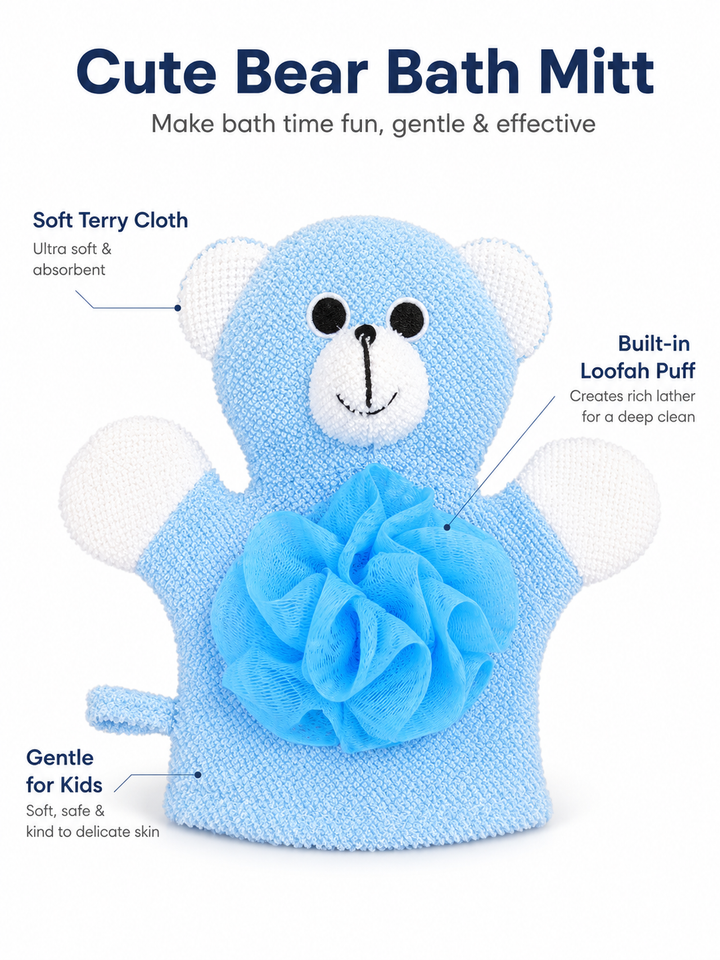
Look for soft, flexible materials, easy cleaning, and shapes that are comfortable for a small hand. The 2-pack animal bath mitt gloves can provide a washable option for gentle body washing and a spare between uses. Silicone tools should have a smooth surface, no sharp edges, and an easy-to-rinse design. Use the silicone baby scalp massage brush with light pressure around the scalp, avoiding the eyes and any sore areas. An antimicrobial silicone body scrubber is a practical option for a toddler’s bath routine, but it should still be rinsed and dried after every use. Inspect each item regularly and replace it if it cracks, splits, develops rough edges, or can no longer be cleaned thoroughly.
Prepare the tub, towel, cleanser, and clean clothing before starting, then check the water with your wrist or an appropriate thermometer. Keep one hand on your baby when needed and stay within arm’s reach throughout the bath; never leave a baby alone in water, even briefly. Use a small amount of baby bath soap if needed, washing gently with the mitt or your hand. Rinse cleanser away, then pat the skin dry rather than rubbing. Use the scalp brush lightly and keep water and soap away from the eyes. Apply Baby Anti-Crack Cream only as directed on its packaging and only to suitable external skin areas. Keep the mosquito repellent spray away from bath water, eyes, mouth, and broken skin, and follow its label.
Do not leave a newborn unattended, place the tub on an unstable surface, or add more water while your baby is in it. Avoid scrubbing, vigorous scalp brushing, very hot water, and strongly fragranced products unless specifically advised for your baby. Do not use a bath mitt, silicone scrubber, or brush on irritated, broken, or visibly sore skin without professional advice. Keep cords, bottles, and sprays away from the bathing area, and never use mosquito repellent as a bath product. Rinse tools after use and let them dry fully instead of storing them wet. If your baby seems uncomfortable, the water temperature feels wrong, or the skin reacts to a product, stop using it and seek appropriate guidance.
This selection suits parents building a simple baby bath routine, relatives assembling a practical gift, and caregivers who want washable alternatives to disposable bath sponges. The animal bath mitt gloves are suitable for gentle washing when their fit and texture work for your baby. The silicone baby scalp massage brush is intended for light shampoo distribution, while the silicone body scrubber is better considered for babies or toddlers who are ready for its size and feel. Baby Anti-Crack Cream is a targeted post-bath skin-care option, not a cleanser. The mosquito repellent spray is for use only as its label permits and is not part of the washing step. For a newborn, choose a suitable tub or sink support separately and prioritize close supervision.
Many families begin with sponge cleaning until the umbilical area has separated and healed, then move to tub baths when ready. Follow advice from your healthcare professional and the guidance provided by your maternity or pediatric care team.
A small, stable newborn bath tub with good support and easy drainage is a practical choice. A baby bath tub for sink use may also work if it fits securely and is used exactly as instructed, with an adult providing constant hands-on supervision.
The best setup is one that matches the infant’s size and stage, holds the baby securely, and allows the caregiver to keep a hand on the baby. Add a soft mitt, clean towel, and mild cleanser rather than relying on rough scrubbers or excessive products.
Prepare warm water, a suitable newborn bath tub or supported basin, a clean cloth or soft bath mitt, a towel, and fresh clothing. Use cleanser sparingly if needed, and follow your healthcare professional’s advice about caring for the umbilical area.
Never leave a newborn alone in or near bath water, even for a moment. Avoid hot water, unstable surfaces, vigorous scrubbing, distracting phone use, and products that are not intended for a baby’s skin or age.
Babies usually do not need a full bath every day; the right routine depends on age, mess, skin comfort, and professional guidance. Clean the face, neck folds, hands, and diaper area as needed between baths, and reduce or adjust bathing if the skin becomes dry or irritated.
Browse related: Shop all Baby Chairs - Infant Car Seats & Carrier Seats for Safe Travel · explore infant bathtubs - collapsible baby bath tub with seat.