
$64.90
Free delivery · 7–14 days
Small Pet Playpen — Portable Exercise Fence
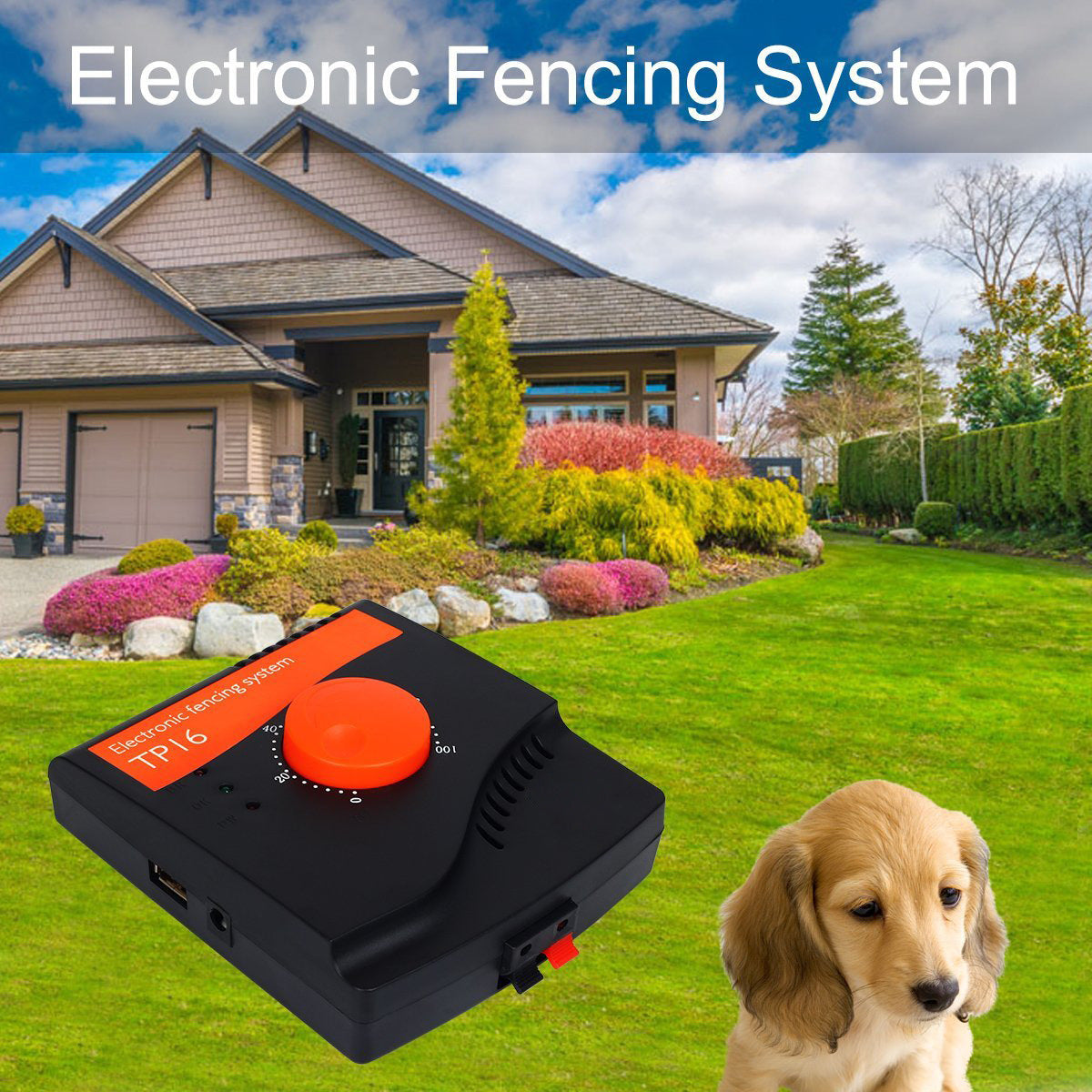



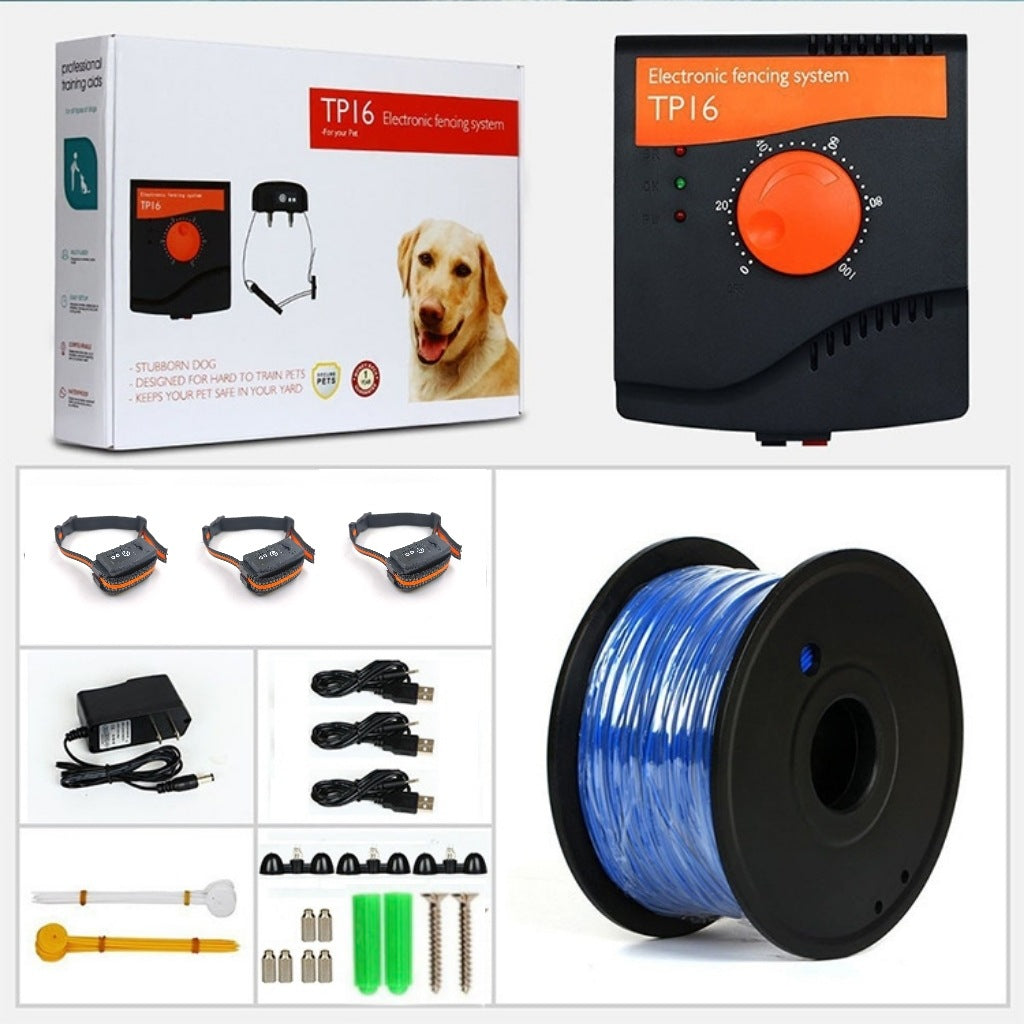
Give your dog room to roam without another fence-gap chase. The TP16 combines a central control unit, boundary wire, and three waterproof receiver collars for multi-dog yard training.
Read the full descriptionGive your dog room to roam without another fence-gap chase. The TP16 combines a central control unit, boundary wire, and three waterproof receiver collars for multi-dog yard training.
A complete electronic fencing kit with waterproof receiver collars for helping keep dogs safely within a yard.
Stop patching fence gaps and chasing runaways down the street. This complete containment kit trains even the most stubborn dog to respect the boundary you set — rain, mud, or pool included.
The bright orange dial lets you tune the correction strength for the dog in front of you. That gives high-drive dogs a stronger training response while keeping the setting adjustable for more sensitive dogs.

The receiver collars are built for wet outdoor conditions and are advertised for swimming. Rain, sprinklers, and supervised pool days do not require a separate dry-weather collar.

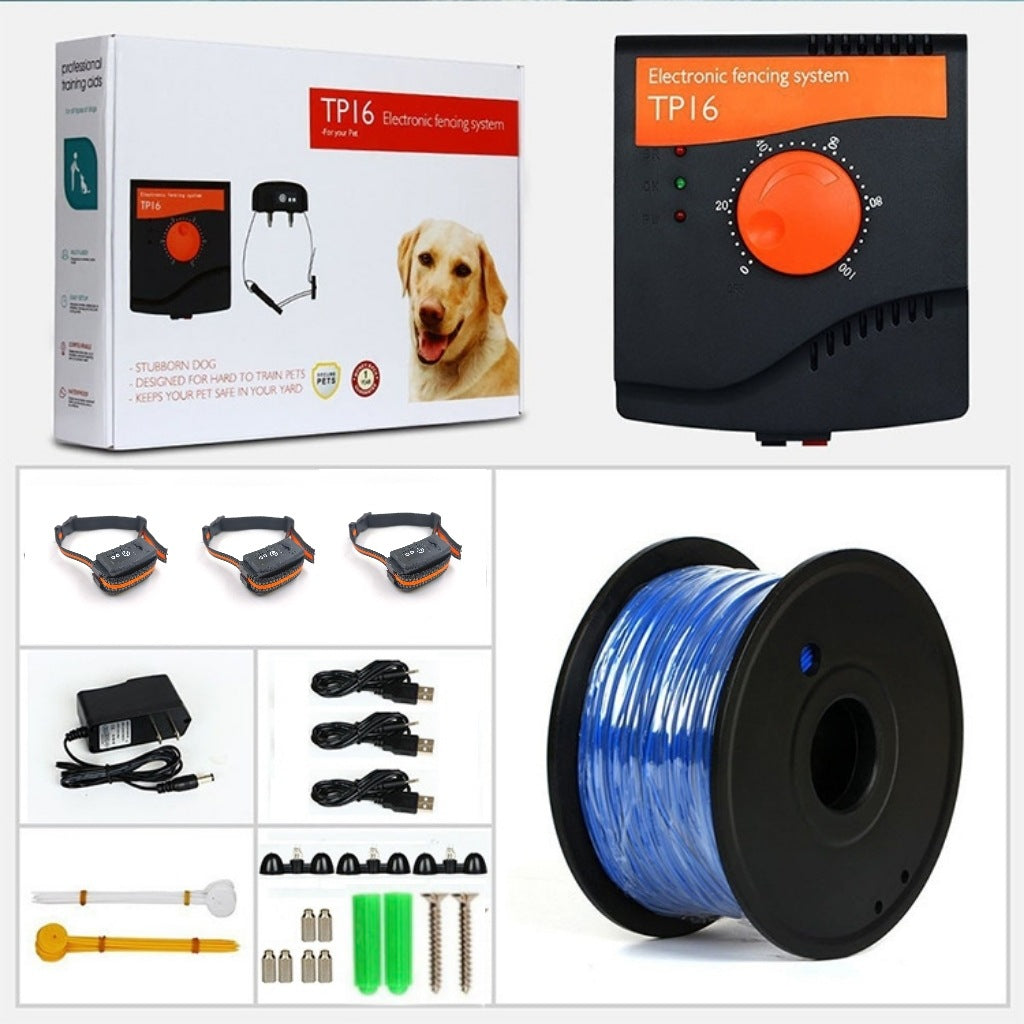
The kit includes three adjustable fabric receiver collars connected to one control system. Multi-dog households can train each dog with a collar suited to its own fit and setting.
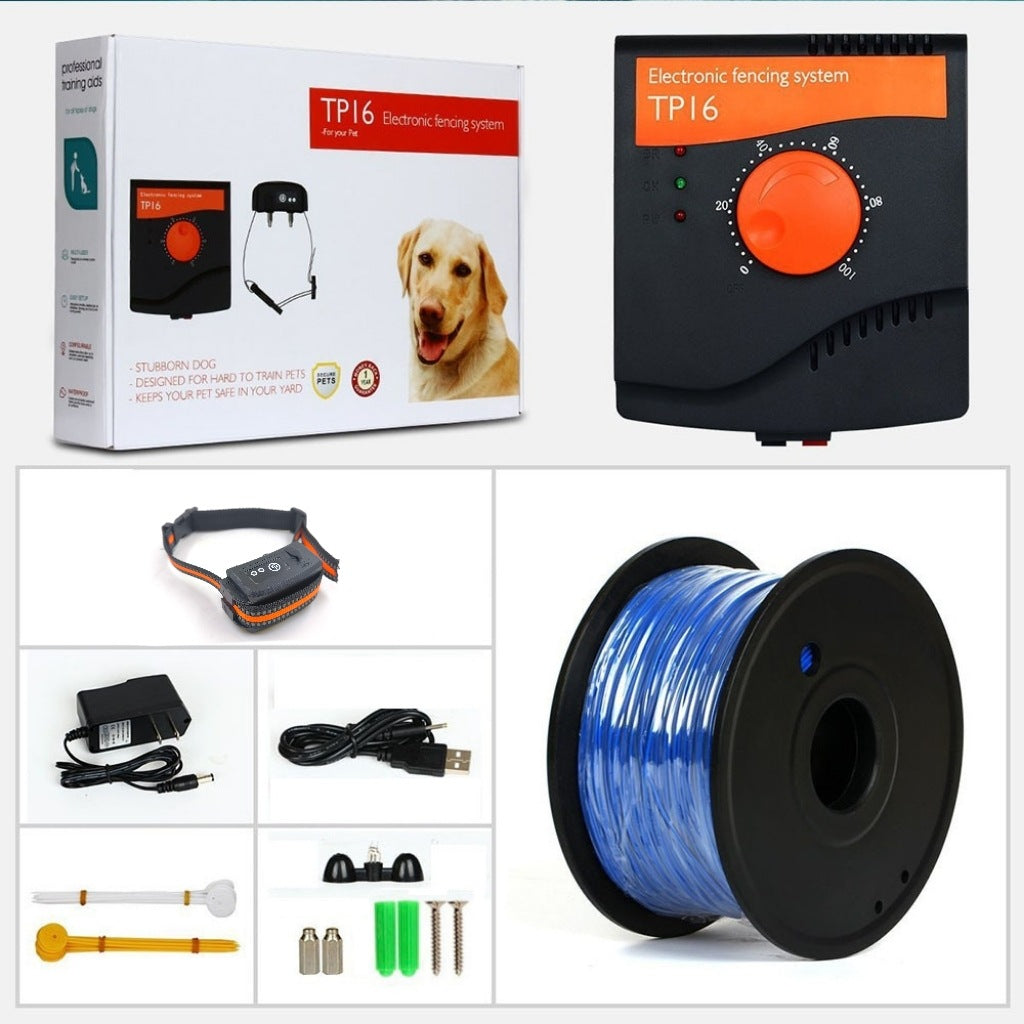
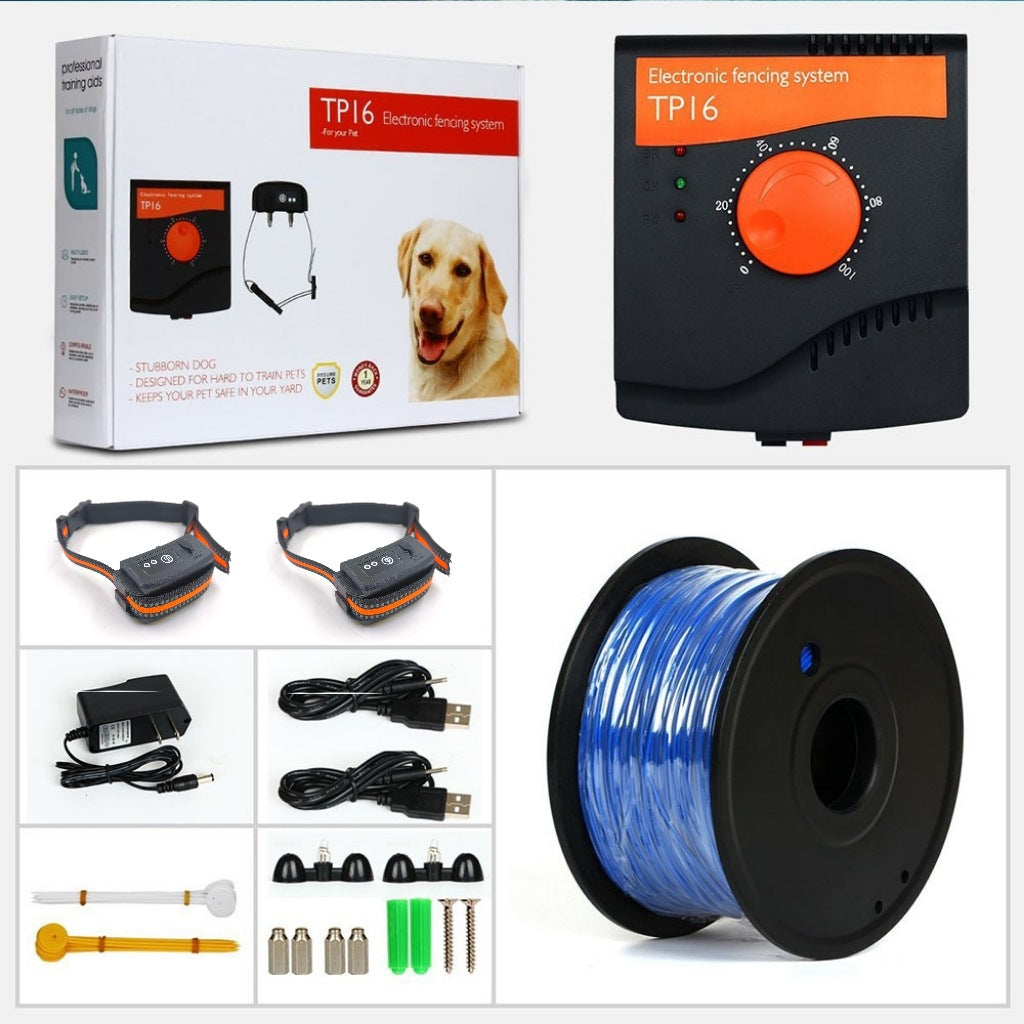
The control unit, boundary wire spool, collars, adapters, charging cables, contact probes, and installation hardware arrive together. You can start planning the boundary without a second equipment hunt.
Walk the perimeter and decide where the boundary wire should run. Mark gates, corners, garden edges, and any section you want excluded before laying the wire.
Place the blue boundary wire around the planned perimeter, then connect it to the TP16 control unit using the included installation accessories. Test the signal before finalizing the route.
Adjust each fabric collar so the receiver sits correctly against the dog's neck without being tight. Charge the receivers and check the indicator lights before training.
Use visible flags and a leash to walk each dog along the boundary. Pair the warning signal with a calm turn-back cue until the line becomes familiar.
Check the collar response, wire route, and control setting with each dog individually. Remove active supervision only after the dog consistently turns away from the boundary.
Central control box with adjustment dial and indicator lights
Adjustable fabric collars for multi-dog use
Wire for tracing the yard perimeter
Power accessories for the control and charging setup
Charging accessories for the receiver collars
Receiver contact components
Hardware for laying out the boundary
Packaged TP16 system
One loose board, a shallow digging spot, or a gap under the gate is enough to start the chase. Physical fencing can fail exactly where a determined dog tests it most.
The TP16 puts the control in your hands. Its adjustment dial lets you set the training response around each dog's size and temperament instead of relying on one fixed setting.
Outdoor life does not stop at the first wet day. The receiver collars are waterproof and advertised for swimming, so the boundary routine stays part of normal yard time.
One control unit works with three included receiver collars. Once the wire is laid out and the dogs learn the line, you can watch from the porch instead of watching the yard edges.
| TP16 wireless dog fence system | Wood or chain-link fence | Tie-out lead | |
|---|---|---|---|
| Boundary shape | Adjustable wire layout | Fixed construction | Single tether point |
| Dogs covered | 3 collars included | All dogs inside the fence | Usually 1 dog |
| Installation approach | DIY wire setup | Posts, panels, and digging | Anchor or tie point |
| Stubborn-dog training | Adjustable control dial | Physical barrier only | Lead restriction |
| Wet outdoor use | Waterproof receiver collars | Depends on fence material | Lead and hardware exposed |
| Value for irregular yards | Coverage without construction | Expansion can be costly | Limited roaming area |
The TP16 gives you an adjustable control dial instead of one fixed response. That lets you set the training level around your dog's size and temperament, then reinforce the boundary with consistent flag and leash training. No electronic system replaces training, but the adjustable setting gives stubborn dogs a signal they cannot simply ignore.
The receiver collars are advertised as waterproof and suitable for swimming. They are built for outdoor use around rain, sprinklers, mud, and supervised water play. Check the collar and charging connections before extended use, and keep the control unit protected from direct water exposure.
Yes. Three receiver collars are included and work from the central TP16 control unit. Fit each collar correctly and set the training response for the individual dog rather than using one setting for every pet.
The kit includes the boundary wire, power accessories, contact probes, and installation hardware. Plan the route first, keep the wire continuous around the area you want contained, connect it to the control unit, and train with visible boundary markers. A straightforward yard can be prepared in an afternoon; irregular yards take more planning.
The adjustment dial lets you control the training response rather than using a single fixed level. Begin with the lowest setting that gets your dog's attention, pair the boundary with calm leash training, and avoid using the collar as a substitute for supervision or positive reinforcement.
The wire can be laid around a boundary shaped to the yard, including corners and changing edges. Map the route before installation and keep it clear of nearby metal fencing or other wiring that could interfere with the signal. Dense obstacles and complex layouts need careful placement and testing.


 Wireless Dog Fence System With 3 Waterproof Collars