
$64.90
Free delivery · 7–14 days
Tree Wound Dressing for Fresh Pruning and Graft Cuts


A clean cut should be sealed before it dries, and this paste does it in one stroke. The thick green film covers exposed wood, stays put on bonsai branches and orchard limbs, and leaves the tree free to heal. The 100g jar comes with its own flat brush, so the job is ready the moment...
Read the full descriptionA clean cut should be sealed before it dries, and this paste does it in one stroke. The thick green film covers exposed wood, stays put on bonsai branches and orchard limbs, and leaves the tree free to heal. The 100g jar comes with its own flat brush, so the job is ready the moment the saw goes down.
Instantly forms a firm protective film over tree wounds to prevent drying, cracking, pests and rot
Open wood dries, cracks and invites pests after every prune. Brush on a firm protective film in seconds and let the tree heal instead of struggle.
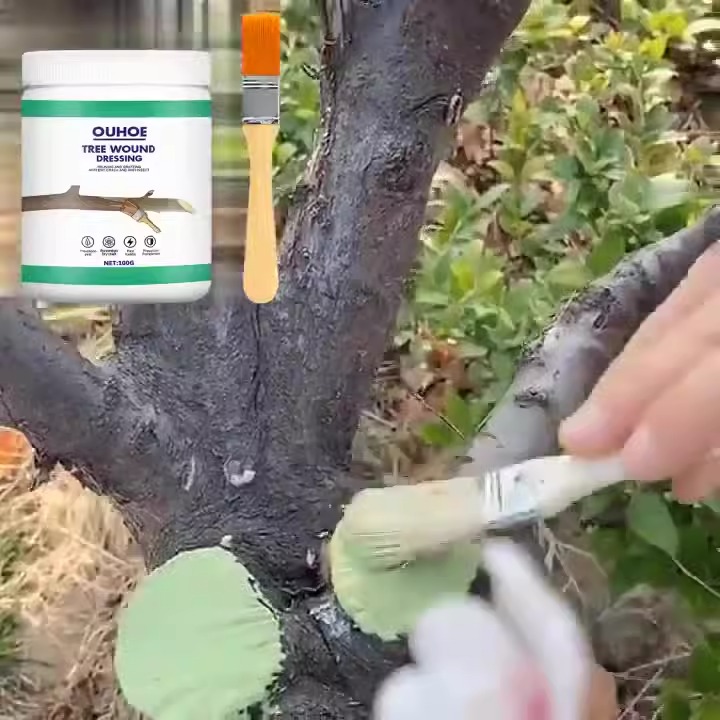
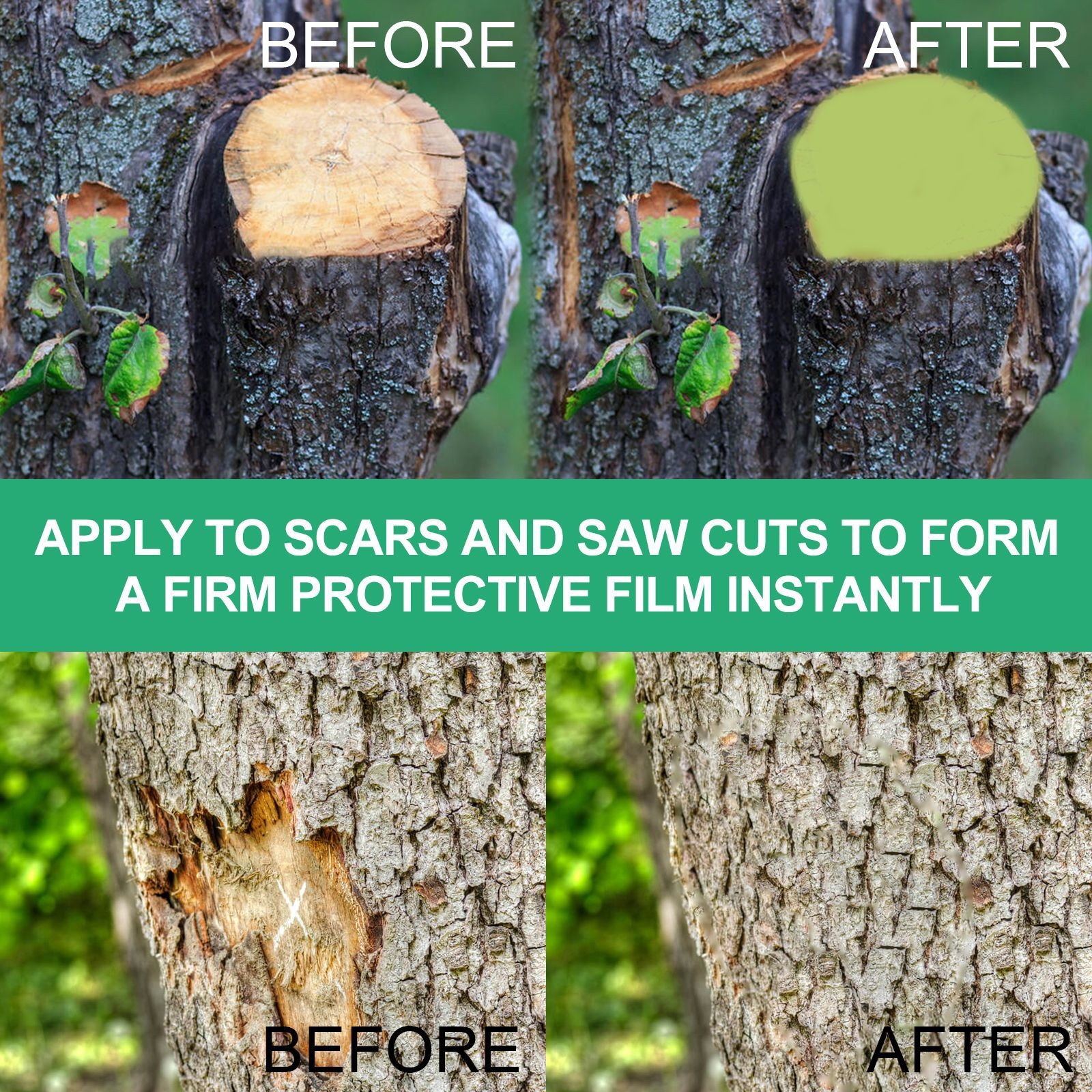
Brush the paste over exposed wood and it sets into a firm protective film right away. The cut stops looking raw and stays covered while the tree works on its own repair. Packaging describes it as forming a firm protective film instantly over scars and saw cuts.
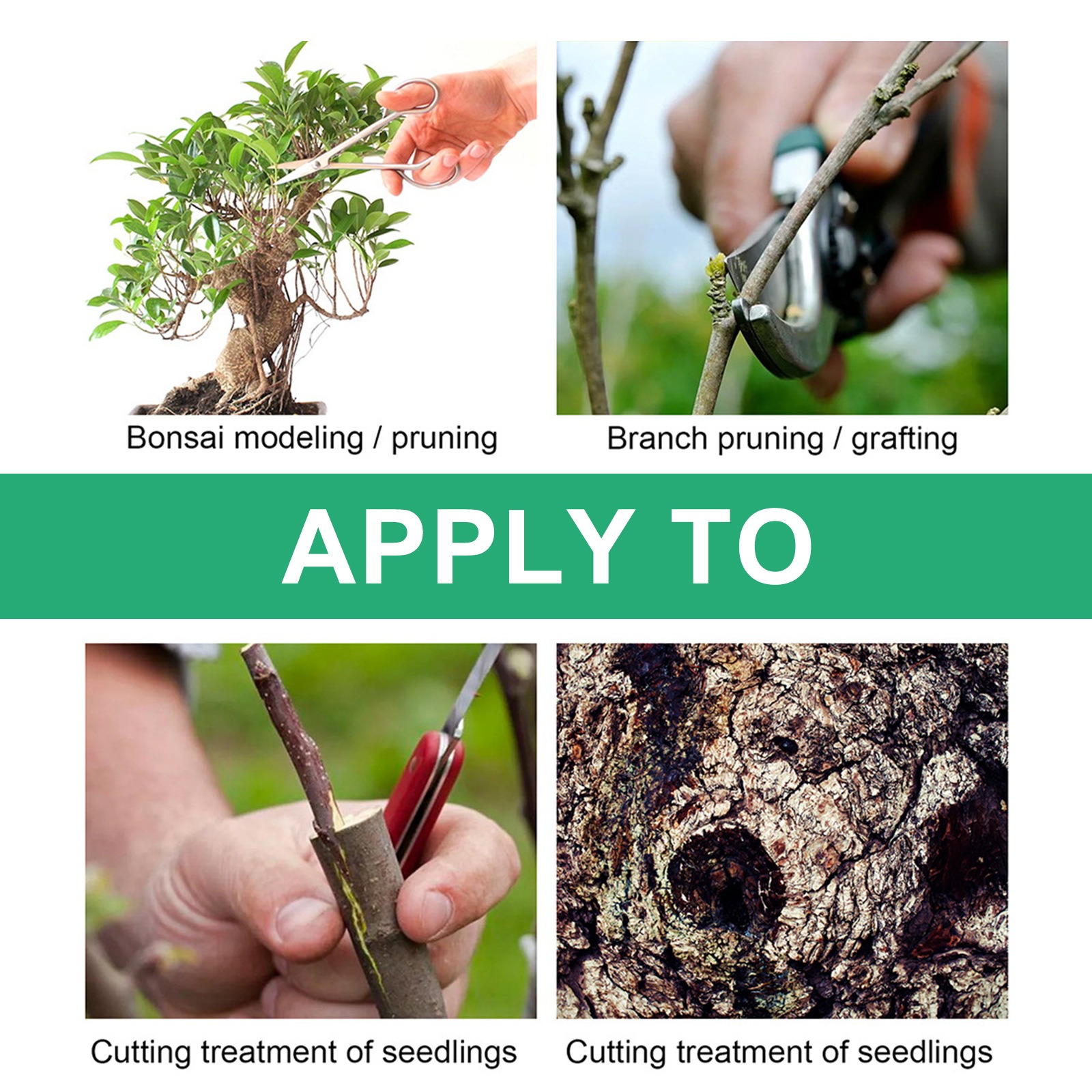
The film keeps insects out of fresh wood and blocks the damp that lets rot take hold. The packaging lists prevention of pests, putrefaction and dry cracking on cut surfaces. Use it on bonsai branches, orchard limbs and graft unions alike.
The 100g wide-mouth jar comes with its own flat brush, with orange nylon bristles on a wooden handle. Dip, spread, close the lid. Nothing to mix and no glue gun to warm up.
Cut with sharp tools so the wood is smooth rather than torn.
Wipe off wet sap and loose debris, then give the cut a few minutes to dry before sealing.
Dip the brush into the wide-mouth jar and pick up a thin amount of paste.
Cover the full cut in a single even layer, edges included, so no bare wood shows.
100g net weight in a wide-mouth screw-top jar
Orange nylon bristles on a wooden handle
Both. The jar is compact enough to sit on a bonsai bench, and the flat brush gets into the narrow cuts that small branches leave. Orchard limbs use the same method, just with more cuts per session.
The film is made to keep pests and rot out of the wood. Seal only clean, dry cuts. Sealing a wet or dirty cut is the one mistake that traps moisture under the film, so let surface moisture dry first.
Brush it on once per fresh cut. After it sets, the wood should look fully covered by a smooth green coat with no bare patches at the edges. Reseal if you open the cut again.
For a bonsai bench or a few fruit trees, yes. Each cut needs only a thin layer, so one jar covers a long run of small cuts. Heavy orchard work will go through it faster, so keep a second jar on hand for the peak weeks.
Yes. Once the graft is secured, brush the paste over the union and any exposed cut edges. It covers the same open wood a graft leaves behind.
Compare the cost per cut, not per jar. The 100g jar comes with its own brush and replaces the tape, glue and wax most people improvise. Cheap sealers that dry brittle crack open and need redoing, so the premium paste costs less over a season.


 Tree Wound Sealer Paste for Pruning and Grafting Cuts