Sunken Pirate Shipwreck Aquarium Decor With Fish Hideout
Your tank deserves more than sand and a plastic plant. This resin shipwreck sits on the substrate with a weathered hull, a red netted sail and an open front that gives fish a place to hide. The result is a tank with a story and a focal point, ready in minutes.
Read the full descriptionDescription
Your tank deserves more than sand and a plastic plant. This resin shipwreck sits on the substrate with a weathered hull, a red netted sail and an open front that gives fish a place to hide. The result is a tank with a story and a focal point, ready in minutes.
Realistic sunken pirate shipwreck decoration that adds a natural, lived-in focal point to aquariums
- bare or sterile tank look
- fish need hiding spots
- need for a simple no-setup decor piece
A sunken wreck turns bare sand into a story your fish use.
Your tank has fish and sand but no personality. Drop in a weathered pirate wreck with an open hull and it becomes the spot everyone swims through.
Every plank tells a shipwreck story
- A hull that looks sunk
Dark wood texture, grey-green patina and a matte resin finish make the hull look like it spent years on the seabed. Up close the weathering shows in the grain, which is what separates it from a smooth plastic ornament.
- Open hull, instant hideout
The hull opening is open at the front, so a shy fish or a shrimp can slip inside and stay out of sight. It sits in the open part of the tank, so the cover is where the fish actually swim.
- Netted sail with pirate flair
The red netted sail and tattered grey-green canopy give the tank a clear focal point from the front glass. Barrel and cannon details on the deck reward a closer look.
From box to tank in five minutes
- 1Rinse it first
Run the wreck under lukewarm water to clear dust and any manufacturing smell. Pat it dry before it goes near the tank.
- 2Press it into level sand
Set it on flat substrate and press it down until the base sits steady. A wreck that rocks stresses the fish and the glass.
- 3Point the hull at open water
Angle the opening toward the open part of the tank so fish can slip in and out without crowding a corner.
A pirate ship that never made it home
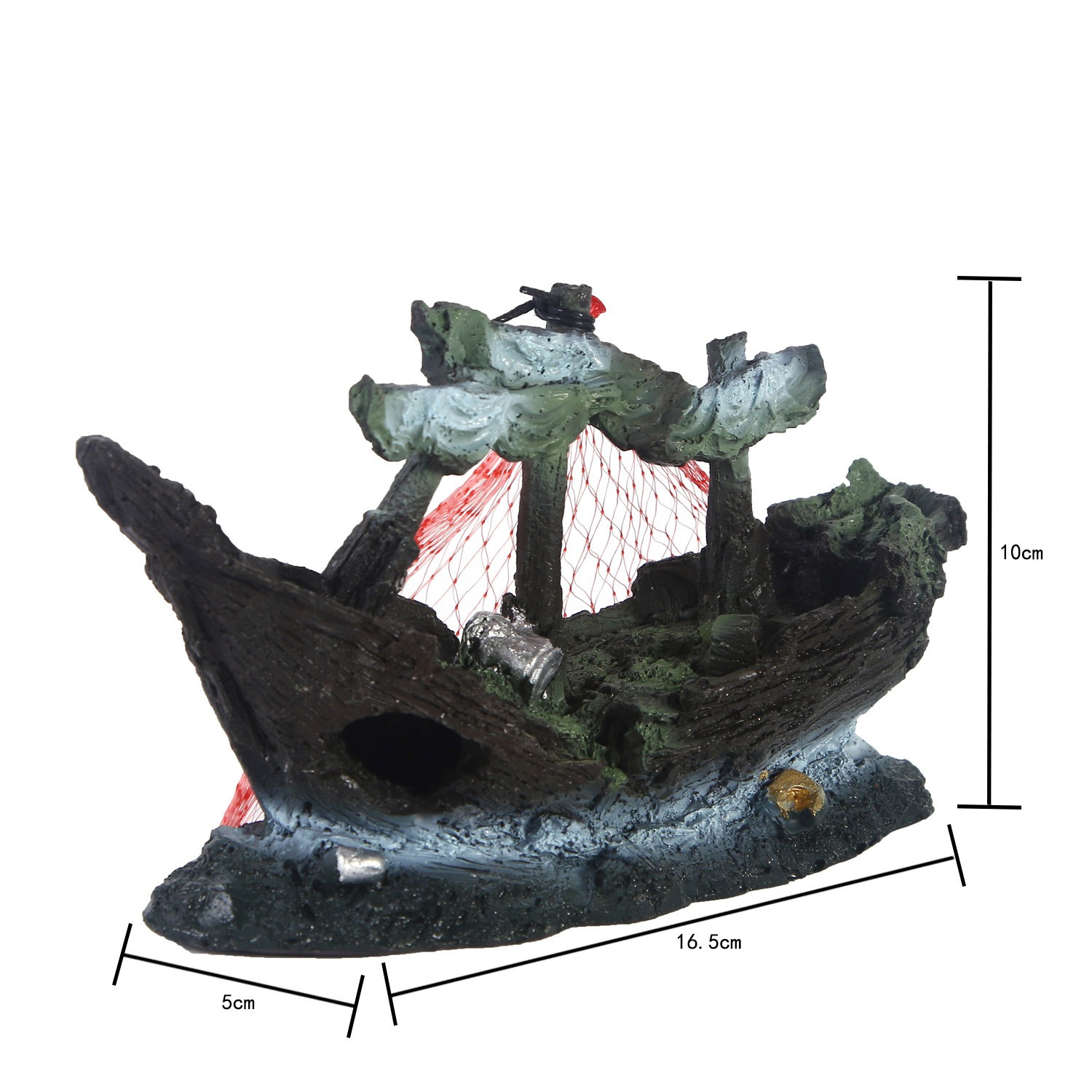
The tank that looked finished but felt empty
Your tank has fish, sand and a plastic plant, and the glass still shows nothing but open space. Shy fish hover in the corners because there is nowhere to retreat when the water feels exposed. From across the room it looks fine. Up close it looks bare.
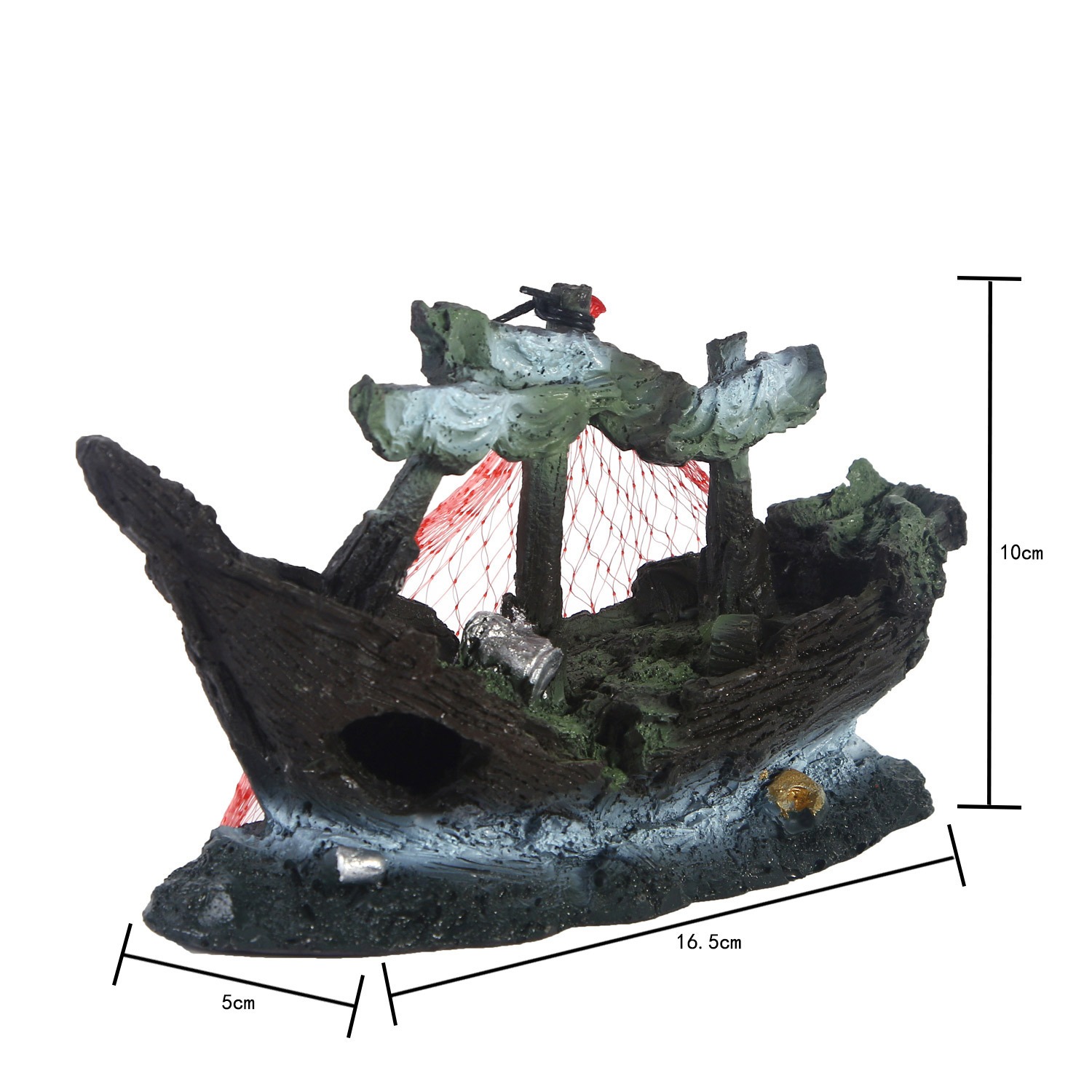
A wreck that finally gives fish cover
A sunken hull sits on the sand and answers both problems at once. The open front gives fish a place to slip in and out, and the weathered wood-look finish reads as an old wreck, not a toy castle.
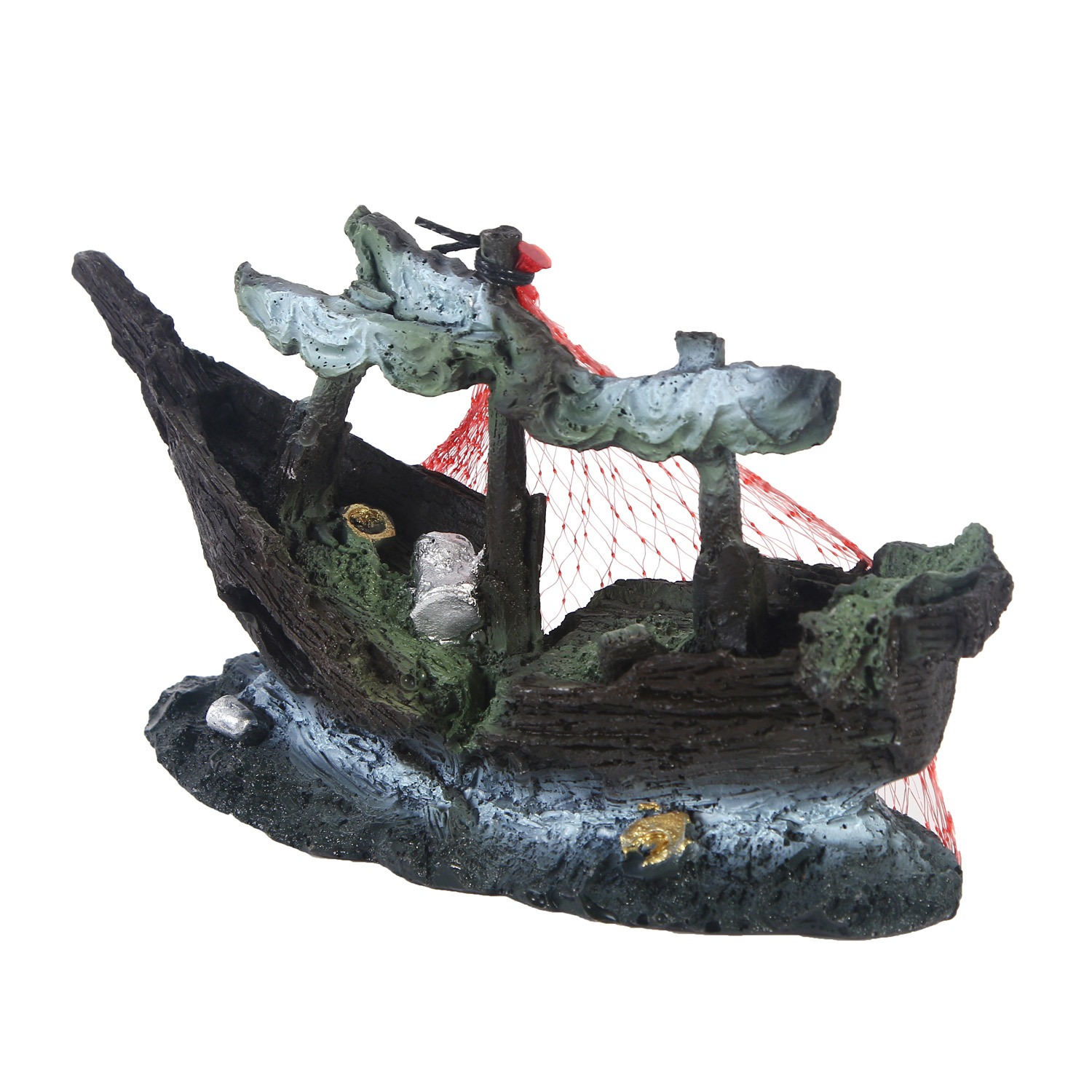
A pirate story that stays in the tank
Press it into the substrate, step back, and the scene already has a story. Then watch where the fish settle. If you enjoy building small scenes, fairy garden supplies pair well with a wreck theme.
Keep the patina, skip the scrubbing
- Rinse with tank water
Swish it during water changes to lift loose debris.
- Soft cloth only
Wipe lightly if algae gathers. Harsh brushes wear the weathered finish.
- Check it stays put
Give it a gentle press each time you clean the substrate.
Compact, with a real presence
- 16.5 cmLength
- 5 cmWidth
- 10 cmHeight
Measured at its full length, width and height.
Why this, not that
| Sunken wreck | Plastic castle | Natural rock build | |
|---|---|---|---|
| Looks like a real wreck | — | Partial | |
| Open hull for fish cover | Partial | — | |
| Ready with no planning | — | ||
| Sunken-ship focal point | — | — |
Characteristics
Reviews
Questions and answers
Yes, the wreck is a solid resin piece with no moving parts, and it goes into freshwater and saltwater tanks alike. Rinse it under lukewarm water before use. Keep the hull opening clear so shrimp can reach it during molts.
Rinse it well before it goes in, then check your parameters after the first water change. That test tells you more than any claim on a label.
It measures 16.5 cm long, 5 cm wide and 10 cm tall. That is a centerpiece size for a mid-size tank and a generous one for a nano, where you should plan the layout around the sail first.
It looks like a wreck. The matte finish, the grey-green patina on the dark wood-look hull and the tattered red netted sail read as weathered rather than bright and plasticky.
The opening is open at the front, so fish swim in and out freely. Press the wreck firmly into the substrate so it cannot shift and pin a fish against the glass.
Set it on the substrate and press it down until the base sits steady. No glue or setup is needed, which makes it a quick change before the next water change or restocking.