Stainless Steel Weeding Fork and Root Digging Hand Tool
Pull the whole root and stand up to do it. This stainless two-tine fork and scoop lifts weeds, wild greens and seedlings from the soil in one hand tool, with a beech wood handle that feels solid in the palm. Built for home beds, containers and tight vegetable rows.
Read the full descriptionDescription
Pull the whole root and stand up to do it. This stainless two-tine fork and scoop lifts weeds, wild greens and seedlings from the soil in one hand tool, with a beech wood handle that feels solid in the palm. Built for home beds, containers and tight vegetable rows.
One hand tool for pulling weeds and digging out roots and seedlings
- hard-to-remove weeds and grass roots
- digging around seedlings during transplanting
- bending down to weed by hand
Pull the weed, keep the root out of your back
Stop kneeling over stubborn grass and fighting roots by hand. This stainless steel fork and scoop lifts weeds and seedlings from the soil so you can work upright and leave the bed looking clean.
One head, two jobs: fork for roots, scoop for seedlings
- Two tines that lever roots free
The two tines slide under the root and lever it out instead of snapping the top off. Pull the handle toward you slowly and the root comes up in one piece, which is the only way a weed stays gone.
- A scoop for seedlings
The curved scoop on the shaft lifts a seedling along with its soil clump. Set the clump in the planting hole and firm the soil around it, and the roots stay undisturbed through transplanting.
- Stainless steel and beech wood
The head is polished stainless steel and the handle is natural beech. A metal ferrule collar sits at the joint, so the shaft and handle feel like one solid piece in the hand.
Get under the root and lever, don't yank
- 1Water the bed lightly
Damp soil lets the root release. Give the row a light soak about 15 minutes before you start.
- 2Slide the fork in beside the root
Set the two tines at an angle next to the stem, not on top of it, and push down into the soil.
- 3Lever gently
Pull the handle toward you in small steps. The root lifts out whole when you let the tines do the work.
- 4Scoop seedlings with their soil
For transplanting, slide the scoop under the seedling, lift the clump, and set it straight into the hole.
Stop chasing the weed, pull the root
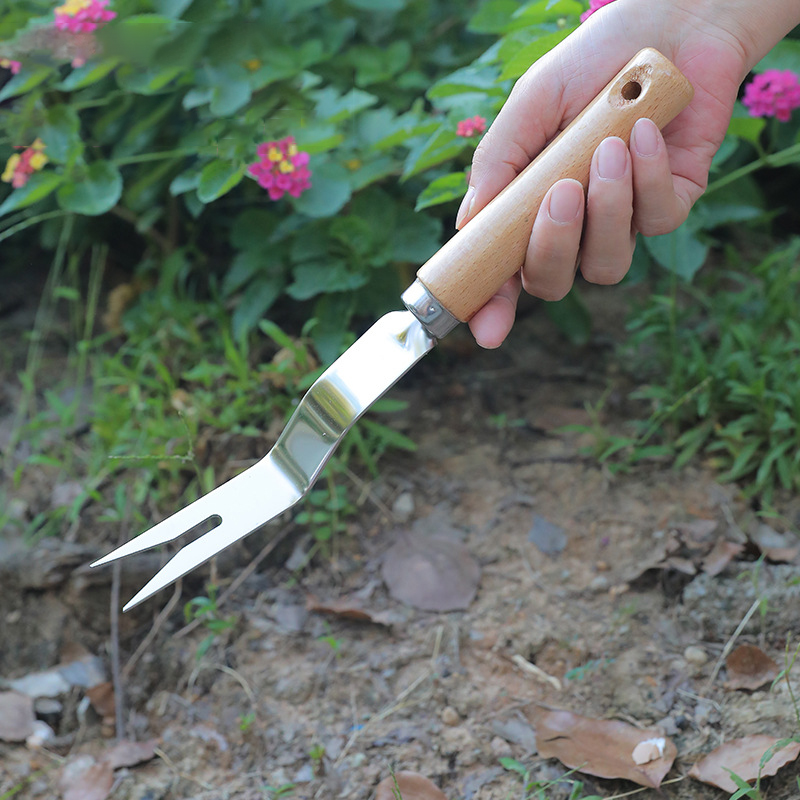
The kneel that never ends
Twenty minutes into a bed of grass and wild greens, the knees are sore and the weeds keep snapping at the top. Every pull leaves a little root behind, and by the next week the same patch is green again.
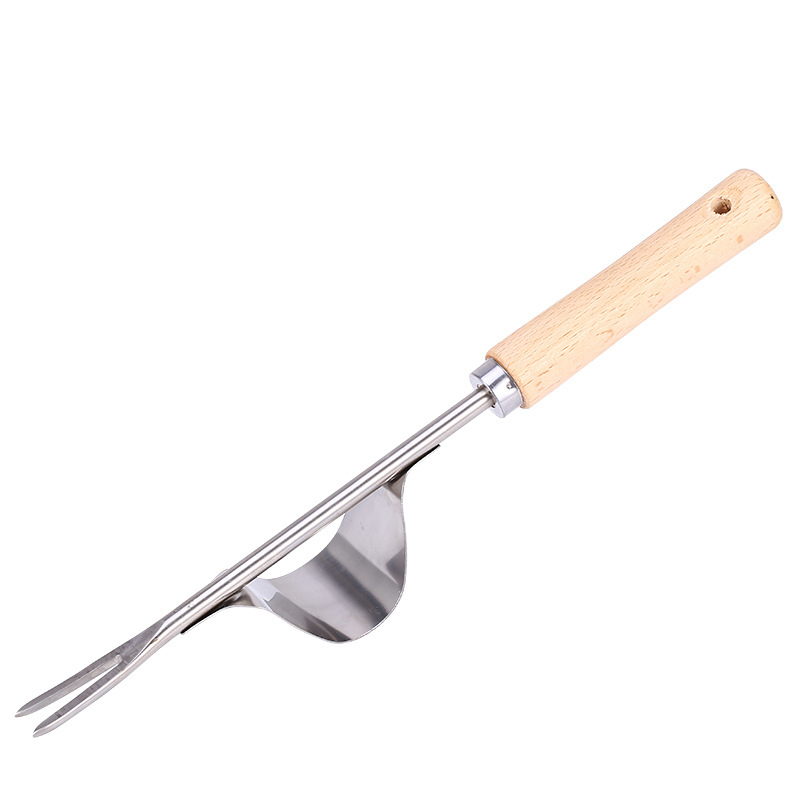
Why the weed keeps coming back
A root that breaks off in the soil is a weed waiting to return. Bare hands and cheap plastic weeders tend to stop at the stem, so the cycle repeats every spring and eats up the season.
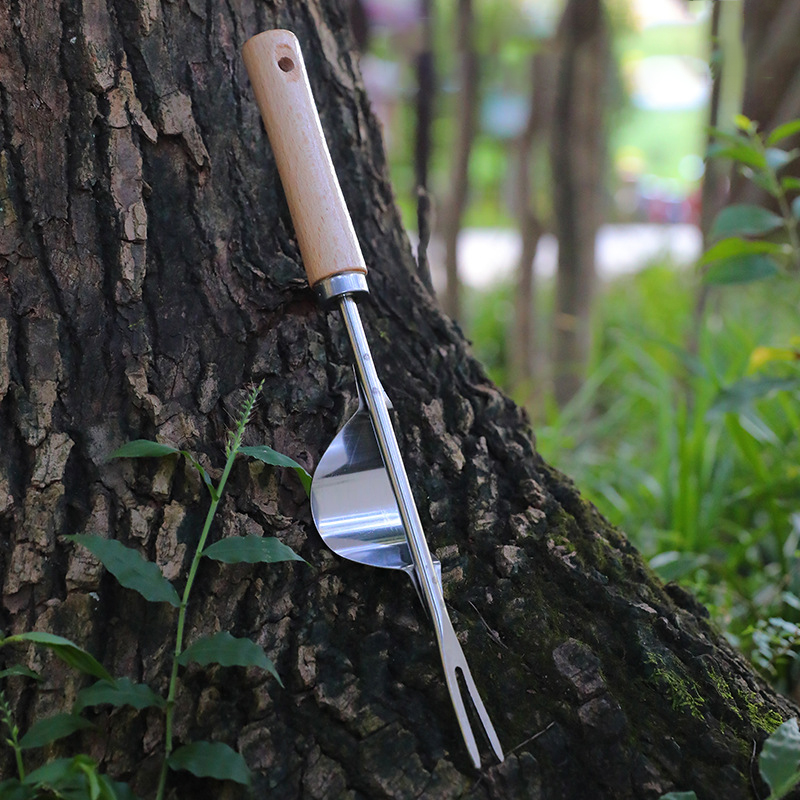
Lift it whole, stand up
Slide the fork in beside the root, lever gently, and the whole plant comes up with it. The scoop does the same job on seedlings, so you transplant standing up with the soil clump intact.
What to expect over the season
- First useRoots lift with less effort
Work a small section of the bed and notice weeds coming out with more root attached than bare-hand pulling usually gives you.
- 3 usesTransplanting gets quicker
The scoop becomes a natural motion for lifting seedlings, so you spend less time digging around roots during planting.
- 30 daysWeeding feels less like kneeling
Regular use across the bed usually means fewer long sessions on your knees, though results depend on soil and how often you weed.
Rinse, dry, and hang the beech handle
- Rinse off soil
Wash the head and shaft with water after each use so grit does not sit on the steel.
- Dry it fully
Wipe the beech handle and ferrule collar dry before you put the tool away.
- Hang it up
Hang the tool by the hanging hole so the head stays off the ground and out of puddles.
- Skip the soak
Don't leave the tool standing in wet grass or in a pile of damp clippings.
Why this tool, not the usual options
| This | Plastic weeder | Bare hands | |
|---|---|---|---|
| Lifts the root whole | — | — | |
| Stainless steel head | — | — | |
| Scoop for transplanting | — | — | |
| Works in tight rows and containers | Partial | ||
| Holds up in hard soil | — | — |
Characteristics
Reviews
Questions and answers
The head is polished stainless steel with a two-tine fork and a scoop blade on a metal shaft. Water the bed lightly before you start, then lever gently rather than forcing the tines. Clay that has been softened lets the root release without strain on the tool.
Beech is a natural hardwood, so rinse off soil after each use, dry the handle fully, and hang the tool by its hanging hole. Don't leave it lying in wet grass or in a pile. A quick wipe and a dry spot keep the grain from swelling and the finish from dulling.
Yes. It is a compact, single-piece hand tool, so it fits between closely planted rows and along container edges where a full-size hoe cannot reach. The scoop is the easiest way to lift a seedling from a pot without tearing its roots.
Plastic weeders tend to bend or break in hard soil, and they often cut the stem instead of lifting the root. This tool uses a stainless two-tine fork that levers the root out, plus a scoop for transplanting. If you keep replacing cheap weeders every season, a single stainless tool costs less over time.
Yes. Slide the scoop under the seedling so the soil clump comes up with it, then set it in the hole. Keeping the clump together is what protects the roots, and the scoop is built for exactly that motion.