Stainless Steel Spaghetti Server That Lifts and Drains
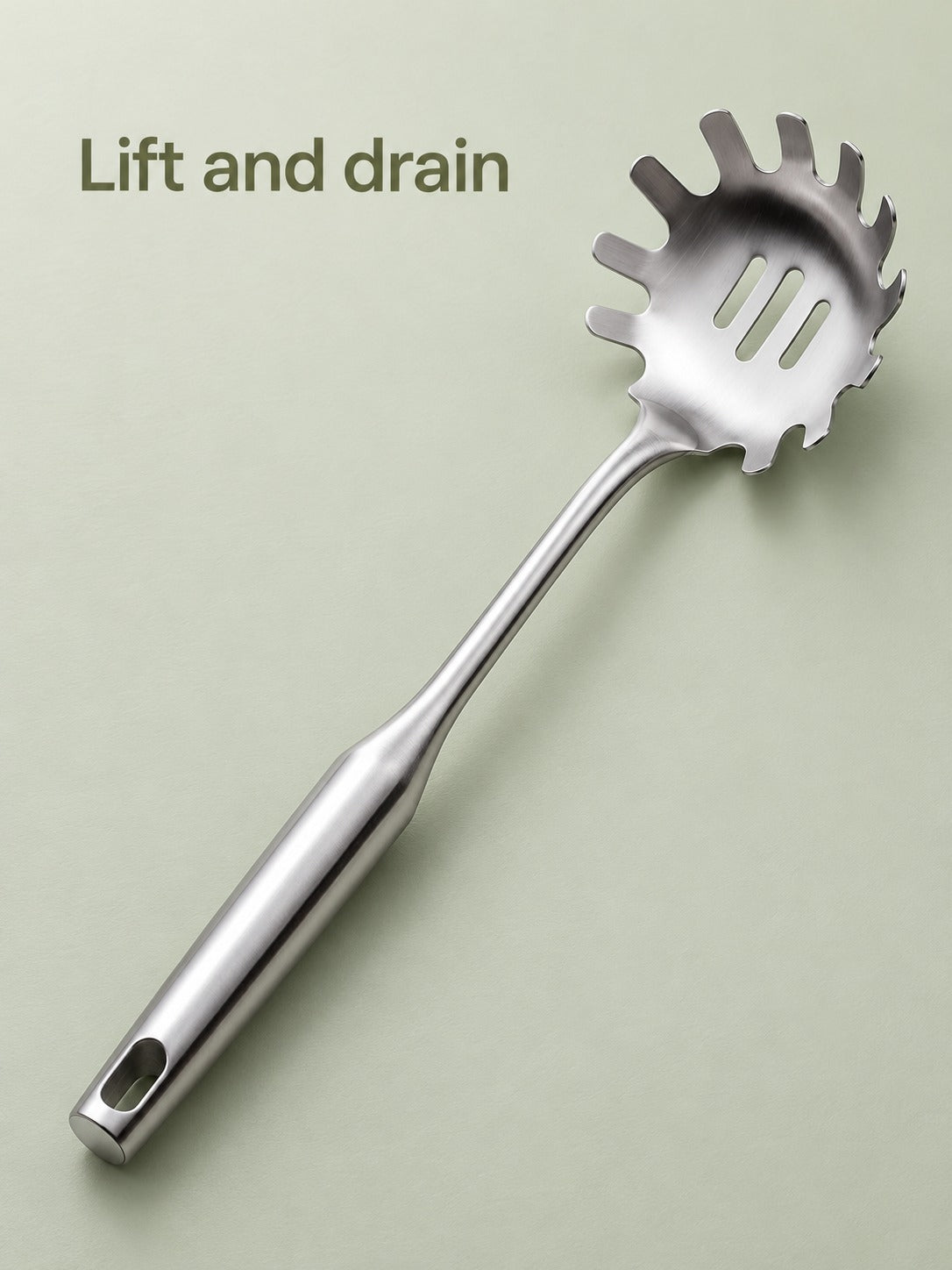


Pasta goes from pot to plate in one lift, and the hot water stays behind. This 201 stainless spaghetti server has a curled, slotted head that grips long strands and drains them as it lifts. Hang it by the hole when dinner is done.
Read the full descriptionDescription
Pasta goes from pot to plate in one lift, and the hot water stays behind. This 201 stainless spaghetti server has a curled, slotted head that grips long strands and drains them as it lifts. Hang it by the hole when dinner is done.
Stainless steel spaghetti server that lifts and drains pasta in one motion
- pasta slipping off standard spoons
- draining hot water from pasta
- hand exposure to steam while cooking
One lift puts the pasta on the plate and leaves the water behind.
Before: long strands slip off the spoon and hot water hits your hand. After: one stainless lift drains and serves dinner without a second pot.
Designed around the way spaghetti actually slips

Curled tines that hold long strands
The curled head wraps around spaghetti so it lifts instead of sliding off the way a flat spoon does. Pause over the pot for a second and the water runs out through the slots while the strands stay in the tines.

Stainless that lasts in daily use
The head is brushed with a bright polished curve where it meets the neck, and the handle is one smooth piece of metal with no joints for starch or sauce to collect in. Rinse it, dry it, and it goes back in the drawer looking the same.

Hangs by the hole at the end
The handle ends in a hanging hole, so the server hooks on a rail or a hook beside the stove instead of sliding around a crowded drawer. At 34 cm long with an 8.5 cm head, it is a full-size tool that does the work of two.
Lift, drain, plate in three seconds
- 1Lift from the pot
Slide the curled head under a small portion of spaghetti and lift straight up. Smaller lifts hold better than a heaping pile.
- 2Pause over the water
Hold the server over the pot for a second. The slots let the water run out before the pasta reaches the plate.
- 3Slide onto the plate
Tilt toward the plate and let the strands slide off in one motion. Repeat with small lifts for family-style servings.
- 4Rinse and hang it
Rinse under the tap, dry the head, and hook the handle end on a rail or hook by the stove.
Simple care that keeps the finish bright
- Rinse after serving
Starch and salted water are easiest to remove before they dry on the metal.
- Dishwasher or hand wash
The dishwasher is fine. Hand washing with a soft sponge is the gentlest option for the brushed finish.
- Dry before you hang it
Water left in the slots can leave spots, so dry the head before it goes on the hook.
- Skip long soaks
Leaving it in salted water for hours can dull the finish and cause spotting.
- Use silicone on nonstick
Metal edges can scratch nonstick coatings, so keep a silicone tool for those pans.
Characteristics
Reviews
Questions and answers
For a serving tool, yes. 201 stainless is firmer than plastic, does not bend the way cheap servers do, and handles frequent pasta nights without fuss. It resists salt and acid less well than 304 grade, so rinse it after serving and dry it before storing. Long soaks in salted water are where spotting starts.
The curled tines wrap around the strands, which is why it lifts pasta a spoon would drop. Work in small lifts, since a heaping pile slides off any tool. Very thin spaghetti takes a slightly slower lift, and a short pause over the pot lets the water run off first.
Yes, it goes in the dishwasher. Hand washing is gentler on the brushed finish, and drying it promptly keeps water spots from forming. Avoid long soaks in salted water and the sheen stays bright with routine washing.
At 34 cm long with an 8.5 cm head, it reaches the bottom of a standard pot and works in deep pans as well. The 166 g weight is light enough to lift a full portion without strain.
Yes, with care. Lifting pasta from a nonstick pot is fine, but scraping hard with the metal edge can scratch the coating. Keep a silicone tool for nonstick surfaces and use this one for lifting.
Tongs grab strands but do not drain them, so you still need a colander and a second pot to wash. This server drains and serves in one motion, which removes two tools from pasta night. A stainless tool costs more than a plastic server, but it replaces the colander you would otherwise wash every evening. Compare it with kitchen tongs if you are weighing options.
Similar products
See all Stainless Steel Spaghetti Server That Lifts and Drains