
$46.90
Free delivery · 7–14 days
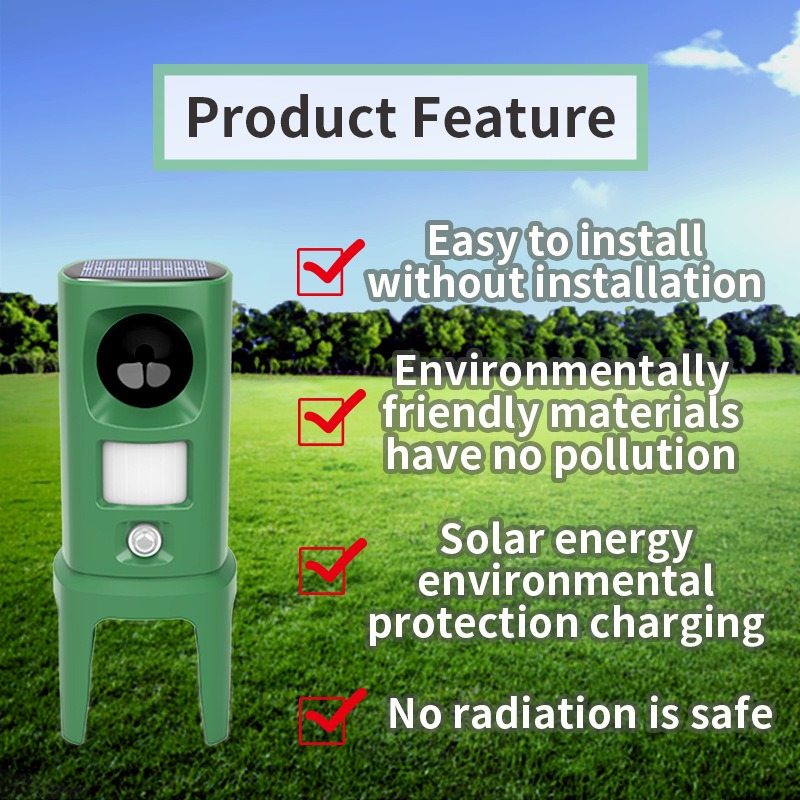
Solar Animal Deterrent Alarm Light for Orchards & FarmsWake up to a garden that is still intact. This solar stake repeller uses a PIR sensor to detect cats, dogs and squirrels across an 8-9 m, 120° zone, then fires ultrasound and a red flash. Push it into the soil and it runs day and night without any wiring.
Read the full descriptionWake up to a garden that is still intact. This solar stake repeller uses a PIR sensor to detect cats, dogs and squirrels across an 8-9 m, 120° zone, then fires ultrasound and a red flash. Push it into the soil and it runs day and night without any wiring.
Solar-powered, no-wiring ultrasonic animal repeller that uses motion detection and flashing light to chase away cats, dogs and squirrels.
Instead of replanting after every raid, stake one solar unit by the entry point and let motion-triggered ultrasound and a red flash send cats, dogs and squirrels back over the fence.
The PIR sensor stays quiet until something warm and moving crosses its 120° zone, reaching 8-9 m out. That means the unit is not blasting sound across the yard all day, and it reacts to the animal on the path rather than the wind in the hedge. Place it where the animals already walk and it does the rest. If you run a few solar garden lights, this slots right in beside them.
The emitter sends variable frequency ultrasound, so the signal does not settle into a single pitch the animal can ignore. The red LED bursts at night at the same moment. Three gear settings let you pick the strength for a quiet suburban lawn or a wider farm edge.
The solar panel charges the battery through the day. On long grey weeks, the USB/DC cable tops it up in a few minutes, so the unit keeps running. Nothing needs to be plugged in outdoors, and the only wiring you will see is the short cable in your hand.
Walk the garden at dusk and find the path animals use. Choose a spot in the open at the bed edge, not buried in shrubs, because the sensor needs a clear view.
Press the ground stakes firmly into soil so the body sits steady. Angle the sensor toward the path so the 120° zone covers the approach.
Leave the solar panel in full sun to charge. For a faster start or a cloudy spell, connect the USB/DC cable to top up the battery.
Start on the middle gear, walk through the zone at dusk and watch the response. Raise the gear if animals keep coming, or lower it if pets nearby seem bothered.
Solar-charged unit with PIR sensor, ultrasonic emitter and red LED
For top-up charging on cloudy days
Built into the unit legs for staking into soil
Support details printed on card
Setup and gear settings
You step outside and the bed is dug up again. Seedlings lie on the soil, there are droppings on the lawn, and the tray you started last week is half gone. It happens most nights, and checking the beds becomes part of the morning.
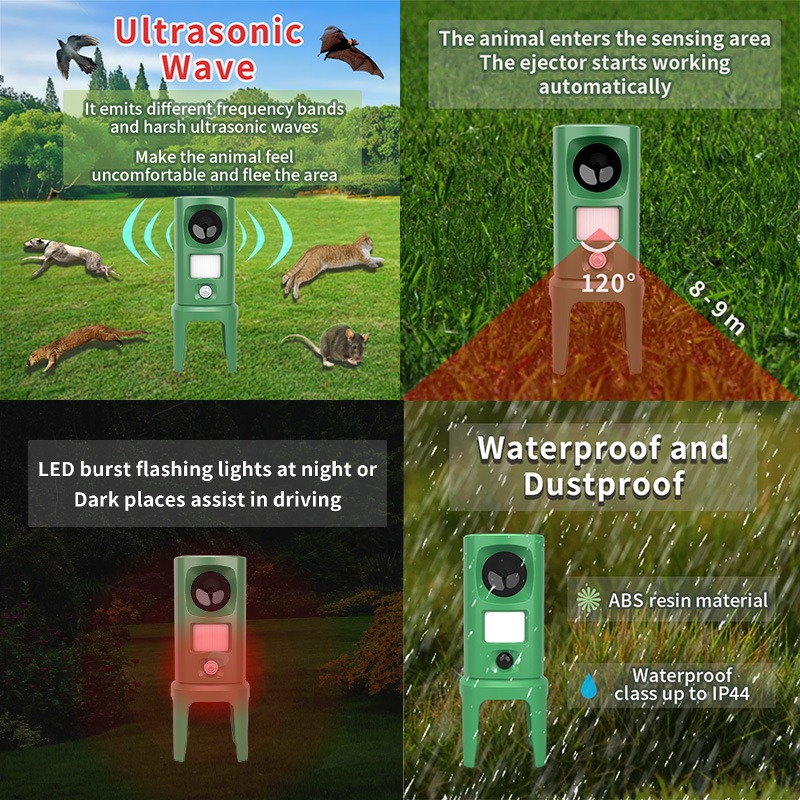
The unit runs on a solar panel and needs no outlet or cable run. A PIR sensor catches movement across a 120° zone, then the ultrasonic emitter and red LED flash fire together. Push the stakes into the soil at the entry point and the setup is finished in a few minutes.
Night after night, the animals meet the signal at the edge of the bed and turn back. Plants keep their roots, the lawn stays clean, and the morning check becomes a quick look over the beds instead of a repair job.
Push the spike into the bed you want to protect, face the panel to the sun, and switch ON. The LED confirms it is running.
Note any new digging or droppings. Results depend on which animals visit and how the stake sits in your yard.
If animals still reach the bed, shift the stake closer to the entry path or add a second unit to cover more ground.
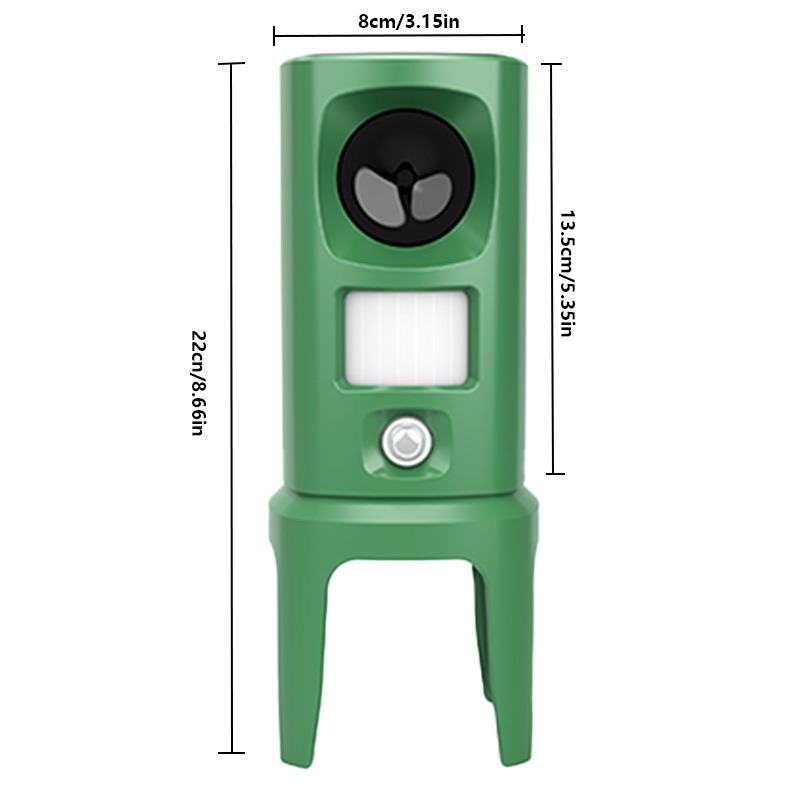
Roughly the height of a standard drinking glass with the stakes in
| Solar stake repeller | Fence or mesh cover | Spray deterrent | |
|---|---|---|---|
| Needs an outlet or wiring | No | No | No |
| Reacts to movement | Yes | No | No |
| Works at night | Yes | Partial | No |
| Needs reapplying after rain | No | No | Yes |
| Setup | Push stakes into soil | Post and mesh install | Spray the bed edge |
The unit targets the animals that move through its zone, cats, dogs, squirrels and rats included. Each animal reacts differently, so the first week is for watching the path. If an animal keeps coming back, move the stake closer to the entry point or raise the gear.
Keep it off the pet's feeding and sleeping spots and set the gear to the lowest level that works. Most household pets learn to avoid the zone rather than sit in it. Birds that land in the bed are not the target of the signal, but a quiet setting keeps the yard calm for everyone.
Yes, though slower. Solar output drops on short winter days and under heavy cloud, so the battery charges more slowly. The USB/DC cable tops it up in minutes, and that is the reason it stays on for night coverage.
IP44 handles rain, splashes and garden hose spray from a normal angle. It is not rated for direct jets or submersion, so keep the unit out of pressure washing and rinse gently only if it gets muddy.
Expect the full 8-9 m reach in open ground with a clear view of the path. Shrubs, fences and raised beds cut the zone, so one stake usually covers a single bed or a stretch of path. A large lawn or orchard row needs a second unit.
One unit covers one entry point. For a long orchard row or a full back lawn, plan one unit per entry path. At about the cost of a few bags of mulch, each stake is cheaper than rebuying seedlings every season or running fence panels around the whole plot.

