
$49.90
Free delivery · 7–14 days
24K Gold Face Oil for Hydrated, Glowing Makeup Prep


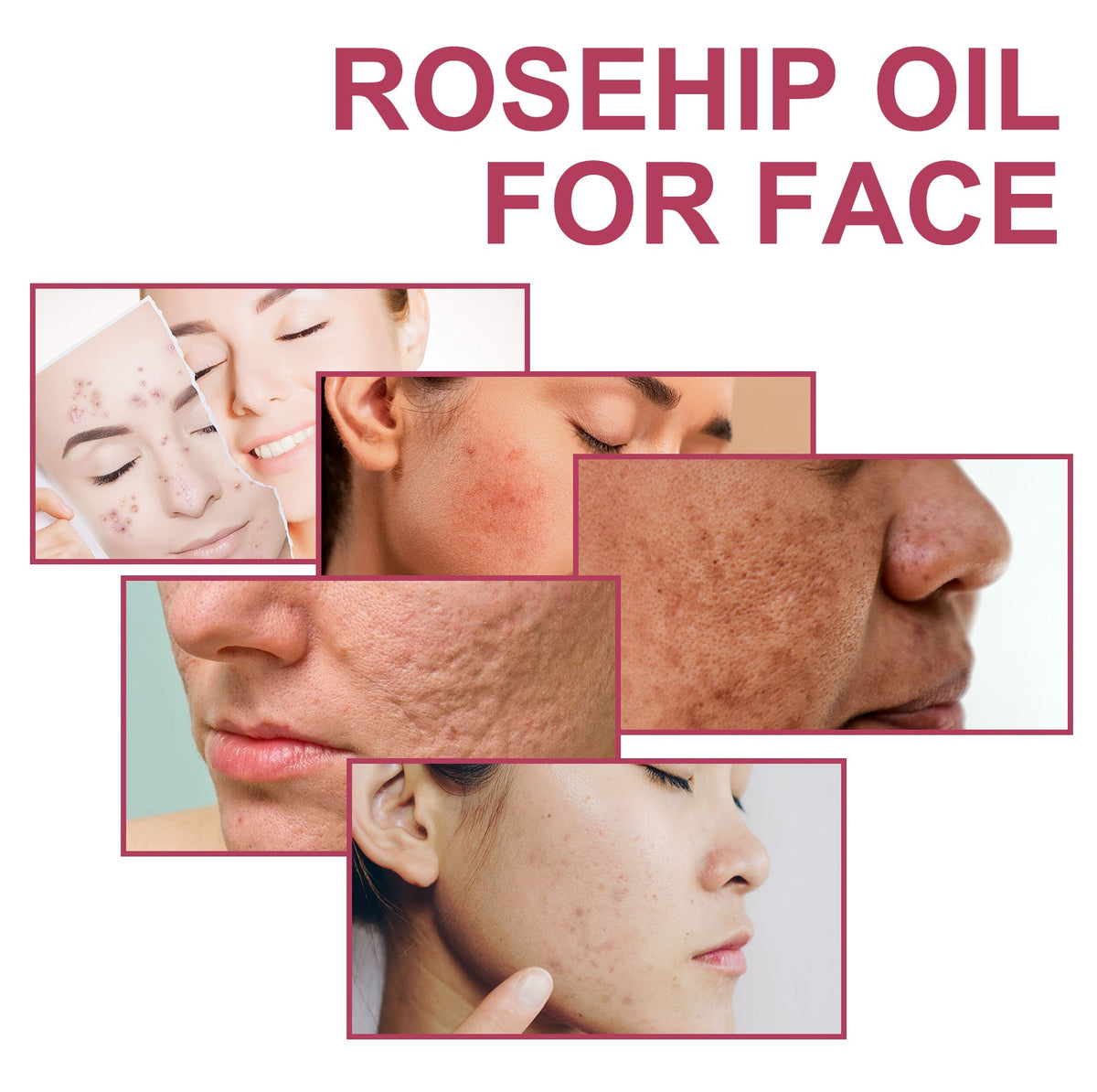


Pure rosehip oil that powerfully firms while fading scars, stretch marks, and acne marks

Acne-prone skin often has lower linoleic acid, leading to thicker, pore-clogging sebum. Rosehip oil supplies it directly, helping your skin produce a lighter, less comedogenic oil. It’s why you can use an oil to fight oil.

Rosehip contains trans-retinoic acid, a gentle plant form of vitamin A. It speeds up cell turnover, which helps fade post-acne spots and soften the look of pores and fine lines without the irritation of prescription retinoids.

The oil carries a natural dose of vitamin C, supporting collagen production and brightening dull, congested skin. It’s not a harsh acid; it’s a slow, steady glow.

It’s cold-pressed and unrefined, so the good stuff stays intact. The texture is thin and sinks in quickly, making it suitable for oily and sensitive skin. No heavy residue, no slippery pillowcase.
You cleanse, tone, treat, and moisturize, but the blackheads come back. The acne marks linger for weeks. Your skin feels tight and oily at the same time. You’ve been told oil is bad, so you avoid it, and your skin gets angrier.
Rosehip oil is high in linoleic acid, the fatty acid that acne-prone skin often lacks. It rebalances oil production instead of stripping it. It’s rich in vitamin A, which helps fade dark spots and smooth texture. This is repair, not just moisture.
After cleansing, warm 2-3 drops between your palms and press into damp skin. It absorbs in under a minute, leaving a soft finish, not a greasy film. Use morning and night, alone or under moisturizer.
After a few weeks, the blackheads look less cramped. The red marks from old breakouts start to fade. Your skin feels softer, calmer, and more even. You stop hiding behind heavy makeup.
Your skin feels softer and more hydrated. No new breakouts from the oil. You might notice less tightness after cleansing.
Blackheads appear less congested. Redness from old blemishes starts to calm. Makeup goes on smoother.
Dark spots from past acne begin to fade. Pores look less noticeable. Your skin has a natural, healthy sheen.
Texture is visibly smoother. Acne marks are significantly lighter. Breakouts are less frequent and less angry.
Rosehip oil is rated 1 on the comedogenic scale, meaning it's very unlikely to clog pores. It's high in linoleic acid, which actually helps thin out sebum, making it less likely to block follicles. If you're extremely acne-prone, start with 1-2 drops a few times a week and build up.
No. It's a dry oil, meaning it absorbs quickly without leaving a slick film. Wait 2-3 minutes before applying sunscreen or makeup. If you have very oily skin, use it only at night or mix one drop into your moisturizer.
Most people notice smoother texture within 2-3 weeks, but fading of dark spots takes 6-8 weeks of consistent use. Cell turnover is a slow process; patience pays off.
Yes, but introduce it slowly. Rosehip contains natural vitamin A, so if you're using a prescription retinoid, use them on alternate nights or layer rosehip after your retinoid has absorbed. Avoid using with high-strength acids in the same routine initially.


 Rosehip Oil For Face, Delicate Pores Smooth Repair Facial Mo