
$119.90
Free delivery · 7–14 days
Rabbit Tree Stump Planter for Whimsical Garden DecorYour tank looks finished on day one and empty by week two. This weathered resin tree stump gives fish and reptiles real places to hide, with open caves on the top and sides. The bark texture and moss-green accents read as wood from the front of the glass, so the setup looks like a natural...
Read the full descriptionYour tank looks finished on day one and empty by week two. This weathered resin tree stump gives fish and reptiles real places to hide, with open caves on the top and sides. The bark texture and moss-green accents read as wood from the front of the glass, so the setup looks like a natural habitat.
Realistic weathered tree-stump hideout that gives fish and reptiles a natural place to hide
Bare glass and empty corners leave fish and reptiles exposed. This weathered tree stump with open caves gives them real cover and makes your setup look like a living habitat.
Several hollow openings sit on the top and sides, so a shy fish or lizard can slip in from whichever direction it approaches. The side arch is big enough to give real cover, and the interior gives a dark retreat that animals look for. If you are choosing between a plain castle and a natural hide, this is the one that gives your animals more than one way out.
The matte finish carries a weathered bark texture with visible grain lines in charcoal brown and bark tan. Moss-green accents break up the surface, so from the front of the tank it reads as driftwood rather than molded plastic. Up close the detail holds, which is where cheaper decor usually gives itself away.
The base is flat, so the stump settles on gravel or reptile substrate without rocking. You do not need suction cups, glue, or a wedge to keep it upright. Place it, check the angle of the openings, and it stays where you left it while the animals move around it.
Run it under plain water and wipe away dust and packing residue before it goes in the tank or enclosure.
Place the flat base on gravel or substrate, against the back glass in a tank or in a quiet corner of a reptile enclosure.
Turn one opening toward the front so fish or reptiles can see the entrance from the open area.
Tuck live plants or moss around the bottom to soften the edges and make the moss-green accents blend into the setup.
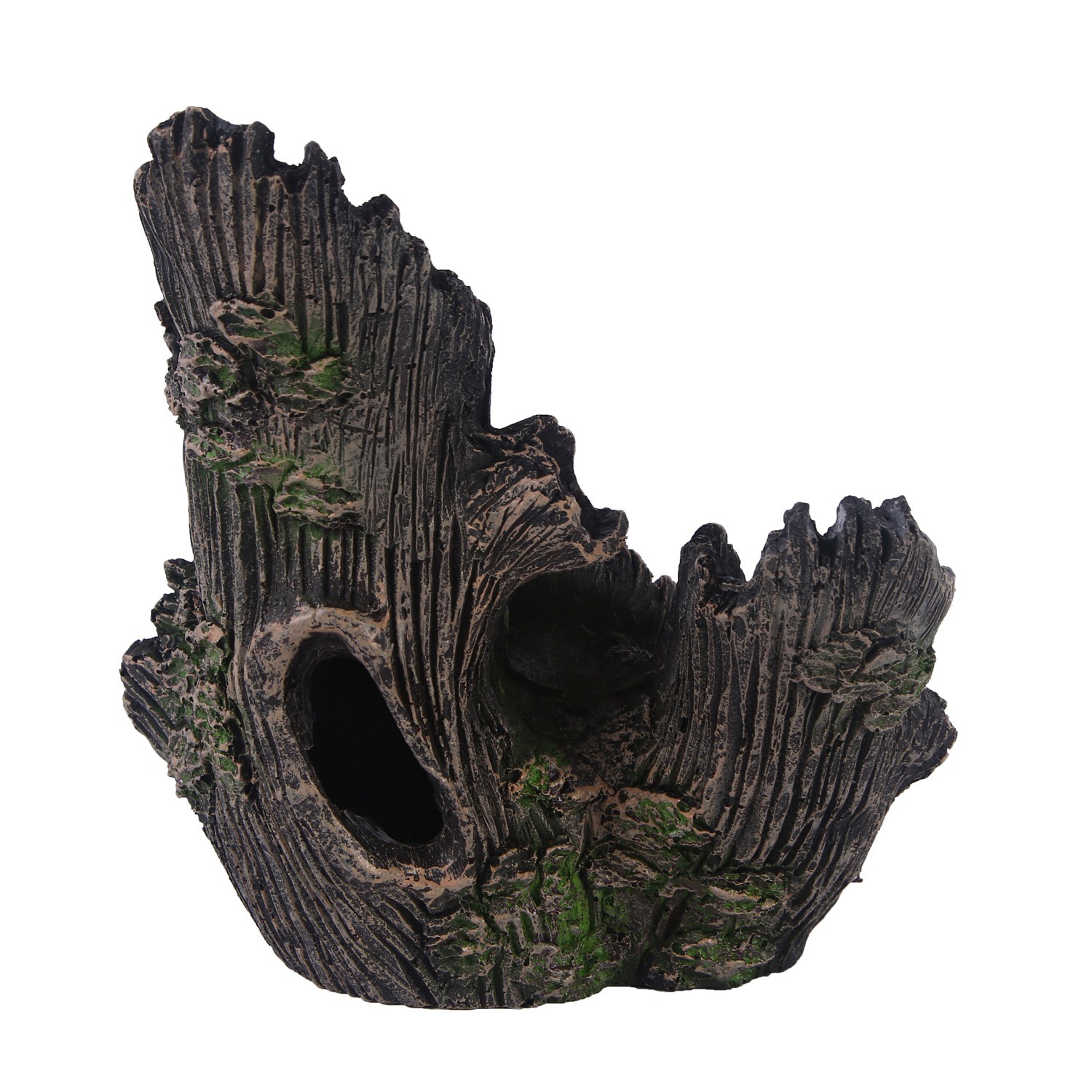
Day one looks good. By week two the back corner is bare, the plants have not filled in, and nothing in the tank gives the animals a place to retreat. The setup feels unfinished because it is.
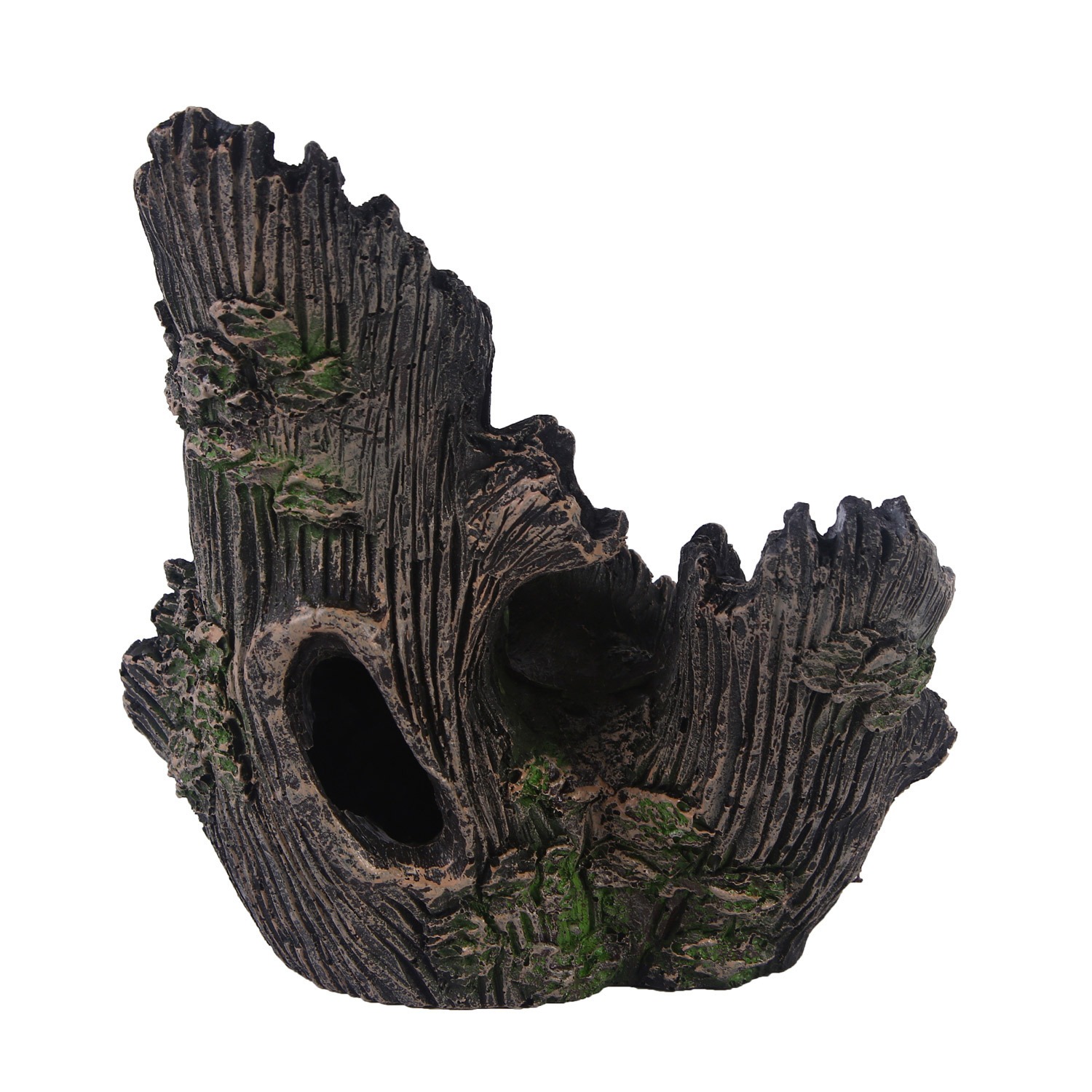
Without cover, fish stay on alert and reptiles keep checking the glass for a way out. Plain plastic castles look fake, and bare rock piles give little shelter. Animals settle when they can get out of sight.
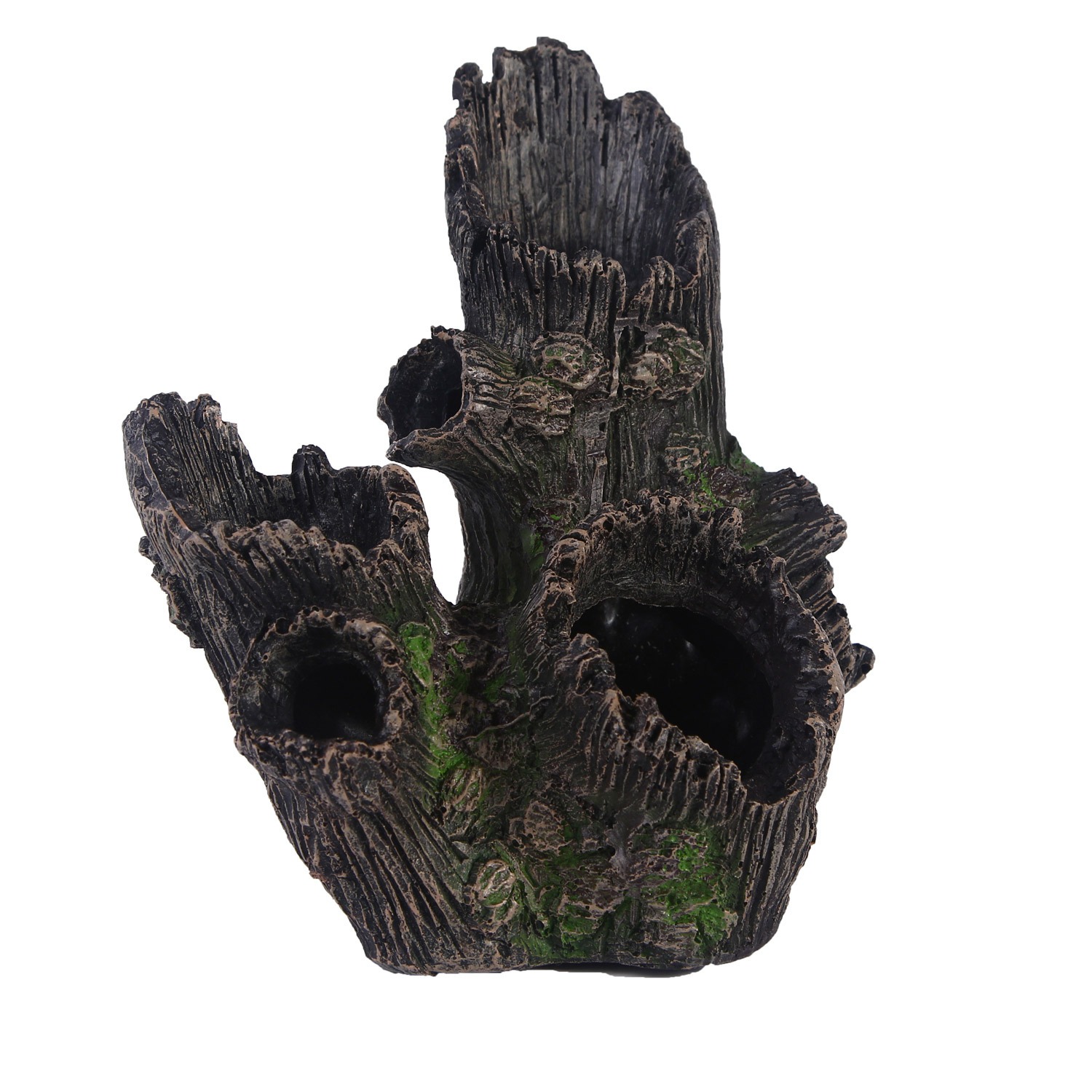
The stump has open caves on the top and sides, a bark texture with real grain lines, and moss-green paint that blends into live plants. Set it flat, face one opening toward the front, and the tank starts to look like a small piece of nature.
Rinse the stump, set it flat, and face one opening toward the front. The tank starts to look more natural right away.
Shy fish or reptiles may begin checking out the caves. Behavior varies by animal, so give them time to settle in.
With regular use, the stump blends into the tank as plants grow and substrate settles around it. Results depend on your animals and setup.
Plain water clears dust and loose paint particles before the piece goes in.
Remove algae or debris from the bark with a soft cloth or brush during water changes.
Hold the stump a few inches away from filter intakes, heaters, and water outlets.
| This | Plastic castle | Bare rock pile | |
|---|---|---|---|
| Looks like real wood | — | Partial | |
| Several open caves | Partial | — | |
| Bark texture and grain | — | Partial | |
| Moss-green accents | — | — | |
| Flat base for stable placement | Partial |
The stump is a solid resin piece with a matte painted finish. Rinse it with plain water before the first use to clear dust and loose paint particles. Once it is clean, it sits in the tank or enclosure like any other hide. If your animals are very sensitive, rinse it again and let the piece run in a bucket of clean water for a day before you add it.
Measure the tank or enclosure first, then pick a placement that leaves open swim space or floor space in front. The stump works best against the back glass in a tank, or in a back corner of a reptile enclosure. Check the cave openings against your animal's body size, because a fish or lizard that cannot fit inside will not use it as a hide.
It can, if you place it carelessly. Keep the stump a few inches away from filter intakes, heater elements, and water outlets. Blocked intakes lower filtration and can cause equipment to overheat, which stresses your animals. Give the equipment clear space and place the stump in the open area of the tank.
A plastic castle is cheap, but most keepers replace it after it looks fake or the animals ignore it. This resin stump gives your animals real cover from more than one angle and reads as wood in the tank. One piece you add once is usually the better buy over the long run than a series of plain decor you swap out.