Resin Groundhog Garden Statue for Potted Landscapes
A bare pot or a plain lawn edge turns into a scene people stop to look at once a hand-painted resin groundhog settles into the soil. Sculpted fur, a grey stone-look base with moss and flower accents, and a flat underside make it sit naturally among real plants. It is a single, low-effort piece that...
Read the full descriptionDescription
A bare pot or a plain lawn edge turns into a scene people stop to look at once a hand-painted resin groundhog settles into the soil. Sculpted fur, a grey stone-look base with moss and flower accents, and a flat underside make it sit naturally among real plants. It is a single, low-effort piece that gives a planter a playful focal point for the whole season.
Whimsical resin groundhog figurine that brings charm to any potted landscape or garden corner
- bare or plain corners in gardens and planters
- need for low-maintenance garden decoration
- want for playful miniature focal points
A wild groundhog that pauses in your garden all season
Your planters and corners sit bare and forgettable. Add one hand-painted resin groundhog and they become a scene someone wants to stop and look at.
Fur, paws and painted eyes that look alive
- Fur that looks alive
The fur is sculpted in fine texture and painted in sandy tan, warm taupe and terracotta tones on the paws. Dark glossy eyes and the upright, paws-together pose give it a wild-animal expression that a plain plastic animal never gets.
- A base that belongs in soil
The base is grey and speckled like river stone, with moss accents and white edelweiss-style flowers. Set it among real plants and it disappears into the bed, which is why visitors often look twice before they see the figurine.
- Stable in any corner
The underside is flat, so the figurine sits steady in a flower pot, a rock bed or a lawn edge. Press the base into level soil and it stays put, without wobbling or needing a stake.
A corner that finally feels finished
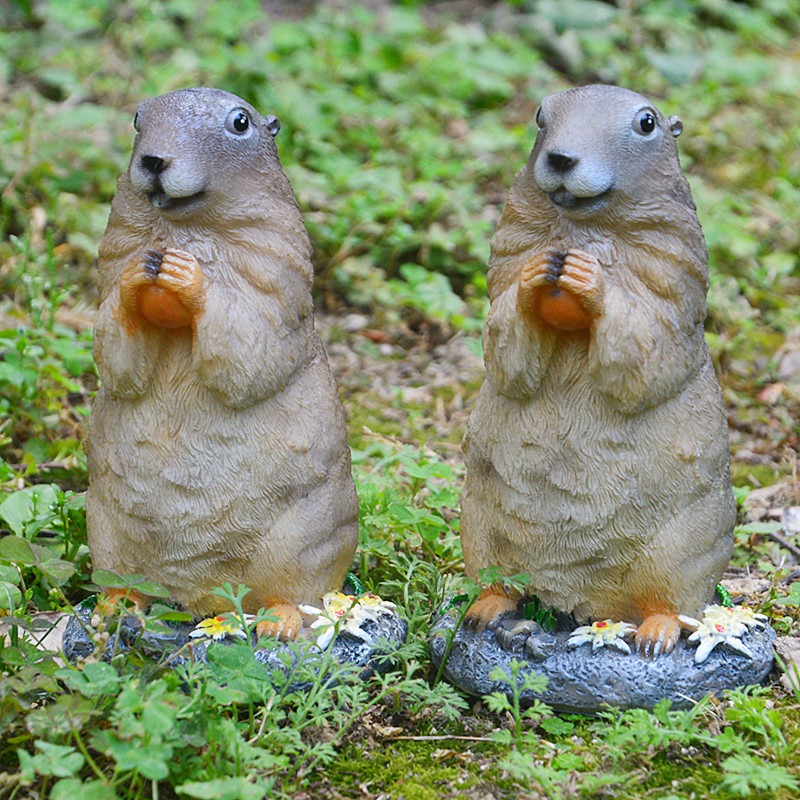
The corner that never quite worked
Bare planters and plain lawn edges look fine for a week and then start to feel empty. Generic gnomes look cartoonish up close, and plastic animals give themselves away the moment someone looks twice. Extra plants add upkeep without adding any character.
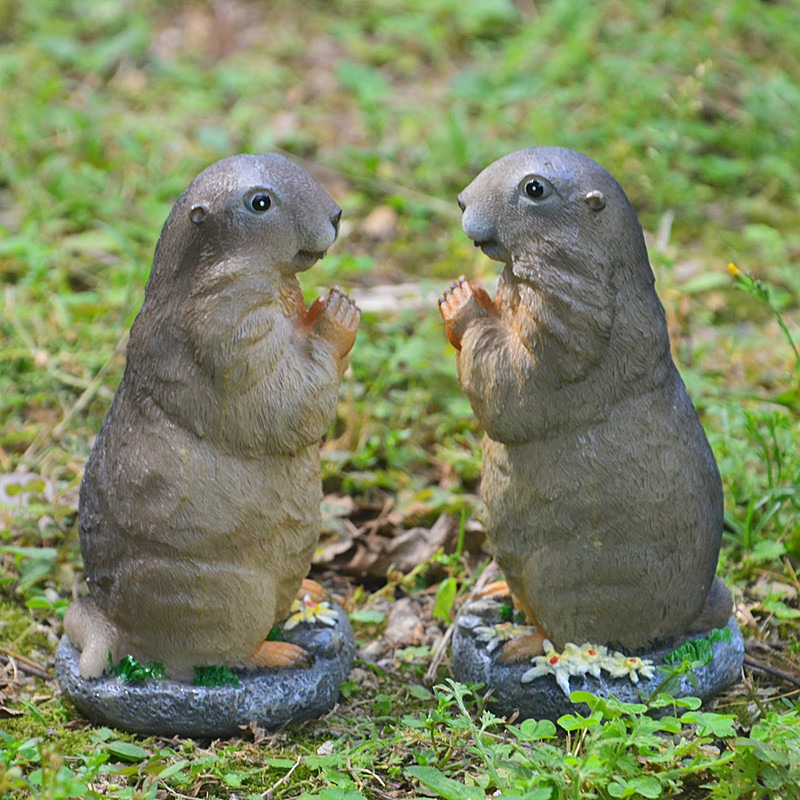
A visitor who looks like he belongs
Set the groundhog at the edge of a pot or in a rock bed and its flat base sits level in the soil. The grey speckled base, moss accents and edelweiss-style flowers pick up the same tones as the stones and soil around it, so it reads as a wild animal that stopped by rather than an object someone placed.
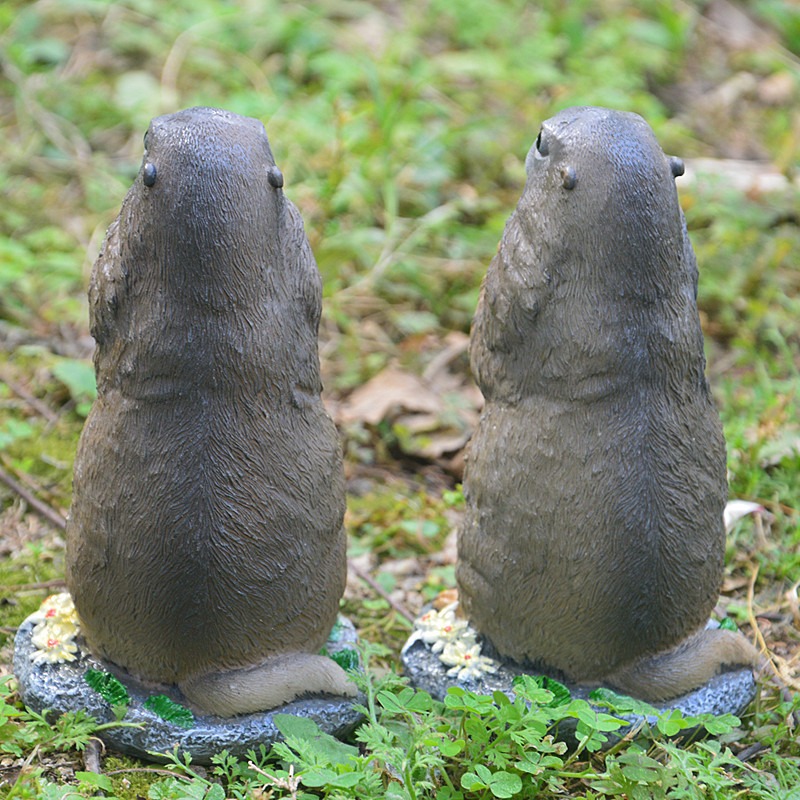
Every season, a little more charm
Once it is set, the corner needs almost nothing. A quick rinse after heavy rain keeps the painted fur fresh, and the figurine becomes the spot you check on your walk past the planter. Every visit it looks a little more at home.
What to expect after you place it
- First useVisitor settles into the scene
Press the base into soil so it sits level. Nudge it until the pose faces the path, and it should look like it just paused there.
- Week 1Corner starts to feel finished
Plants and soil settle around the moss accents, and the base blends into the bed. Visitors often notice the figurine before they notice the planter.
- 30 daysPart of your garden routine
After a month of rain and sun, a quick rinse keeps the painted finish fresh. It becomes the spot you check on your walks.
Set it once and let the seasons do the rest
- Rinse after heavy rain
Wash off soil and splashes so the painted fur stays clean and bright.
- Soft cloth and mild soap
Wipe gently and let it air dry. Skip abrasive scrubbers and harsh chemical cleaners.
- Keep it out of standing water
Set it in soil or a stone bed, not in a saucer that holds water for days.
Characteristics
Reviews
Questions and answers
Plastic animals are usually smooth and evenly colored, so they look like toys from a distance. This figurine has sculpted fur, a multi-tone hand-painted finish and a grey stone-look base with real-looking moss and flower accents. The paint and texture are what make it read as a real animal in the soil.
It is made for outdoor placement in pots, beds and lawn corners. Keep it out of standing water, rinse off soil after heavy rain, and wipe the fur with a soft cloth if it gets grimy. That routine keeps the matte paint looking fresh through the seasons.
It is a compact piece, so it works best as a close-up accent. In a large bed, set it near the edge of a path or among smaller plants so people see it as they walk by. In a standard flower pot or a rock garden, it is about the right scale to be the focal point.
The price reflects the hand-painted fur, the multi-tone finish and the sculpted stone-look base, which are the parts a mass-produced plastic animal skips. You set it once and it stays in the bed for many seasons, so the cost per season is small compared with replacing bedding plants or buying a new decor piece each year.
It is a garden sculpture, not a play toy. Keep an eye on young children who pick it up, and check that it sits firmly after storms or heavy digging nearby.